What new planning framework means for farmers and rural businesses
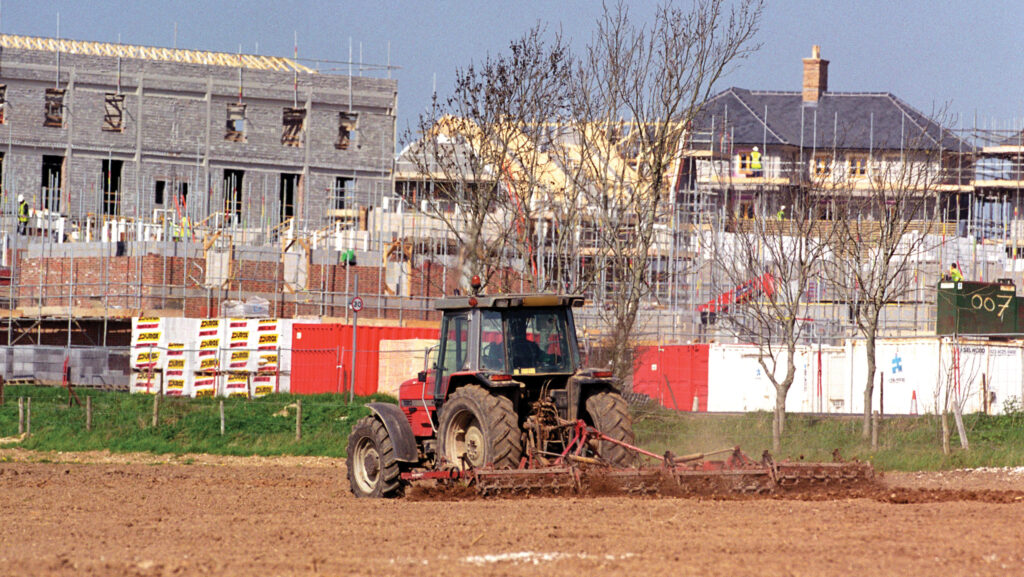 © Patrick Abell/Alamy Stock Photo.
 The final version of a new National Planning Policy Framework (NPPF) is due to be published in the summer and should set a smoother path for both farming developments and diversification proposals.
The NPPF is the key government document that sets out planning policies for England – consider it as one of the rulebooks as to how planning officers should make decisions, says consultant Hannah Moule of The Rural Planning Co.
While the framework’s principal focus is housebuilding in the hope of economic recovery, the changes are much wider reaching, says Hannah.
See also: Diversification – legal blocks to look for when making plans
She suggests that those with projects in mind should start preparing now so they are ready to move when the new framework takes effect.
“There are more mentions of food production, farms, farm business and the rural economy than I ever remember, and it gives greater weight to supporting applications for agricultural development.”
The NPPF states: “To support business growth, substantial weight should be given to… the economic benefits of proposals for commercial development which allow businesses to invest, expand and adapt…” and to “Benefits for domestic food production, animal welfare and the environment which can be demonstrated through proposals for development for farm and agricultural modernisation.”

Planning for buildings such as grain stores should be easier to obtain © Tim Scrivener
Change of emphasis
A fundamental change in the proposed NPPF, as drafted, is that it sets out that where there is conflict with the local development plan, the NPPF should take precedence.
“This is a major change and basically means that where a local plan doesn’t support something, if the NPPF does, then the NPPF could trump the local plan,” says Hannah.
“Historically, the NPPF has been a material consideration, but not the starting point in a planning decision.”
This means that once the new guidance is in place, if farmers have been turned down previously for diversification projects on a planning principle because the planning policy did not support a particular type of development, then it would be worth looking at again, she advises.
However, this does not apply to refusals on technical grounds such as unsafe highways or flooding risk that cannot be overcome.
The new wording in the NPPF sounds like a subtle change, but in planning terms it is important, says Hannah.
“Support for agricultural and rural projects now need to be given substantial weight – which is chunky in planning terms.
“For agriculture, this means that all technically compliant applications should be policy supported. There will still be technical issues with things like intensive livestock buildings to overcome, but there is more support there than before.”
For many years, many local planning authorities (LPAs) have had sequential tests, which make it difficult to get certain uses in rural areas.
This is because they don’t want to take those uses outside of town centres, says Hannah, giving the example of a soft play building on a farm park.
However, under the proposed NPPF, this sequential test will not apply to applications for small-scale rural offices or other small-scale rural development, which may open more opportunities for farm diversification and other rural businesses.
Rural business development
The draft NPPF says the sustainable growth of businesses in rural areas should be supported, including:
- Conversion of existing buildings and well-designed new buildings
- Development and diversification of agricultural and other land-based businesses
- Facilities to support rural leisure and tourism, and measures to retain and expand accessible local shops and services
- Development to maintain and enhance farm viability and sustainability, and support domestic food production – such as better accommodation for livestock, on-farm reservoirs, greenhouses, polytunnels, farm shops and temporary accommodation for seasonal workers (where ancillary to agricultural use and not for permanent occupation).
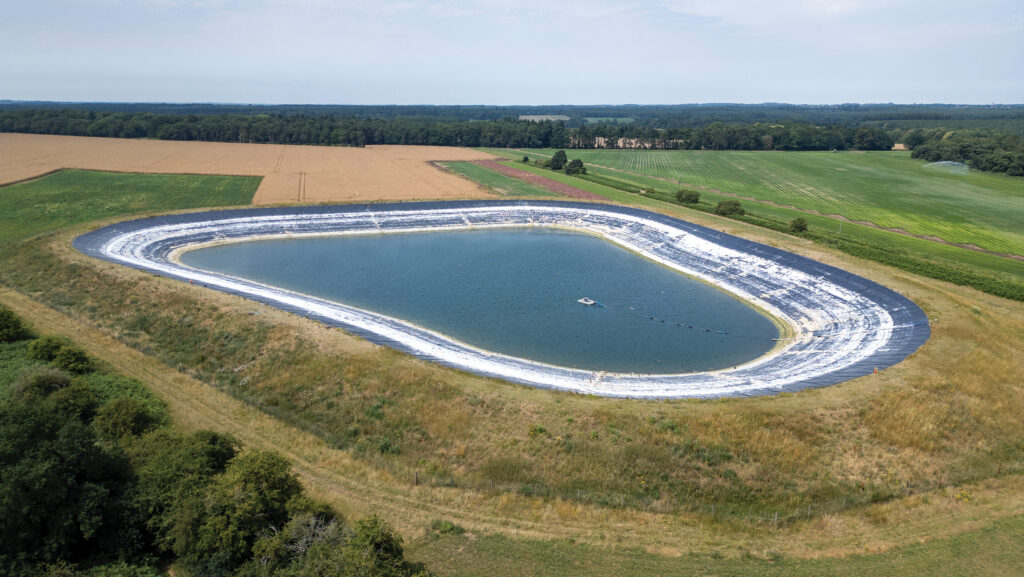
The framework supports on-farm developments such as reservoirs © GNP
It also acknowledges that development proposals to meet business needs in rural areas may need to be located outside settlements, and in locations that are not well served by public transport. In these circumstances:
- Development proposals should take opportunities – where they exist – to use previously developed land, and sites that are physically well-related to existing development
- The siting and design of development should be appropriate, having regard to the character of its surroundings.
Residential development
“More emphasis will be placed on achieving housing development on smaller sites, hopefully, within a wider range of settlements (where certain criteria apply) – the definition of settlements now being cities, towns, villages and other predominantly built-up areas.
It still excludes hamlets, and there will be lots of discussions about the difference between a village and a hamlet!
“If it is within a settlement, then the tilted balance will apply,” says Hannah. This is a planning assessment which weighs a development’s adverse impacts against its benefits, and tilts towards granting permission.
“Within” can also mean immediately adjacent to a settlement, suggests Hannah.
“If a site is outside of a previous settlement boundary and well connected to the settlement, then there are more times where the tilted balance will apply.
“Furthermore, the criteria of when the tilted balance applies outside settlements will include previously developed land (brownfield) infill within groups of houses and redevelopment of existing buildings.”
More potential for smaller villages?
Smaller villages – which may have previously been counted out of the titled balance consideration – may under the new framework be considered settlements in planning terms, and therefore stand more chance of getting small developments approved.
“While I don’t promote large-scale new housing in small villages, a few small-scale developments can help offer young people the chance to stay in the village where they grew up – and that has got to be a good thing for the countryside,” says Hannah.
“While generally very positive – and I look forward to seeing the final draft – it will still take time for the changes to filter down through the LPAs and planning officers. It also won’t make any change to local objectors.”
In isolated locations, proposals for housing will be in a similar position to the current one, where only specific exemptions such as housing for rural workers, the conversion of existing buildings or splitting a single large dwelling will be acceptable.
Permitted development
No changes to permitted development rights (PDRs) are proposed in the draft NPPF, but Hannah points out that if a Class R PDR is used to change something from agricultural to commercial use, then that site becomes previously developed land.
In other words, a brownfield site – which could make it fit one of the criteria for development outside of settlement boundaries, for example, or lead to further opportunity down the line.
The Country Land and Business Association (CLA) has broadly welcomed the draft NPPF, saying that many of its proposals align with long-standing CLA asks – such as simpler information requirements for planning applications, improved support for rural businesses and revised policies for the delivery of housing in rural areas – aligning with the CLA ambition for a small number of homes in a large number of villages.
Commenting on the draft, the association’s planning adviser Shannon Fuller says that a new national decision-making policy sets out the types of development that will be deemed as acceptable outside settlements, specifically supporting development for agriculture, horticulture, forestry and rural businesses including tourism.
While broadly supportive of the proposed new policy for development outside settlements, the CLA has lobbied for greater flexibility, and clarity on how a “settlement” and a “built-up area” are defined.
Rural exception sites
The revised NPPF looks to strengthen planning policies for rural exception sites (RES).
These are small sites usually located on the edge of rural settlements and not allocated within the local authority’s adopted development plan, so would not normally gain consent for residential development.
RES are approved to primarily deliver affordable housing where there is a proven local need.
The draft NPPF also proposes removing first homes exception sites (FHES).
The CLA supports this, saying that FHES can reduce the supply of affordable housing in rural areas due to the higher sale price of properties on these types of sites.
In addition, the consultation sought views on the setting of benchmark land values to help the delivery of RES, including a benchmark land value of £10,000 a plot, five times agricultural value, or existing use value, where appropriate.
The CLA says it has worked with the rural housing sector to agree a combined response to reflect higher-than-agricultural values.
Local government devolution risk
The association continues to lobby for improved training of planning officers on rural issues and agricultural matters and is concerned about the implications for rural planning in the proposed local government reorganisation.
This will see the current two-tier system of county and district councils replaced with single-tier unitary authorities, aiming for populations around 500,000 to improve efficiency.
“There is a risk for smaller local authorities – there may be some planning benefits, but there may be a loss of rural understanding,” says CLA senior property and business policy adviser Avril Roberts.
Biodiversity net gain changes
The announcement of the NPPF consultation in December was accompanied by a commitment to exempt small sites of up to 0.2ha (up to nine houses) from the mandatory biodiversity net gain obligation.
Consultation on further easements and exemptions for different categories of site is expected early this year.
NFU concerns
While welcoming the proposed streamlining of the planning process and the possibility of speeding up applications to better support farm productivity and UK food security, the NFU remains concerned that horticulture and poultry face barriers to development, with many farmers looking to upgrade existing infrastructure struggling to obtain permissions.
Alongside this, the union is concerned about how policies will be interpreted at a local level, particularly regarding statutory environmental regulations, where plans can often be delayed or halted at this early stage.