Arla launches schools drive to tackle dairy skills gap
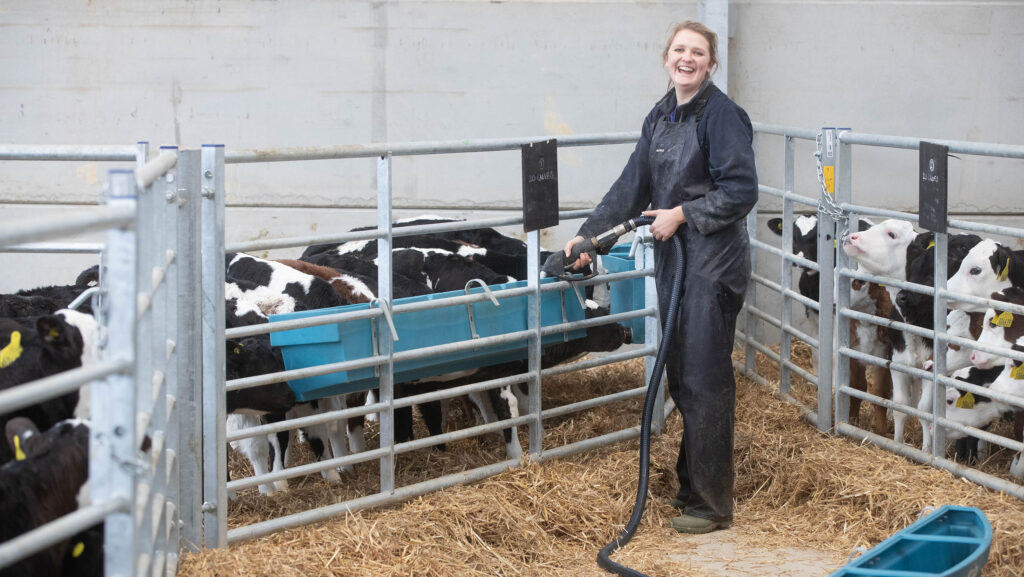 © Tim Scrivener
 Arla is targeting more than 100 schools and 100,000 young people in a drive to tackle a persistent skills gap in British dairy farming.
The dairy cooperative’s new outreach programme aims to showcase the breadth of careers across modern farming and the wider food supply chain, from science and engineering to technology, sustainability, logistics, nutrition and business.
It comes as Arla’s latest annual survey of 440 farmers highlights a skills shortage that has persisted for years.
See also: Dairy farm numbers slip below 7,000 for first time
Some 82.4% of farmers who had advertised a vacancy said they received few or no applications from candidates with the right skills.
The figure has remained above 80% for seven consecutive years, pointing to a skills crisis rather than simply a shortage of workers.
The challenge is compounded by an ageing workforce – 47.7% of farmers are aged over 55, while 50.5% say retaining staff is harder than before Brexit and Covid.
Almost two-thirds (64.7%) believe changes in schools and colleges would be the most effective way to attract people into farming and the wider food industry.
A further 21.2% say farmers need more support to recruit, train and develop the next generation.
Arla says many young people remain unaware of the opportunities available across the sector.
“Securing the future of British food starts with securing people,” said Bas Padberg, managing director of Arla Foods UK.
“If we want a resilient food system capable of feeding future generations, we must invest in the skills, education and pathways that will build the workforce of tomorrow.”
Earlier intervention needed
Arla Food UK agriculture director Paul Dover said government initiatives, including the Farming Roadmap and school-based routes into work, would help – but intervention needs to start earlier.
“We need to change perceptions of the sector and ensure attractiveness to expand our talent pool to bring many more young people into our industry,” he said.
Arla farmer Tim Dale, based near Shrewsbury, said investing in the next generation was “essential for the future of British food production”.
The survey forms part of Arla’s seventh annual assessment of farmer recruitment and builds on a recent white paper (PDF) produced with Harper Adams University.
The recruitment pressure extends beyond farming. Engineering vacancies at Arla take around 105 days to fill, compared with 58 days for other roles.
At its Taw Valley Creamery in North Devon, where Arla is investing in domestic mozzarella production, the company plans to recruit 50 apprentices over the next two years.