

Greener and long-term FBTs: How new tenancies are working
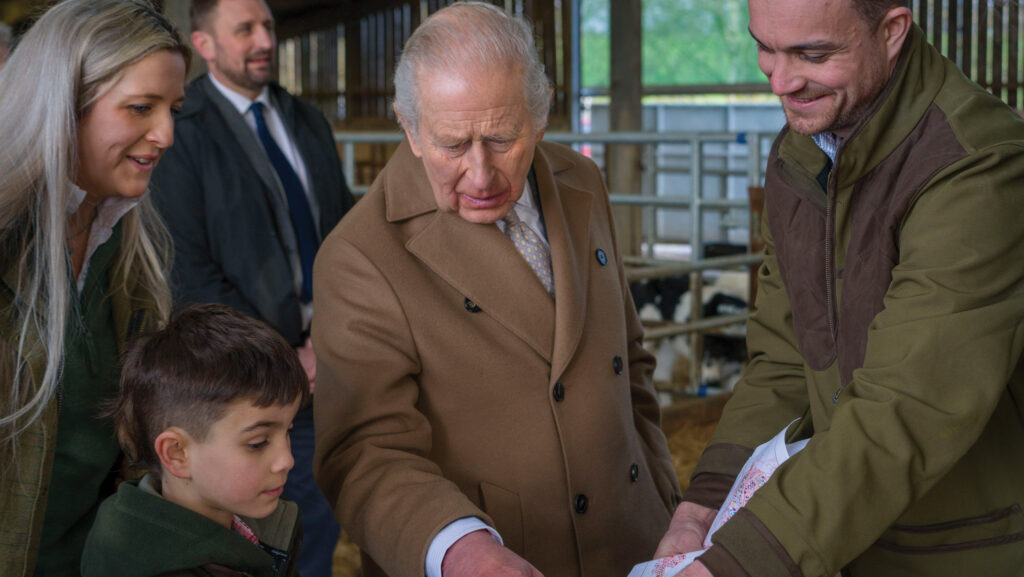 King Charles with Joe Towers, Hannah Kent and their son, George © Duchy of Lancaster
 Organisations like the Tenant Farmers Association (TFA) have long called for lengthier tenancies to become the industry standard. Progress has been slow, but the influence of one person is helping to drive momentum.
“The driver behind our new approach has been King Charles,” says Mark Coombs, head of rural at the Duchy of Lancaster, which has started rolling out what it terms sustainable tenancies of up to 30 years across its 17,000ha let estate.
“He wants nature very much at the heart of what we are doing in terms of the management of our rural portfolio, and to do that, you need to take a long-term view.”
See also: Tenancy succession – advice on meeting the suitability test
New tenants are offered 15-year farm business tenancies (FBTs) that come with a side document, which Mark describes as memoranda of understanding (MoU).
These specify how the holding should be managed from an environmental perspective, often in relation to local nature recovery strategies.
Know where you stand
Although some farmers may initially bridle at this level of detail, Mark says the lack of ambiguity means everybody knows where they stand.
“Each agreement comes with a mutual five-year break clause designed to keep all parties focused on delivering sustainable farming outcomes and upholding the objectives set out in the MoU. In practice, we’re unlikely to use it because of our strong emphasis on working closely with our tenants – it’s very much a partnership.”
He emphasises that any environmental plans are created in conjunction with the tenant and can be reviewed, if required, as can rents if they prove to be unsustainable.
The launch of Cinder Hill, the first farm to be let under this new approach (see case studies), attracted a huge amount of interest, says Mark. “We had 65 expressions of interest and 20 or so written submissions.”
A recent survey of its tenants by the duchy also showed support for the estate’s new approach. “About 85% responded, and the majority recognised there has to be some form of change,” Mark says.
Existing tenants renewing their FBTs are offered terms of 25-30 years, says Mark. “We’ve just agreed on one deal that takes a young tenant to retirement age.”
Environmental FBTs
The Crown Estate, although not directly influenced by the monarch, has also thrown its weight behind longer rental terms with the introduction of its 15-year environmental FBT (eFBT), launched in conjunction with the TFA and law firm Burges Salmon last year.
“We already have just over 10,000 acres [4,050ha] let under these eFBTs, with another 7,000 acres [2,800ha] going through legals,” says Paul Sedgwick, managing director of The Crown Estate’s rural portfolio. “Probably one-quarter of our FBT land will be let on eFBTs by the end of this calendar year.
“By granting a longer term, we are attracting a greater diversity of applicants because they can see it as a route to running a business rather than a short-term fix of bolting on acres to an existing farm,” Paul explains.
“But I would say the biggest benefit by a country mile has been the rebuilding of the relationship between The Crown Estate and its farmers. We are relearning that skill,” he adds.
A review with the TFA of the eFBT’s progress so far is planned later this year, says Paul. “One of the things we may look at is extending the term beyond 15 years.”
It is not, however, just institutional landowners that are offering longer-term FBTs.
Knight Frank’s Alastair Paul, who advises a number of large estates, is a strong advocate for long-term tenancies as a strategic planning tool for both estates and their tenants.
Align objectives
“The purpose of granting long-term tenancies is to align the aims of the parties,” says Alastair. He believes that once there is a clear understanding of the respective future objectives, alignment becomes the key ingredient for a successful outcome.
Alastair has helped negotiate several long-term tenancies for the Holkham Estate in Norfolk, enabling tenants to plan for the longer term with confidence, in an increasingly uncertain agricultural environment.
“For a tenant, an Agricultural Holdings Act tenancy provides excellent security. However, where it is not a succession tenancy – or is on its final succession – it can present a significant risk for the tenant’s family.
“Supporting these families to secure long-term stability for their next generation is not only vital for them, but also in the landlord’s interest. While smaller estates may look to resume land and farm in-hand, this is rarely practical for larger estates, where diverse income streams are essential.”
Alastair emphasises that a tenancy is not the only long-term solution. He has also helped the estate in its desire to secure the future of another tenanted family through a long-term share-farming agreement, working closely with the estate’s own significant in-hand farming business.
“This approach reflects a shared ethos around food production, with a commitment to the stewardship of natural capital. For a progressive estate with clear long-term ambitions, this represents an exciting way of working with families who, in many cases, have farmed the estate’s land for generations,” points out Alastair.
Exception to the rule
Generally, though, longer FBTs remain an exception on private estates, laments Philip Meade of land agent Davis Meade, who is often involved in tenancy arbitration cases.
“There’s an estate in Cheshire with a very hands-on owner that has just given three tenants who I have been negotiating on behalf of 20- to 25-year FBTs, but that’s outside the norm, really. Most still tend to be for five or 10 years.”
Uncertainty about inheritance tax, relatively low returns on capital, opportunities for alternative uses and stagnant land values mean many landowners are nervous about tenancies in general, let alone offering lengthier terms, says Philip.
“In the past 12 months, we’ve been involved with a dozen cases where landlords were buying out their tenants or selling to them. Usually, we’d probably deal with one or two a year.”
Although he is a strong believer in the value of longer tenancies, Philip says it is vital for the lucky few who are offered one to plan ahead for when their term ends in 20 or 25 years.
Tendering a sensible rent is crucial, he warns. “It’s no good ending up after 20 years without a penny in the bank to reinvest in your own land or a place to live.”
Case studies
Farmers Weekly spoke to a range of tenants to see how the new approaches are working.
The new-entrant agroforesters – Joe Towers and Hannah Kent
“It has been life-changing,” says Joe Towers when asked about the effect of taking over the tenancy of 117ha Cinder Hill Farm, in Lancashire.
Although not new to farming – Joe comes from a farming family and Hannah reared her own calves – a farm of their own to share with son George had seemed a distant prospect until they saw Cinder Hill advertised by the Duchy of Lancaster 12 months ago.
The livestock unit was the first to be let under the duchy’s new sustainable farm business tenancy. The 15-year term and environmental focus of the tenancy matched the couple’s long-term aspirations and passions.
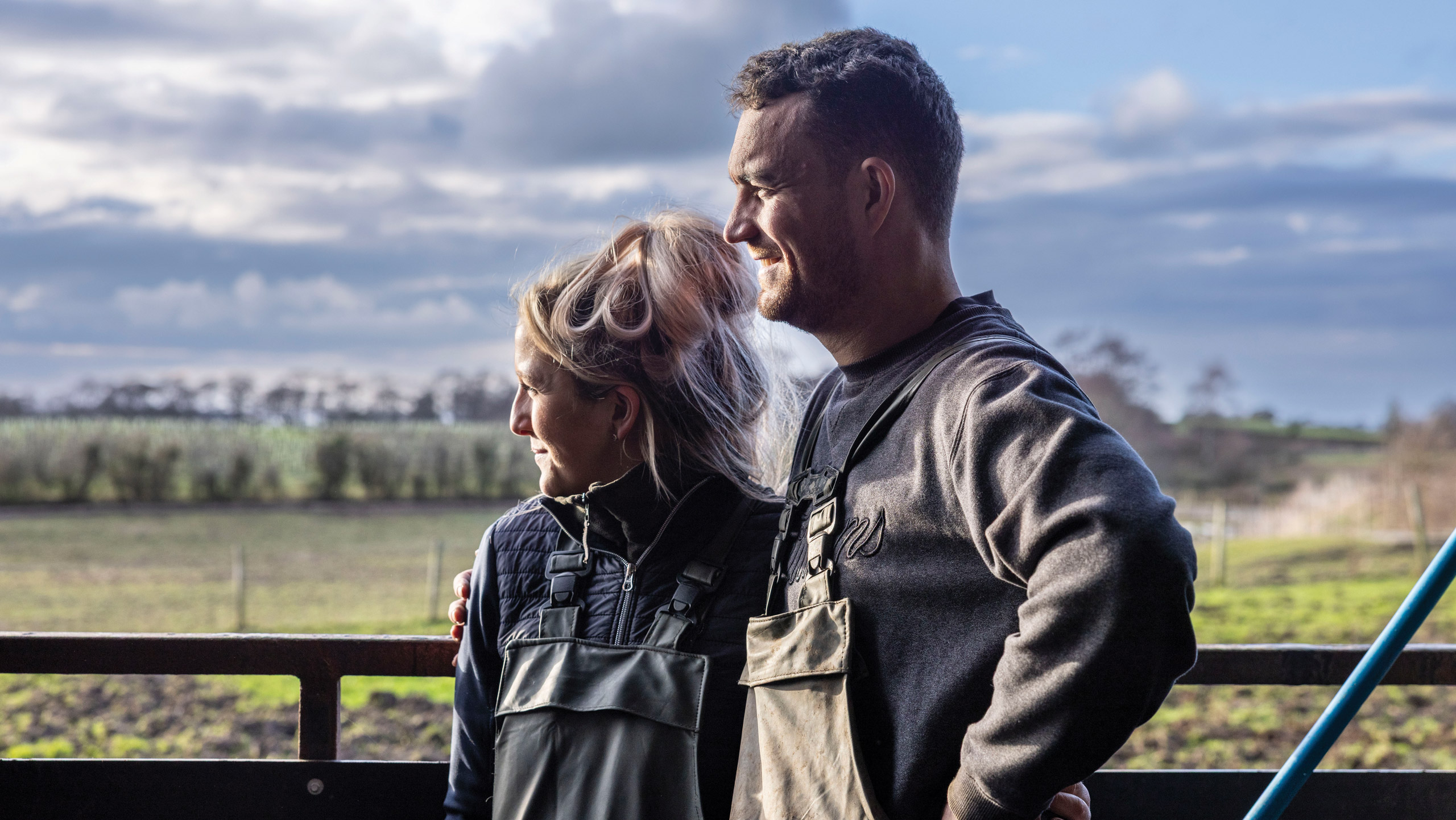
Joe Towers and Hannah Kent plan an expanding Angus herd and agroforestry © Duchy of Lancashire
They plan to build up an Angus beef herd in conjunction with an exciting 70ha agroforestry project, neither of which would have been an option with a shorter-term tenancy.
“From a marketing perspective, visually the cows grazing in the trees should be very appealing, so hopefully we’ll be able to add value to what we are producing,” says Joe.
There was a slight hiccup when the government abruptly closed the Sustainable Farming Incentive scheme to new entrants last year, just as the tenancy was being agreed. Luckily, they have still been able to apply to the standalone Countryside Stewardship agroforestry offer.
Joe says he doesn’t want to be presumptuous about the future once their initial 15-year term comes to an end, but is “quietly confident” things will work out well because the tenancy feels like a genuine partnership with the duchy.
“They have introduced us to a consultant called Nethergill Associates that has helped us with what they call maximum sustainable output and provided membership to Pasture for Life, which has an incredibly active WhatsApp group.”
The collaborative approach – Will Wastling and Jon Page
When the opportunity to tender for a 15-year environmental farm business tenancy (eFBT) on Abbey Garth Farm, a mixed 283ha farm in East Yorkshire, came up, Jon Page, an agronomist, and Will Wastling, an established local farmer, leapt at the chance.
“We weren’t sure if The Crown Estate would accept a joint bid for the tenancy, so we knew we had our work cut out,” says Jon.
“We spent a lot of time putting together a booklet covering all our environmental plans, such as cropping rotations, environmental stewardship, organic matter and livestock; the rest is history.”
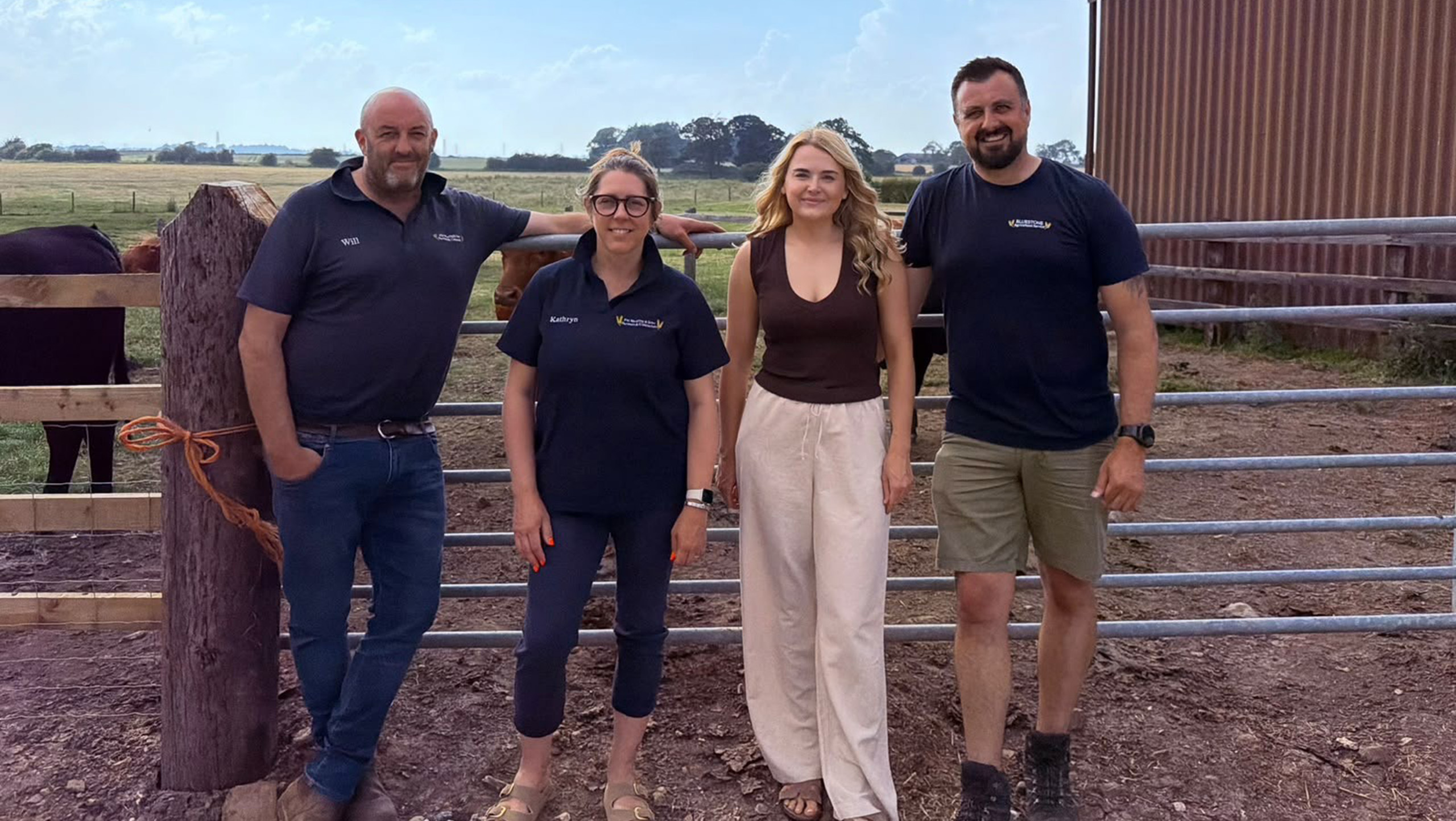
Will and Kathryn Wastling, Jon Page and Kimberly Marriott will be working together on Abbey Garth Farm © Jon Page
Hosting visits for local schools was also a core part of their bid, says Jon. But the flexibility to apply jointly was crucial, he adds.
“Will and his wife, Kathryn, a teacher, bring to the table an experienced workforce and modern farming machinery. My partner, Kimberly, a police officer, and I bring agronomy and environmental expertise.”
Without the partnership, it would have been impossible for Jon and Kimberly as first-generation farmers to take on a farm, he says. “We are grateful to both Will’s family and The Crown Estate for the opportunity.”
The length of the tenancy means they have been able to start their own Stabiliser cattle herd, which has been made easy through Will’s father, Richard, who manages the cattle. The first calves are due next March.
“With just a five-year tenancy, you’d be forced to just buy and sell stores, but now we can enhance long-term genetic quality and farm resilience,” says Jon.
“The 15-year term will also give us the chance to increase the soil organic matter,” he adds. While some might be concerned that 15% of a farm let under The Crown’s eFBT must be dedicated to nature restoration, Jon was not put off.
“For somebody so regeneratively focused, it was music to my ears.”
Building the family legacy – Grant Page
Grant Page is a fourth-generation arable and sheep farmer on The Crown’s Bingham Estate in Nottinghamshire.
He already had an Agricultural Holdings Act tenancy on Smite Hill Farm, which his great-grandfather took over in 1925, and two shorter term farm business tenancies (FBTs), but had been hankering for a longer-term option to tie everything together.
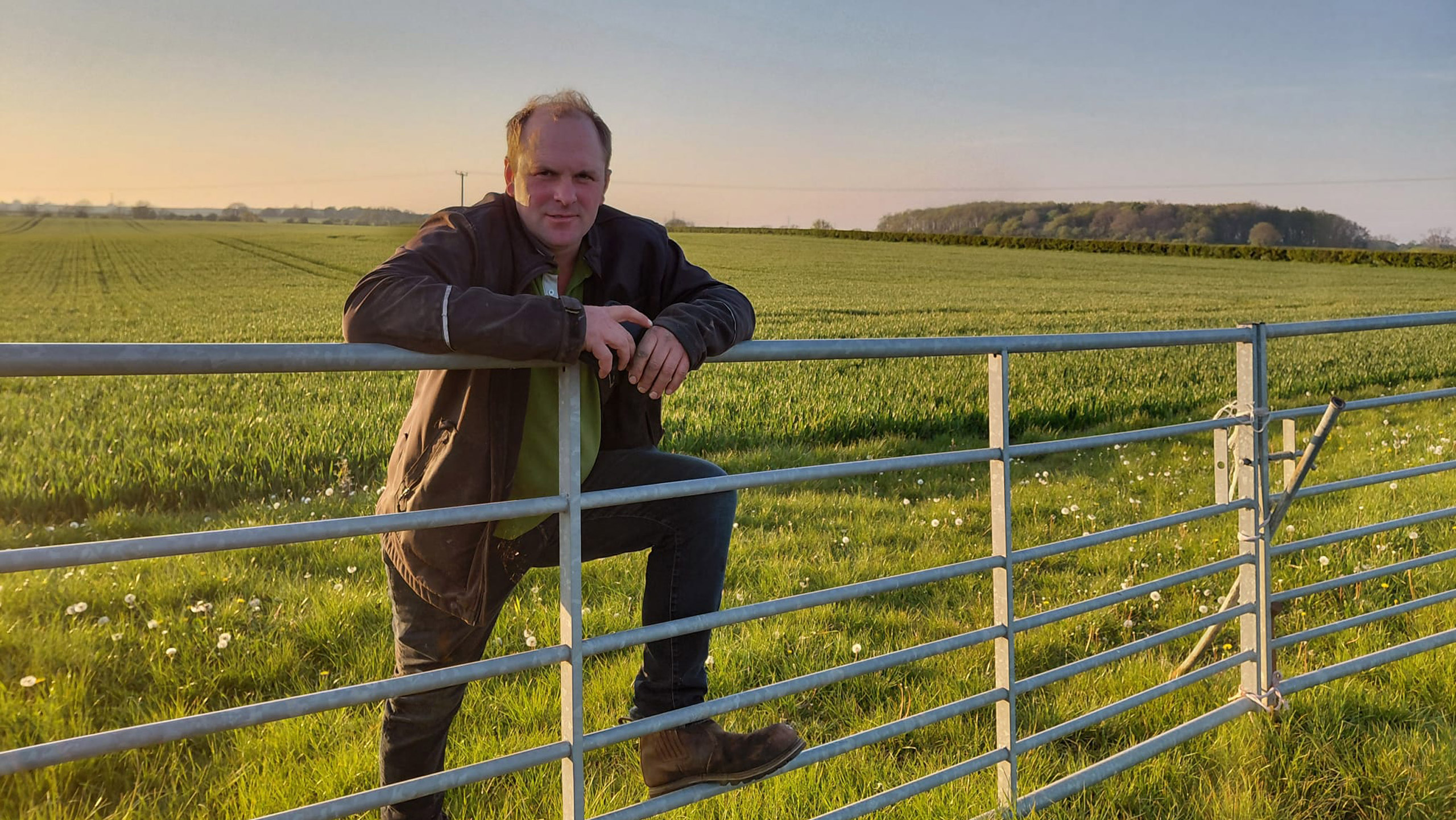
Grant Page now has a large ring-fenced farm to progress with © Grant Page
When the opportunity to tender for Spring Farm, a neighbouring 170ha block of land under a 15-year environmental farm business tenancy (eFBT) came up, he jumped at it.
Having put in a successful bid, Grant will also be able to link his existing FBTs to the new eFBT, meaning he’ll have long-term security over the entire holding.
“It’s what I’ve always wanted. We are now a 1,500-acre [607ha] ring-fenced business, which means we’ll be able to undertake more environmental options and create fantastic wildlife corridors across the farm.”
As part of the agreement, The Crown is also building a new grain store and has supported the conversion of a grain loft where Grant can host inner-city school visits organised by the Country Trust.
“I’ve really enjoyed having the children on the farm and teaching them different things,” he says. Grant also receives free advice from one of The Crown’s ecologists.
“I remember when I was a little boy, my dad used to be worried when the land agent came around because all they wanted was more money.
“Now they are actively encouraging us to look after the land and are not just chasing the highest bids anymore, which I think is a fantastic step forward.”
A new family farm – Tom Brankley
Last year was a busy one for Tom Brankley. He got married last June and a few months later started a 15-year environmental farm business tenancy (FBT) on the 142ha Newland Farms, part of The Crown’s Sunk Island Estate on the north bank of the Humber estuary in East Yorkshire.
Along with his brother, Adam, Tom previously helped on his father’s nearby farm, another Crown tenancy, but after working away from the farm for a while, he decided to look for his own holding.
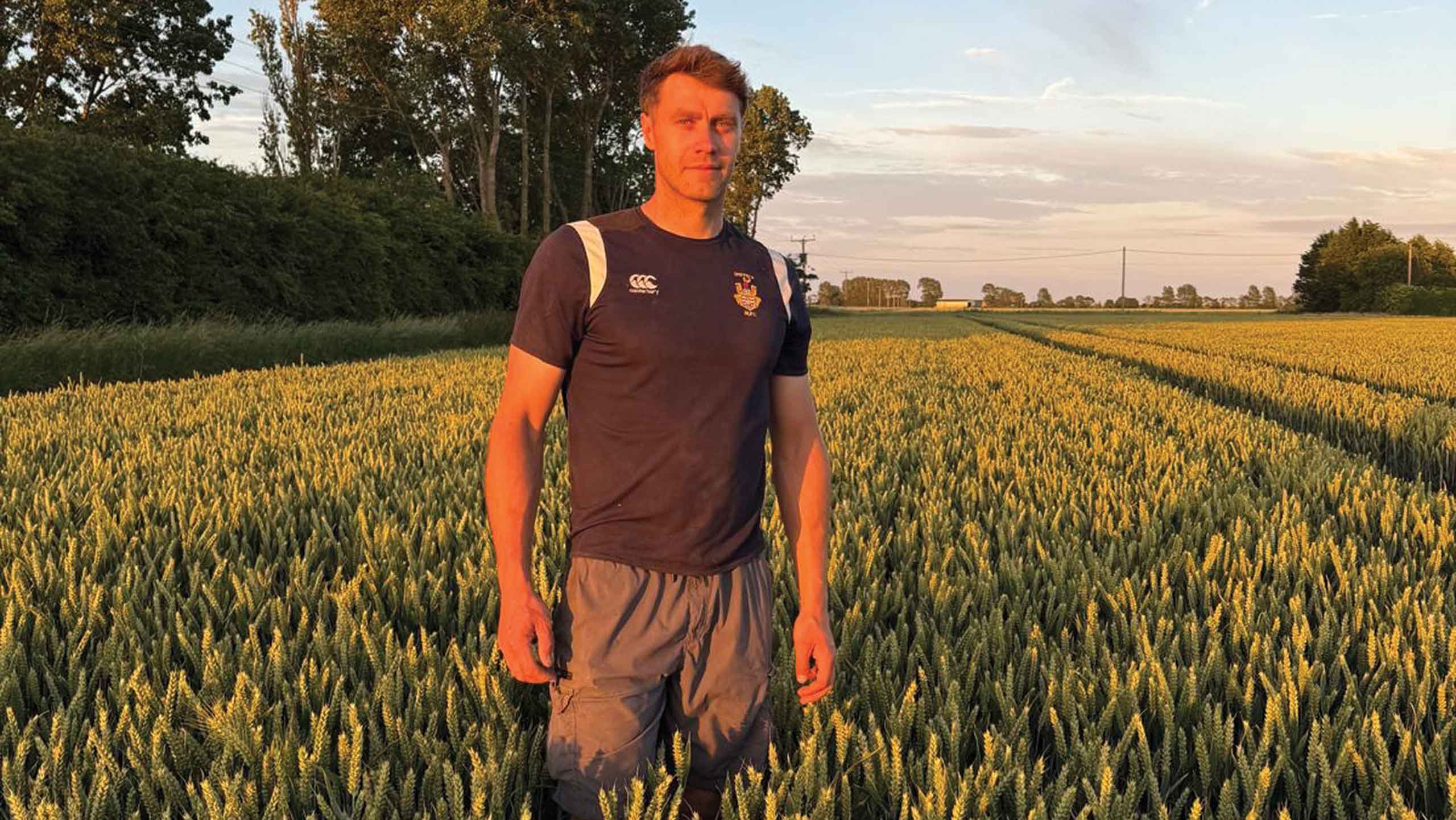
A lack of long-term tenancy options is holding the industry back, says Tom Brankley © Tom Brankley
“It’s been an ambition, but not much comes up to rent around here. I did tender on two blocks of bare land over the past few years, but didn’t get either, which in the end was probably for the best.”
A lack of long-term options is certainly holding the industry back, Tom reckons.
“Having a longer-term tenancy gives you the faith to invest and hopefully farm better. With a five-year FBT, you’re just in limbo when it comes to investment.”
Tom was also hit by Defra’s decision to close applications for the Sustainable Farm Incentive (SFI) last year.
“I was just putting together a business plan and my proposals for the environmental side of the tenancy, which included some SFI options, and then, two days later, they pulled it.”
He is, however, hopeful that as a new entrant, his application to the first round of the 2026 iteration of SFI will be successful. Tom says he is not worried about the requirement that 15% of the farm must be allocated to nature recovery.
“It’s something I’ve always been interested in, and I’d like to get some livestock on the farm, which will help with reducing chemical inputs, which The Crown has an emphasis on.”
Explore more / Transition
During the series we follow our group of 16 Transition Farmers through the challenges and opportunities as they seek to improve their farm businesses.
Transition is an independent editorial initiative supported by our UK-wide network of partners, who have made it possible to bring you this series.
Visit the Transition content hub to find out more.
