How greener, longer-term FBTs are gaining momentum
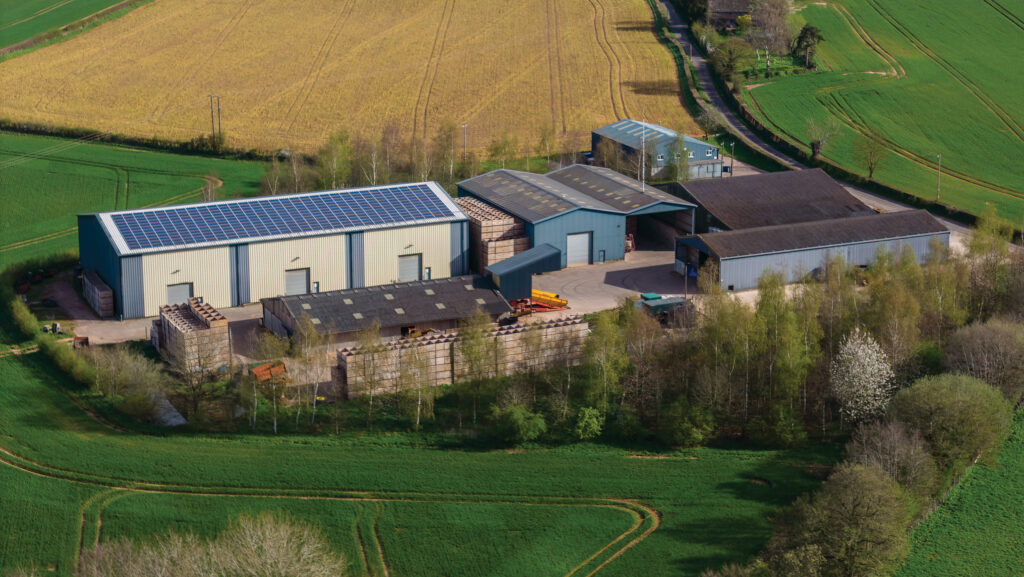 To let – Monkhall Farm, Herefordshire © Duchy of Cornwall
 Hot on the heels of a new guidance note from the Farm Tenancy Forum on how to set up a long-term farm business tenancy (FBT), the Duchy of Cornwall has just launched a ring-fenced Herefordshire arable farm unit on a rare 25-year tenancy.
Its length is not the only innovative aspect of the deal. Monkhall Farm, which includes a 3,600t potato store, irrigation across much of the land, and a newly refurbished farmhouse, is the first property to be let under the Duchy’s new regenerative FBT (rFBT).
See also: How running two flocks helps farm optimise lamb market potential
Full details of the rFBT will be revealed at the Groundswell event in July, but the Duchy, which owns 55,000ha of land across England, says the incoming tenant will be expected to adopt practices that support nature recovery, improve soil health and build long-term resilience on the farm’s 365ha of mainly Grade 2 land.
The agreement will provide a framework of support for the transition to regenerative farming and to help the tenant deliver a resilient, productive and nature-rich farming system over the long term.
“At Monkhall, the aim is to identify a tenant who is focused on enhancing the natural environment and reducing reliance on external inputs, while also delivering a commercially successful farming operation,” says Matthew Morris, the Duchy’s rural director.
“This reflects the Duchy’s long-term commitment to managing land in a sustainable and resilient way that delivers for agriculture, nature, climate and rural communities,” Matthew adds.
“By offering a 25-year tenancy at Monkhall, we are providing the certainty needed for a farmer to invest, adapt and be part of that journey at scale.”
George Badger of Ceres Rural, which is helping to identify a suitable tenant – tenders close on 15 June – says momentum is starting to shift towards longer-term FBTs.
“Across the wider arable sector, shorter FBTs have been common in recent years for their flexibility in an uncertain agricultural transition period.
“They worked for many while Basic Payment Scheme payments were available, but they can encourage short-term thinking by their very nature.
“The ability to plan over a 25-year timescale enables a business to smooth out the current volatility being experienced by the arable sector.”
Customising an eFBT
Kevin Kennedy, an agricultural expert at law firm Burges Salmon, who helped draft the Crown Estate’s eFBT, said those looking to customise the agreement should think carefully about what they want to achieve.
“It sounds a bit odd, but I would first suggest asking yourself why you don’t think it works. Some of that might just be because it represents a big change and a break with the past.
“That can lead to a desire to keep putting in additional provisions that don’t necessarily add anything.
“It’s fairly light touch as a document and doesn’t impose lots of obligations, but if there are certain things that are just fundamentally incompatible for you, that’s where you should focus your energies.
“To get the most from it, you do have to see it as a bit of a mindset change, because it is focused on an ongoing positive relationship between landlord and tenant. It’s more than just a document.”
Setting the pace
Environmental FBTs first sprang to prominence last May when the Crown Estate launched its own 15-year eFBT model in conjunction with the Tenant Farmers Association (TFA).
Paul Sedgwick, the estate’s managing director of Windsor and rural, says he has been pleased with the reaction.
“The response from our existing farmers and new entrants has been really encouraging, with over 10,000 acres (4,050ha) now let on eFBTs.
“We continue to listen to feedback from our farmers and their advisers on improvements we can make to the eFBT. In this respect, the TFA acting as a ‘critical friend’ has been vital to its success,” Paul adds.
To encourage wider uptake of longer-term environmental FBTs, the Crown and TFA have made the agreement freely available for anybody else who would like to use it.
George Dunn, TFA chief executive, says there has been strong interest, particularly from other institutional landowners, but also private estates. However, many were looking to add their own tweaks to the agreement.
“The eFBT was groundbreaking in the sense that we included clauses that were aspirational. Some estates would rather have something a bit more black and white,” he explains.
Momentum building
Quantifying the number of new FBTs being agreed that have an environmental perspective is difficult, George says.
“I wouldn’t say there is a tsunami of them yet, but every day the bucket gets wetter. We are certainly talking in the hundreds, but I couldn’t say if that is 300 or 800.”
Tom Cackett, a food and farming consultant at Savills, says he is definitely seeing more emphasis on the environment in the FBTs that he has been involved with, but the motivations and depth of landlord engagement vary.
“Compared with 10 years ago, landlords are much more concerned about the state of the farm they’re going to get back at the end of the tenancy.
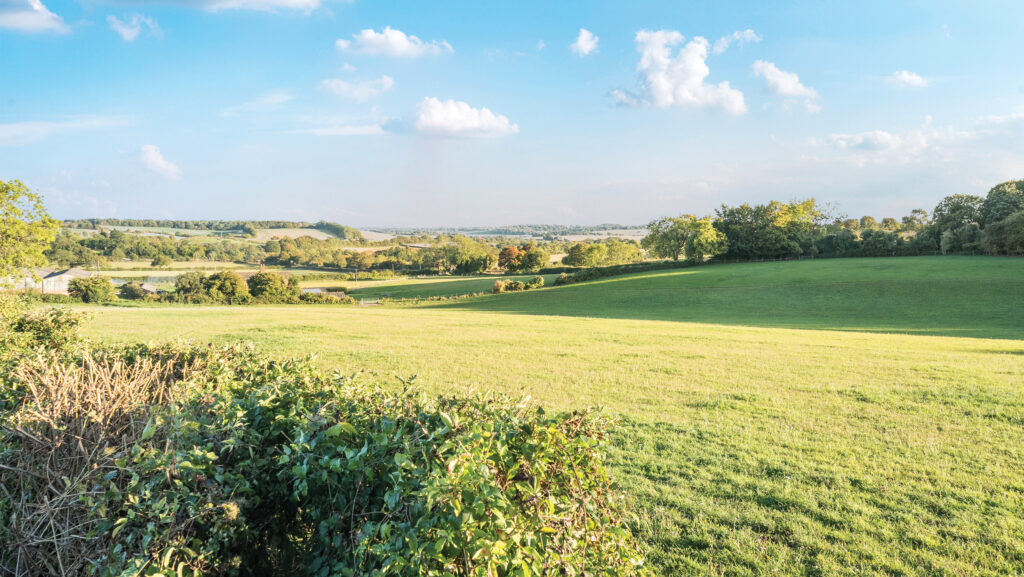
The 72ha Lilley Hoo Farm – available to rent from the Crown Estate © Duchy of Cornwall
“They are putting in clauses requiring the farm to be soil sampled at the beginning and end of the tenancy. They may also want the farm to be under environmental stewardship for the duration of the term,” he says.
Others, however, are looking for deeper relationships and are creating bespoke eFBTs, adds Tom.
“Some are committing to jointly funding habitat improvements, while others are offering rent rebates during the term of the tenancy to reflect any good environmental work they have undertaken.
“One tenant, for example, would get a rent rebate every three years if they could show that there had been a demonstrable increase in the farm’s soil organic matter.”
Ed Dixon of Dixon Rural, which operates in England and Wales, has been arranging FBTs for up to 16 years’ duration for the Old-Lands estate in Monmouthshire, which has a strong focus on regenerative farming and rewilding.
However, rather than filling the FBT with detailed clauses, most of the environmental heavy lifting is done by an accompanying land management guide, says Ed.
“Each farm has a bespoke guide created by Sam Bosanquet, an ecologist whose family has owned the estate for 200 years.
“It sets out the vision of the estate, but allows for some flexibility, so we don’t need to keep redrafting the main agreement.”
The approach has attracted a range of forward-thinking and entrepreneurial tenants, says Ed.
To let or not to let?
Over the past decade or so, taking land back in hand has been considered a prudent move by some landlords and their advisers, but will the government’s controversial inheritance tax (IHT) reforms reverse the trend?
Land let under a long-term tenancy will have a lower capital value and therefore be liable for smaller IHT bills.
“That’s the line that we have been taking with landlords,” says George Dunn of the TFA. “If this land is always going to be part and parcel of your family’s history and future, why don’t you let it for the long term?
“You avoid the cycles of the economic marketplace, and you are essentially depressing the freehold value of the farm. So what’s not to like?
“But what we’re hearing from our members is that private estates are being told to keep everything short, so that if they do have a tax bill to pay they will have options to find a way of covering it, and also not to invest in farms because that could essentially raise their value,” George says.
However, land agents say the current meagre returns from farming are tempering the enthusiasm for a return to in-hand farming.
“It would be a brave thing to do, especially if you’ve sold all your kit,” says Andrew Fallows of Carter Jonas’ York office.
Potentially loss-making contract-farming arrangements (CFAs) are also likely to come under more scrutiny after this year’s harvest, reckons Andrew, with some kind of tenancy arrangement a less risky proposition for the landowner.
Some tenants with Agricultural Holdings Act tenancies may also be questioning their future, says Ellie Allwood, an agricultural tenancy specialist at Brown & Co’s Lincoln office.
“I’ve got clients, who five or 10 years ago expected to carry on farming until their dying breaths, starting to take a more pragmatic view.”
Suffolk-based Chris Leney, of agent Brooks Leney, says he has been arranging more FBTs privately for clients who no longer want the aggro of farming themselves or being involved in a CFA.
A number of them are also looking at new tenancy structures within their business that could offer protection from IHT bills,” he adds.