Somerset farmer questions value of RPA inspections
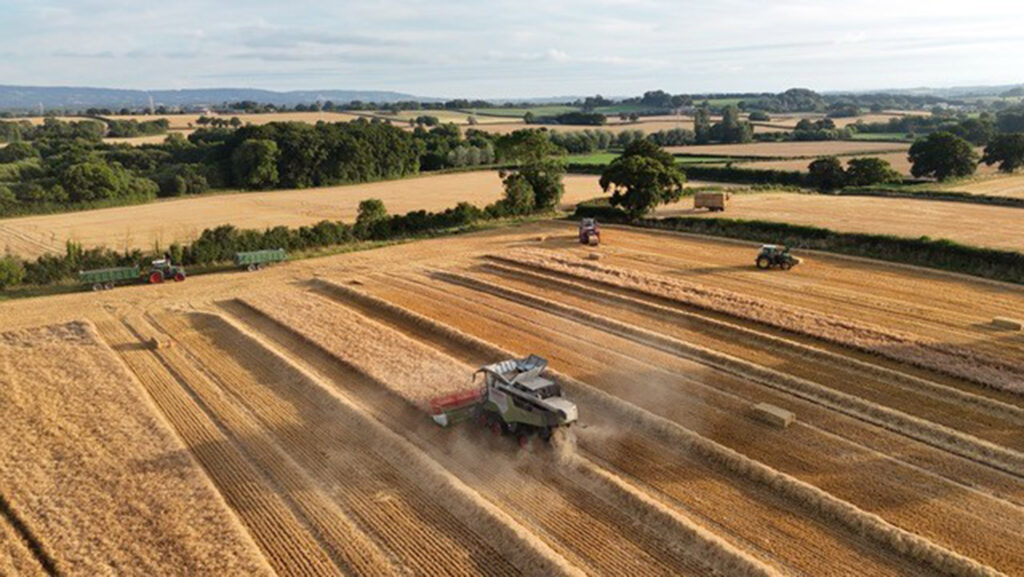 Wheat harvest at Manor Farm © Richard Payne
 A Somerset farmer has questioned whether a government inspection that uncovered less than £100 in discrepancies represents a good use of public money, warning that mounting compliance demands are placing increasing strain on the industry.
Richard Payne, who runs a 283ha arable operation west of Taunton, said officials from the Rural Payments Agency (RPA) spent two-and-a-half days surveying his land as part of a Sustainable Farming Incentive (SFI) inspection.
He added that the visit was followed by months of administrative work, only for the process to conclude that no further action was necessary.
See also: Farmer Focus: Constructive chat from environment inspection
Due to remapping of fields, there was a minor discrepancy in areas of SFI actions SAM1 Soil Management Plans and SAM3 Herbal leys.
“The difference between what they think and what I think is less than £100,” he said.
“They’ve magnanimously said there will be no further action – but don’t do it again.”
Small adjustments
The RPA found that some areas of hedgerow had been misinterpreted and a small adjustment will be made to the third year of the scheme.
It has not been made clear whether this has been included in the £100 error.
The inspection began on 22 January after Mr Payne was given two days’ notice.
It involved an officer walking the farm with GPS equipment and generated several reports before the outcome was sent to the farmer by email on 1 May.
It followed a remote inspection last year, which did not identify any breaches or compliance issues.
Mr Payne questioned the overall value of the process.
“What is the cost of a two-and-a-half-day inspection, countless reports and calculations, then getting back to me almost three months later?” he asked.
“Is this genuinely a good use of taxpayers’ money?”
The farmer suggested the resources used for his SFI23 agreement inspection, worth around £50,000 a year, could have been better deployed elsewhere within the scheme.
“We hear about farmers missing out on SFI entry because Defra said the money had run dry,” he said.
“That money could have gone into another agreement for somebody else.
“My question is: how many people are being denied the chance to join the SFI because the RPA is carrying out inspections?”
While acknowledging the need for oversight, Mr Payne argued that the scale and duration of the inspection appeared disproportionate.
“Is it worthwhile doing three months’ work to find less than £100 worth of error?” he said.
Red Tractor ‘inconvenience’
He said the experience reflects a wider compliance burden, pointing to annual Red Tractor farm assurance inspections alongside government requirements.
“Red Tractor inspections are another inconvenience farmers face every year,” he said.
He added that experiences can vary significantly depending on the inspector involved.
“Some are very co-operative and others just seem to want to catch you out.
After all, an inspector’s work is never done.”
Mr Payne, a former cavalryman with the 16th/5th The Queen’s Royal Lancers, said he had experienced many inspections during his military career.
“The one thing they all have in common is they never leave until they’ve found some sort of fault,” he added.
Inspections burden
Mr Payne said the cumulative burden of inspections is taking time away from core farming work and food production.
“I suppose there have to be inspections because we are producing food.
“But I believe the burden of inspections is over the top,” he added.
“We’ve all become civil servants. We’re spending far too much time on unproductive work and too little time planting crops, producing food and trying to earn a living.”
RPA response
An RPA spokesman said: “Our visits are designed to ensure public money is being used as intended, and in many cases they identify no discrepancies at all – which is exactly what we want to see.
“Where minor issues are found, they are often resolved during the visit. These checks help us confirm that the vast majority of farmers are doing the right thing, while giving confidence to farmers and taxpayers alike that the scheme is working as intended.”