Delayed approach to planning holds back poultry growth
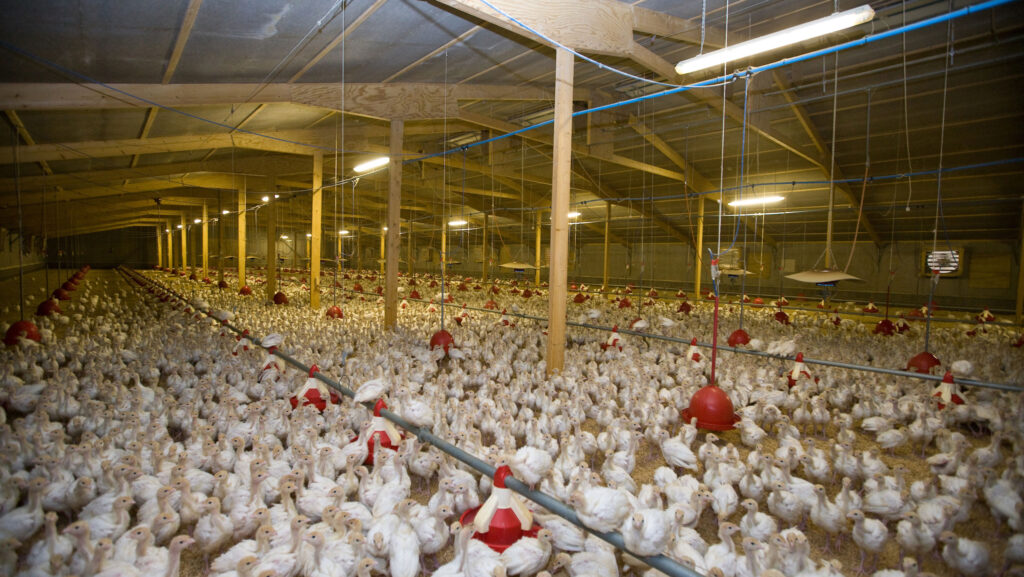 © Tim Scrivener
Lack of investment and persistent planning delays are thwarting the poultry sector’s ability to expand – despite “growth” being one of the government’s declared objectives.
Addressing this week’s Egg and Poultry Industry Conference in South Wales, NFU president Tom Bradshaw said the poultrymeat sector was “on a knife edge” as the effects of climate change and geopolitics drove up production costs.
See also: A guide to improving poultry shed insulation
“Investing in our systems must be a political imperative,” he said. “But what really frustrates me about the planning systems is that it seems to be a case of ‘how can we stop these applications’ rather than how can we enable them.”
Mr Bradshaw explained that the need for more shed space was the direct result of the industry’s voluntary move to reduce stocking rates to improve animal welfare.
Without new shed capacity, the only way to meet demand was to step up imports from countries like Poland, Ukraine, Thailand and Brazil, where standards are lower.
Mr Bradshaw was especially critical of the Campaign Against Factory Farming (Caff), which had a well-orchestrated campaign to slow down and stop any applications for new broiler sheds.
“This is not about welfare, because all they’re doing is making sure we import more poultry from other countries that have worse standards,” he said.
“If they cared about animal welfare they should be trying to make it possible to produce more here so we could rely less on imports.”
The “delay, delay, delay” approach to planning was also pushing up costs for producers, which in turn would trigger more food price inflation.
Egg sector concerns
Similar concerns were expressed by Nick Allen, chief executive of the British Egg Industry Council, who said there was potential for a 15% expansion in egg production by 2031, as consumers sought protein-rich, natural food sources.
“The opportunity is there, but will it be for British eggs or will it go elsewhere?” he asked.
The egg sector faced similar challenges in terms of securing planning permission to expand domestic production, while imports were also on the up.
There had been a 25% increase in egg imports in 2025, principally from Poland and Ukraine, where standards of production were lower than in the UK.
This had culminated in a major salmonella outbreak in August linked to imported eggs, with one person dying and the whole egg sector tarnished.
Mr Allen also pointed to the impending UK ban on cage egg production, which could expose the sector to imports from countries still using such containment systems
‘No comment’
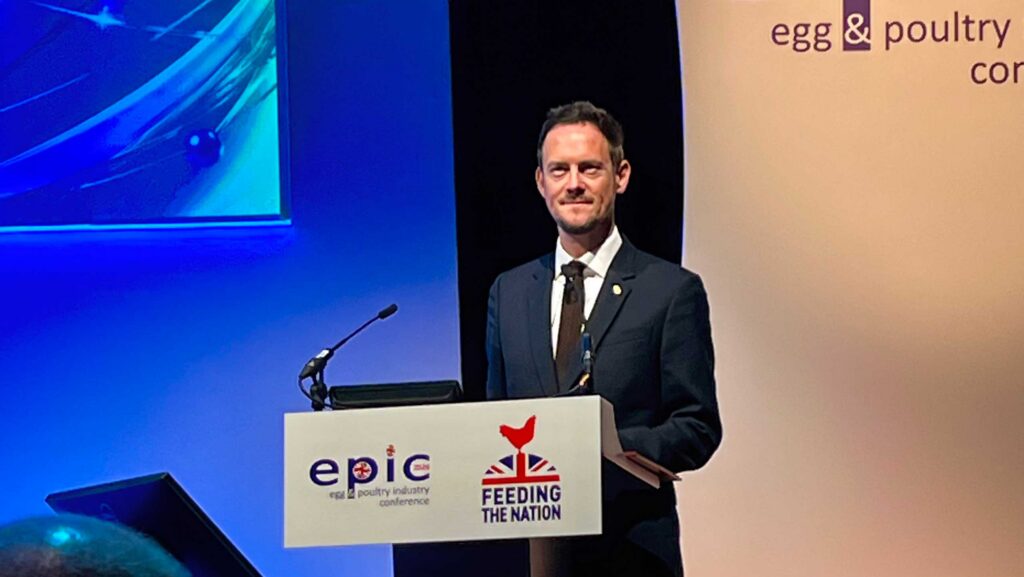
Stephen Morgan © MAG/Phil Clarke
Defra farming minister Stephen Morgan – also speaking at the event – was challenged to comment on these issues.
However, in his address to the conference, Mr Morgan remained silent on both planning permission and substandard food imports.
Instead, he used his 10-minute speech to praise the poultry sector for its achievements and resilience, before leaving the stage without taking any questions from the audience.