Major solar farm approval stokes food security concerns
 © AdobeStock
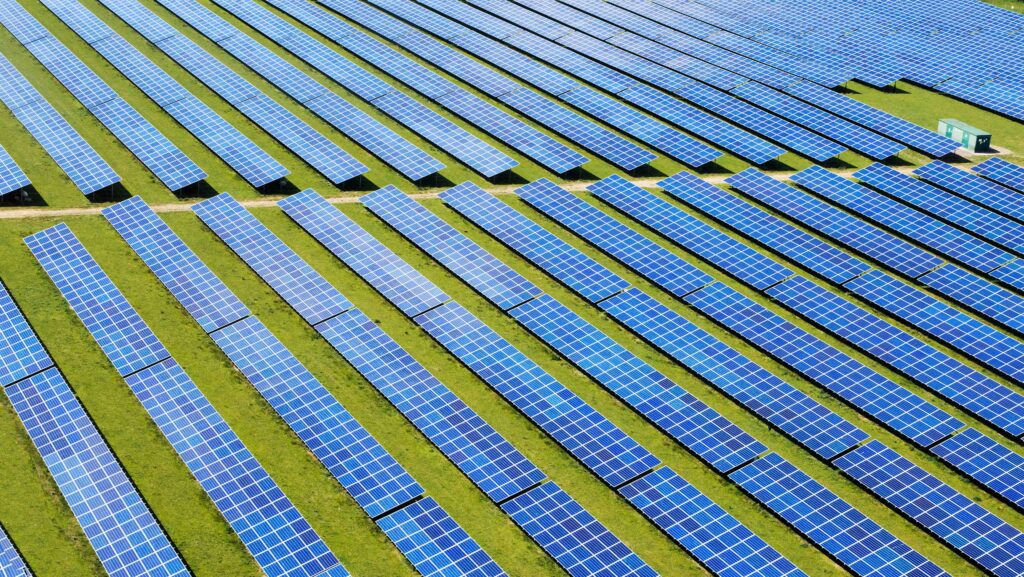
 A major solar farm covering a large area of Northamptonshire countryside has been approved by ministers, reigniting debate over whether productive farmland should be used to help meet the UK’s renewable energy targets.
The 500MW Green Hill Solar Farm was granted development consent by the Department for Energy Security and Net Zero on 8 October, paving the way for a 1,200ha (2,965 acres) scheme featuring ground-mounted solar panels, battery storage and associated grid infrastructure.
See also: Record 157 solar farms approved amid food security fears
The decision has drawn stinging criticism from opposition politicians, who argue that too much agricultural land is being lost to large-scale energy projects.
Sarah Bool, Conservative MP for South Northamptonshire, said she was “absolutely devastated” by the outcome.
“This was never about being against renewables – this is the wrong application in the wrong place,” she said.
“The government has acknowledged that arable farmland will be taken out of production for at least 60 years yet finding alternative sites is apparently too ‘complicated’. That is simply not good enough.”
Food security fears
She urged ministers to prioritise solar installations on commercial and industrial buildings instead.
“We should be putting solar panels on warehouse rooftops before sacrificing good quality agricultural land,” she said.
“Food security is part of our national security and must not be brushed aside in the rush to meet net zero targets.”
The approval highlights growing tensions between efforts to expand domestic renewable energy generation and concerns about the long-term loss of farmland.
Green Hill Solar Farm Limited said the project will generate enough electricity to power about 200,000 homes a year. The development would strengthen energy security while delivering significant environmental benefits, it added.
The company said the scheme would provide a minimum 47% biodiversity net gain in habitat units, alongside more than 50km of new and improved hedgerows and 18km of new permissive paths.
Project development manager Lesley Giles said feedback from local communities had helped shape the scheme’s landscaping, biodiversity measures and public access plans.
The decision followed a six-month examination process during which residents, local authorities and other interested parties were able to submit evidence. The Planning Inspectorate submitted its recommendation to ministers in July.
Martin Griffiths, Reform UK leader of North Northamptonshire Council, said he was “bitterly disappointed” by the approval, warning that it would affect rural communities “for a generation”.
The debate over solar development on agricultural land is being played out across England.
Oxfordshire solar project
In Oxfordshire, campaigners have raised concerns about the proposed 500MW West Oxfordshire Energy Plant, a separate solar scheme covering 971ha (2,400 acres).
Local resident Jim Johnston told the BBC he was not “anti-solar” but feared the development would transform “an agricultural and rural environment to an industrial one”.
The Green Hill approval comes as the government seeks to increase total UK solar capacity to 45-47GW by 2030 under its Clean Power 2030 plans, with the potential to reach 54-57GW if additional rooftop solar capacity is delivered.
Dozens more large-scale solar projects are also progressing through the planning system, with some awaiting decisions from ministers.