

Norfolk solar will ‘industrialise’ countryside, warn critics
 © Tim Scrivener
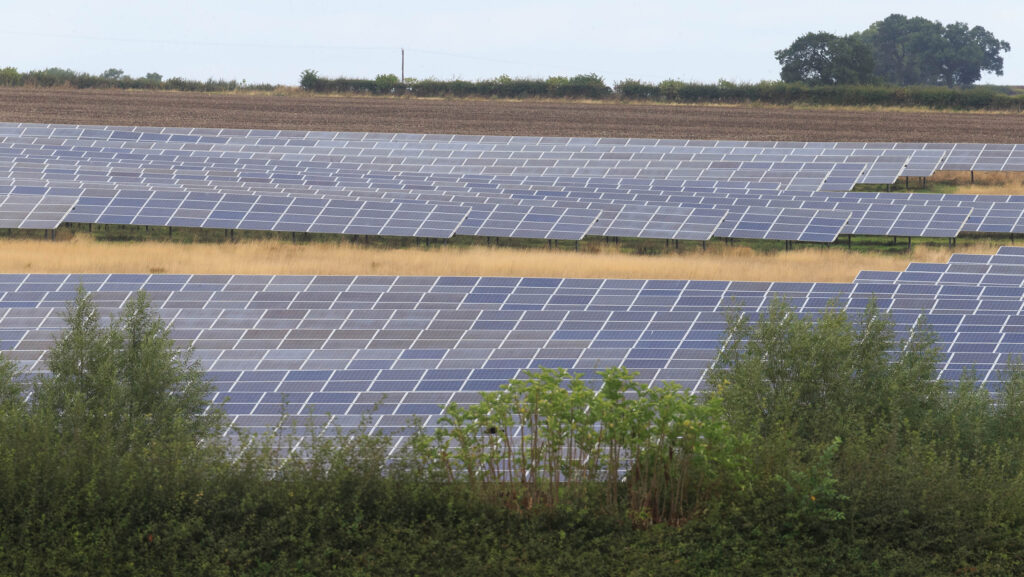
 Rural campaigners and MPs have warned that a wave of giant solar projects proposed across Norfolk could “industrialise” thousands of acres of productive farmland and reshape large areas of countryside for decades.
Three nationally significant infrastructure projects (NSIPs) – Droves Solar Farm, High Grove Solar Farm and East Pye Solar – are together expected to cover more than 3,640ha (9,000 acres) across west and mid-Norfolk.
See also: Record 157 solar farms approved amid food security fears
A fourth mega solar scheme has also been proposed for Norfolk, with the 700MW Tasway project planned across about 1,460ha (3,600 acres) west of Long Stratton, in south Norfolk.
But this has been paused while the developers review grid connection timelines.
Together, the schemes are fuelling growing concern over their impact on food production, the countryside and the cumulative effect of large-scale energy infrastructure.
The 500MW Droves scheme, proposed by Island Green Power (IGP) UK, is currently being examined by the Planning Inspectorate and would cover about 1,133ha (2,800 acres) between Castle Acre and Swaffham.
Nearby, the proposed 720MW High Grove development, backed by renewables group RWE, would stretch across five development areas between Dereham, Watton and Swaffham, covering about 1,619ha (4,000 acres).
A third project, the 500MW East Pye Solar scheme near Long Stratton, would occupy a further 1,090ha (2,700 acres) of land in south Norfolk.
Campaigner concerns
Campaign to Protect Rural England Norfolk trustee David Hook warned that the cumulative impact of multiple “mega-scale” projects would damage the county’s idyllic rural landscape and reduce its productive capacity.
“We are very concerned that some of these will be built on the best arable land in the county and the impact this will have on food production and the country’s food security,” he added.
Mr Hook said it appeared many larger landowners were considering solar schemes following the loss of direct support payments and ongoing uncertainty around future Environmental Land Management income.
“There is uncertainty over farm support and these schemes can look financially attractive,” he said. “But I would urge people tempted by large solar projects to consider the long-term impact on the landscape.”
He argued that the drive towards net zero should not come at the expense of productive farmland and rural landscapes.
“We should put our faith in emerging technologies, especially offshore wind power and rooftop solar,” he added.
North West Norfolk Conservative MP James Wild has also criticised what he described as the “damaging cumulative impact” of concentrating large-scale solar infrastructure in the county.
“Droves and High Grove together cover more than 6,700 acres and would industrialise large areas of productive farmland,” he said during the Droves Planning Inspectorate inquiry, held last week in King’s Lynn.
Government stance
The government insists solar expansion is essential to improving energy security and meeting net- zero targets.
During a parliamentary debate on solar and food security last November, farming minister Angela Eagle said solar farms currently occupy just 0.1% of UK land and pose “no risk to food security”.
She said that figure could rise to around 0.4% under Clean Power 2030 plans, but insisted that the Land Use Framework would help steer development away from the most productive agricultural land.