FW Awards: Diversification Farmer of the Year 2026 finalists
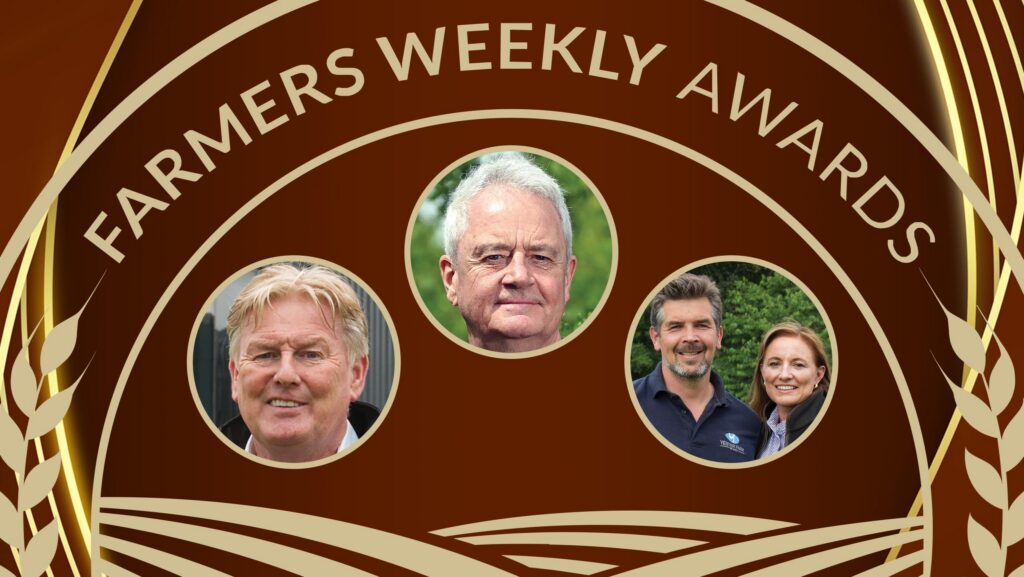 Wilson Strachan, Andrew Shackell, and Simon and Jackie McCreery © Angus Findlay and Richard Swingler
 Each of this year’s finalists have developed successful diversified enterprises that complement their existing farming operations and enhance their overall business.
See also: FW Awards 2026: Meet the finalists
Finalists
- Balmaud Distillery, Turriff, Aberdeenshire
- Penllyn Estate Farm, Cowbridge, Vale of Glamorgan
- Yester Farm Dairies, Haddington, East Lothian
The judges
Charlie Reeve – Former Farmers Weekly markets editor Charlie has a background on his family’s beef and sheep enterprise and farm shops in Warwickshire.
Kenneth and Moira Marshall – Last year’s winners the Marshall family have built up an extensive farm shop with restaurant and butchery, selling their own produce.
Ben Makowiecki – Independent judge and agriculture sustainability director at Lloyds Banking Group, Ben has a plethora of experience working with farming businesses looking to diversify.
Balmaud Distillery, Turriff, Aberdeenshire
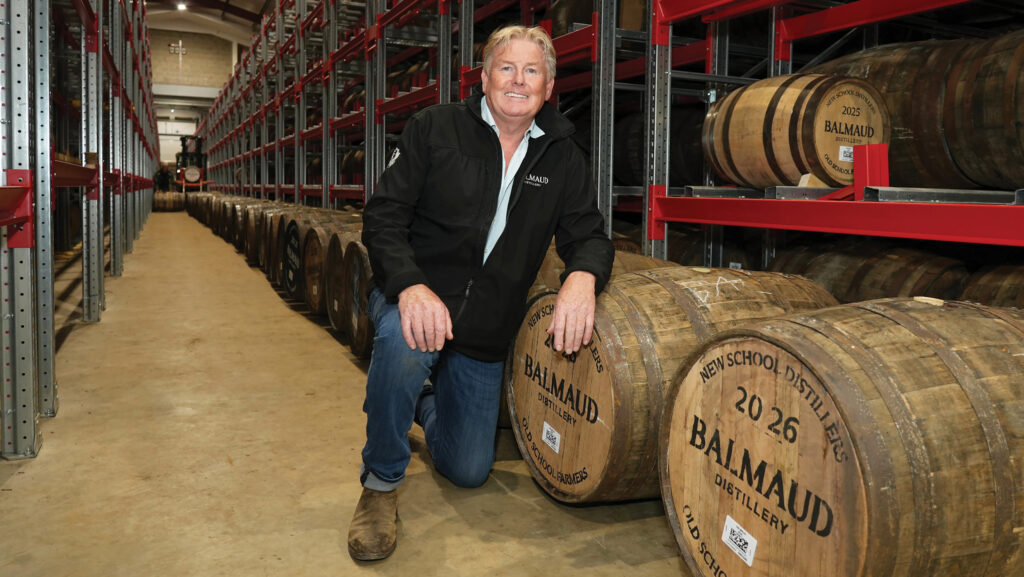
Wilson Strachan © Angus Findlay
The Strachan family has been farming near Turriff for three generations, growing malting barley for the Scottish whisky industry for more than 60 years.
However, the farming enterprise was often selling grain at relatively low margins, and had very little control over the selling price, despite crops being grown to a high quality.
This prompted Wilson Strachan and his family to create their own distillery on site, which has allowed the farming business to receive a more stable income for their cereals.
Wilson says: “Rather than leaving farming behind, the distillery has allowed us to diversify and innovate while staying true to our farming heritage.”
Balmaud Distillery is currently producing its own gin, which is sold online and through distributers supplying the hospitality sector.
Whisky production is under way, with spirit currently maturing in casks in a bonded warehouse on farm and some early private sales taking place.
Wilson’s daughter and managing director Shannon Green says producing their own barley gives the business complete traceability and ensures that the grain meets the standards needed for the distillery, from variety selection through to how it’s grown and harvested.
Two on-farm wind turbines generate electricity, which provides a steady income that helps to alleviate cashflow challenges within the wider business while the whisky is maturing. The turbines also keep energy costs down at the distillery.
Water is sourced using a borehole on farm, which enables a consistent end product to be produced.
The business is also considering installing an anaerobic digester close to the distillery to take waste products and produce a natural fertiliser for the farmland.
Meanwhile, a quarry business located on farm provides an additional revenue stream and has helped to keep build costs down.
Farming operations
The farm currently produces about 3,000t/year of malting barley, with roughly 1,200t used by the distillery.
Wilson says that at full production the distillery will be using close to 5,000t of malting barley a year.
With the total acreage available, the business will be able to produce all its spirits using only its own grain, making it a single-estate distillery.
Shannon says: “Controlling our barley production influences our carbon footprint by allowing us to manage how our barley is grown, optimising fertiliser use, improving the soil health and using a more sustainable practice that lowers overall emissions.”
The farm also grows wheat, oilseed rape and oats, and some ground is rented out to a neighbouring farmer to grow potatoes.
Future plans
The first whisky is due to be bottled and commercially available in 2028; a visitor centre is also being opened on farm to tap into a passing tourist trade.
Barley is currently malted off site, but the business plans to install its own on-site maltings in the coming year, subject to planning, which could allow the farm to not only save malting costs but also potentially malt barley for other local farms.
The numbers
- 1,750 – farm size in acres
- 1,200t – current barley requirement for distillery
- 5,000t – projected future barley requirement for distillery
- 3,000t – current barley production
- 2 wind turbines on farm
Farm facts
- Water used in distillery sourced from borehole on farm
- Electricity generated using on-farm wind turbines
- Long-standing quarry business on site as part of wider business portfolio
The judges liked
- Circular nature of business, with all barley grown on farm using single-estate model
- Huge potential for growth and expansion
- Excellent marketing and branding of products
What the judges say
The Strachan family have used their entrepreneurial mindset to find a way to add significant value to their barley, and in doing so have created a modern, state-of-the-art distillery that will challenge the best malt whiskies in Scotland.
Penllyn Estate Farm, Cowbridge, Vale of Glamorgan
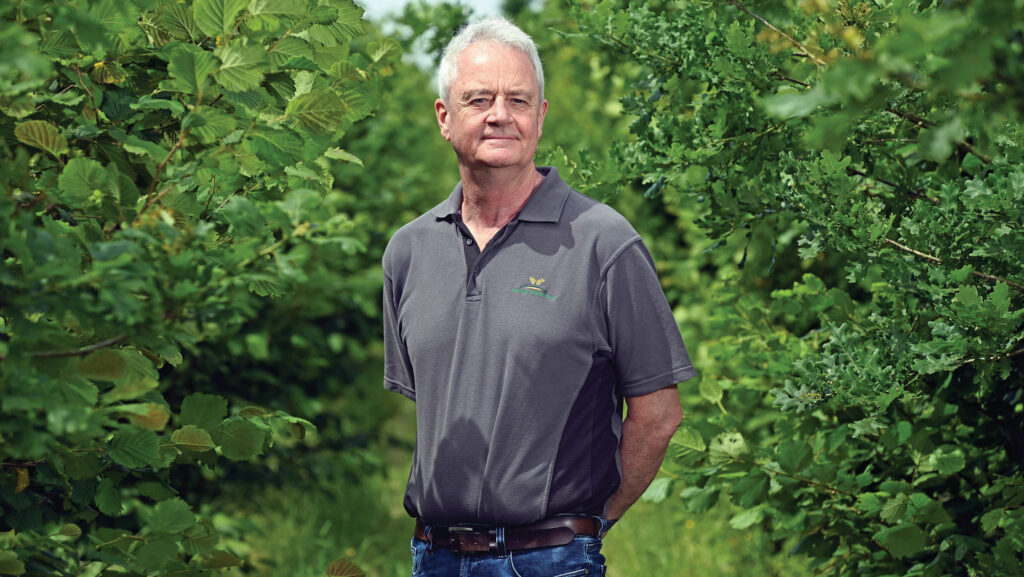
© Richard Swingler
Penllyn Estate Farm has grown from a traditional farming business into a diversified commercial estate, combining cereal production with breeding ewes, pigs, and poultry.
The Homfray family, together with estate manager Andrew Shackell, have developed a broad portfolio of enterprises to support farming operations, including a large farm shop, pick-your-own flowers and pumpkins, solar energy, holiday cabins and commercial units.
Forage Farm Shop includes a butchery and café selling meat produced on the farm, as well as its own rapeseed oil and apple juice.
As part of its planning conditions, the farm shop must stock at least 70% Welsh produce and a minimum of 40% must come from the estate itself.
The business holds a number of events throughout the year with more than 10,000 tickets sold for Christmas at Forage last year and 35,000 visitors attending the pumpkin event for Halloween.
Obsolete farm buildings have been converted into commercial units, helping to generate a stable long-term income.
Roughly 70 staff are employed across the farming and diversified enterprises.
Tom Homfray says they have worked hard to ensure every aspect of the farm and diversified businesses is commercially viable in its own right.
Renewable energy helps to keep costs low on farm and provide an additional income; 400kW of solar energy is produced by panels on farm buildings and farmland.
Heating is supplied through biomass and ground source systems.
Farming operations
Roughly 450ha of combinable crops are grown. Wheat, oilseed rape, spring barley, forage rye and maize all form part of the wider rotation.
The farm also runs a flock of 1,000 Romney and Aberdale breeding ewes, lambing outdoors in April.
About 450 lambs are sold each year through the farm shop, with the remainder sent to a local auction market.
Weaners are also bought in and reared indoors in sheds on deep straw and taken through to fattening. Six pigs a week are typically sold through the farm shop.
Andrew says the animal feed rations are formulated using the crops grown on farm.
The business previously had a large suckler herd, but has since shifted away from beef production. Instead, cattle are contract-reared for them by another farmer on a satellite farm on the estate.
Poultry forms a significant part of the business; there are 24,000 free-range laying hens and an additional 16,000 barn laying hens.
These produce approximately 13m eggs a year, with roughly 1m of those sold either in the shop or used for catering.
Future plans
Following several years of strong performance, the business is in the process of expanding the existing poultry enterprise with the addition of two new sheds next year, increasing capacity by a further 64,000 birds.
Tom says poultry is a sector that they are particularly enthusiastic about, and one they can scale up.
The hope is that the chickens will eventually be able to range beneath the solar panels in fields, offering a dual income from the same land.
Plans are also in place to open two padel courts on site and expand the butchery in the farm shop.
Roughly 2ha of oak and hazel trees have been planted with the intention of producing truffles in the next few years.
The numbers
- 850ha – farm size
- 70 employees
- 45 tenants across units on farm
- 40,000 laying hens
- 35,000 visitors for pumpkins
Farm facts
- The estate has invested heavily in solar and uses its own electricity to power the farm, commercial units and shop
- Sheep, beef and pork raised on the estate are sold through the farm shop
- Events such as Halloween and Christmas provide key revenue opportunities and help attract new customers
The judges liked
- Excellent commercial mindset with clear focus on profitability and cashflow
- Great synergy between enterprises, with cereals grown on farm feeding livestock which are then sold in the shop
- Strong environmental emphasis and use of sustainable farming practices
What the judges say
The team’s ability to utilise the skills they have and recognise those they don’t, means they are able to focus on the enterprises that most benefit this beautiful field-to-fork estate.
Yester Farm Dairies, Haddington, East Lothian
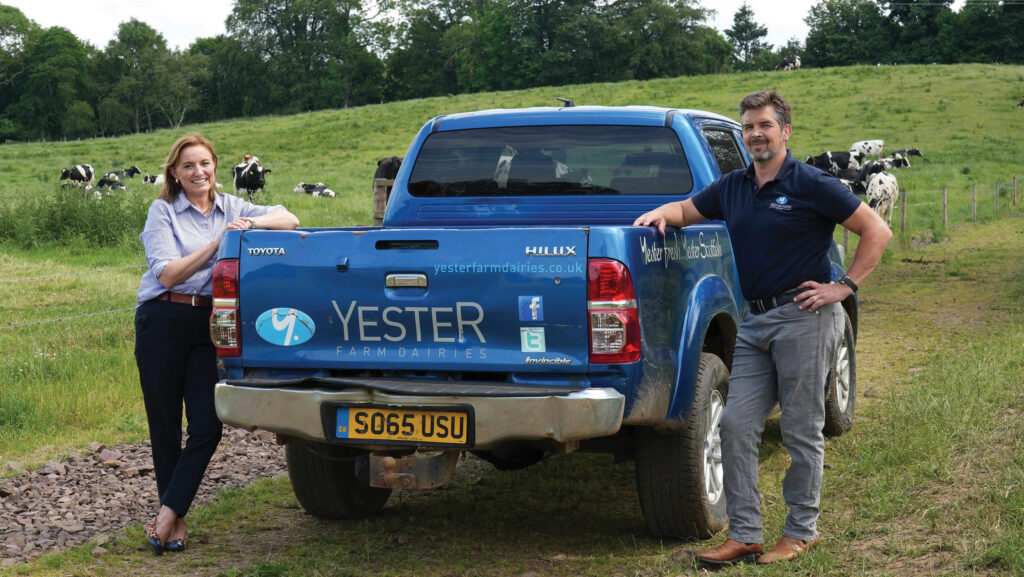
Simon and Jackie McCreery © Angus Findlay
Simon and Jackie McCreery first diversified their dairy enterprise in 2003 when they made the decision to begin selling their own branded milk at retail as well as direct to consumers.
Initially, processing and bottling were contracted out before a pasteurisation plant was built in 2007.
A soft cheese factory followed in 2015, created by converting an old farm building. By 2018, the pair had moved away from liquid milk sales to focus solely on producing soft cheese.
The business had been focused predominantly on the food service sector. However, it pivoted towards more retail products during the Covid-19 pandemic when demand from the hospitality and catering trade dried up.
Simon says: “Our biggest challenges such as Brexit and Covid ended up also being our greatest opportunities because they made us think differently and move in directions we might not otherwise have done.”
Yester Farm Dairies now produces a range of cottage cheese, soft cheese, mozzarella, Greek style yoghurts, crème fraîche, and sour cream.
Roughly 25t of product was being manufactured every week by the end of 2025, with products now stocked by several major UK retailers.
To reduce energy costs, a biomass boiler has been installed on site, alongside a nitrogen plant used as part of the production process.
Farming operations
The farm operates as a mixed dairy and arable enterprise with 350 cows on an all-year-round calving system. Cereals grown on farm are used to feed the cattle.
Dairy beef calves are reared and sold to provide an additional income stream, although the farm is also working to gradually build up its own replacement heifers.
All the milk produced is processed on farm and additional milk is now being bought in to satisfy demand.
Supply agreements with four local dairy farms have recently been secured to help meet demand.
“These are farms that were given notice [by other processors] and they were going to have nowhere else to go with their milk, so it has sort of worked for both of us.”
Simon says: “We will always be farmers who make cheese rather than the reverse.
“We wanted to smooth out milk price volatility and not be beholden to a large processor, which we have achieved.”
Future plans
The business is investing heavily in new farm infrastructure to aid its expansion and aims to grow its capacity to 100t/week of cottage cheese by the end of the year.
There is also a heavy focus on increasing presence in export markets such as Europe.
Simon says: “We are transitioning from being a fairly small on-farm processor to positioning ourselves as a significant player in the UK and European cottage cheese market, with capacity to grow even more.
“We have done this while still retaining control of our own businesses and maintaining the family farm as the core of everything we do.”
The construction of a whey processing plant is also under consideration as a longer-term ambition. It would allow the dairy to extract additional value out of the whey, which is currently a waste by-product of cheese production.
The numbers
- 155ha owned land
- 64ha additional rented land
- 350 cows
- 25t of product manufactured per week in late 2025
- 100t of product manufactured per week target by end of year
Farm facts
- Dairy cows on all-year-round calving system to help steady milk volumes for processing
- New milk contracts issued to four dairy enterprises to supply on-farm processor
- Range of products sold at retail and in food service sector
The judges liked
- Very impressive expansion and future growth plans
- Ability to pivot and diversify to suit changing market requirements
- Partnership with other dairy farms as buyer for their milk
What the judges say
The McCreery family have developed a fantastic range of dairy products using their own milk, and have the potential to support the Scottish dairy industry by working with other farm businesses.