Warehouse boom an opportunity for farmers in prime locations
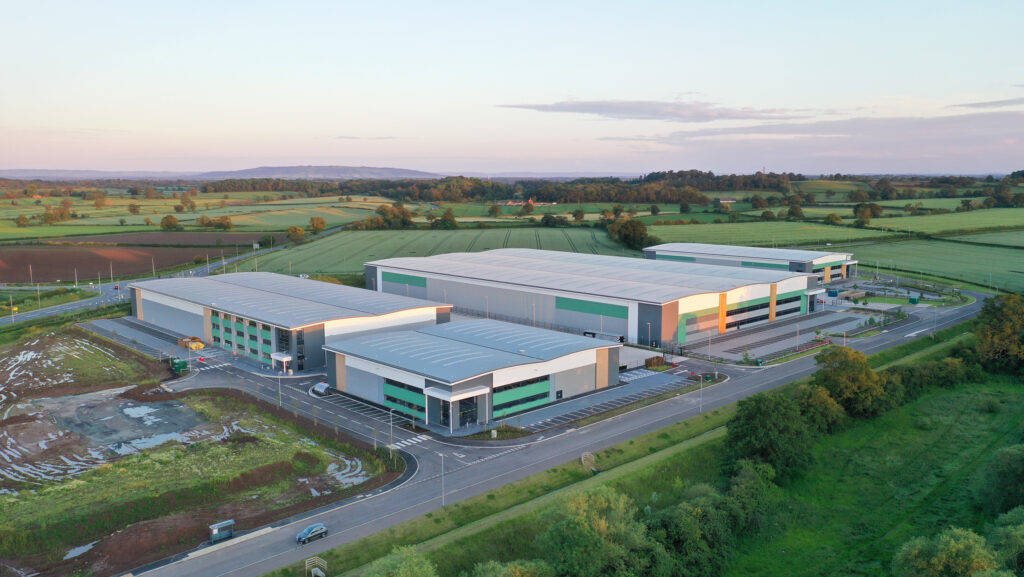 © Adobe Stock
 Changed shopping habits have seen online retail and distribution continue its rapid expansion.
The warehousing and logistics sector has grown by 29% between 2010 and 2025.
Well-positioned farmland with the potential for warehousing development can transform the balance sheet and secure the business for future generations.
For those with land in the right place, the UK’s logistical “sweet spot” is known as the Golden Triangle and is roughly defined by the M1, M6 and M42 motorways.
See also: Novel electric weeder works without chemicals or moving soil
What makes a good site for warehousing?
- Strategic location Close to major road infrastructure (motorways, trunk roads, key junctions)
- Connectivity Good access to the strategic road network (M25, A14, etc)
- People Proximity to big population centres (labour and customer base)
- Planning Outside heavily constrained areas (for example, green belt, AONB, flood zones)
- Scale Typically 20-plus acres in out-of-town locations to deliver ‘big box’ units (300,000sq ft-plus)
- Rail freight Increasingly important; removes HGVs from the road and helps decarbonise supply chains
Golden triangle
Covering areas around Coventry, Leicester, Northampton and Rugby, it offers access to major motorways and proximity to train freight terminals and cargo airports, explains Joe Skinner, development director of Tritax Big Box Developments.
“This spot enables HGV access to 90% of the UK population within four hours and has become an essential area for national distribution, e-commerce and high-density warehousing,” he points out.
“It explains why Northamptonshire has become the epicentre of activity in this sector.”
He points out that for every home built in the UK, there’s a requirement for 69sq ft of warehouse space to meet demand.
“With a government target of 300,000 new homes a year, that’s around 20.7m sq ft of new warehousing space needed every year.”
New-build warehousing is increasingly favoured by occupiers as it delivers operational efficiencies and corporate net-zero commitments, he adds.
“At the same time, the continued growth of ‘last mile’ logistics reflects consumer expectations, where next-day fulfilment is the benchmark.
“Farmland in Northamptonshire in the right location and with planning consent can be worth significantly more than its agricultural value, so protecting your assets makes sense at these figures and often allows the business to keep farming.”
Planning system
The process requires patience, professional advice and a willingness to engage with a complex planning system, says Sam Skinner of Ceres Property, who advise landowners on potential opportunities. “It’s a long-term game,” he says.
“It may take as long as 10 years to get the relevant permission. The structure of the deal is really important, especially where big sums of money are required to get a development started.”
The sites required for logistics development are large and complex, he stresses.
“Be aware that 10 acres is unlikely to be enough. And there are different ways of going ahead – the two main options are working jointly with a land promoter or working directly with a developer.”
In each scenario, the developer partner takes on the planning risk and associated costs, for a pre-agreed period, giving exclusivity to pursue planning permission.

© Adobe Stock
Logistics development will always attract scrutiny, continues Sam, who says that location, scale, design and community impact are key considerations.
“When it comes to planning, dismissing logistics ‘sheds’ as low-value or low-skilled operations doesn’t reflect the reality of how the sector is evolving.
“These are sophisticated, heavily automated buildings employing skilled people, often having office accommodation too.”
Sam adds that multifunctional landscapes are increasingly being seen in Northamptonshire as farming responds to the loss of support and wider society demands.
“Rural land use is adapting. Where it’s working well, it helps rural economies and supports modern lifestyles.”
What are the potential pitfalls?
- Lack of good advice – entering into agreements without legal and surveying input can lead to poor outcomes and long-term constraints.
- Missing safeguards – watch for agreements that are silent on key protections (for example, minimum land value).
- Over-inclusion of land – including too much land can sterilise future opportunities and reduce flexibility across the wider holding.
- Loss of control – limited landowner input into planning strategy, timing, and decision-making.
- Misaligned agreements – poorly structured deals can create a disconnect between landowner and promoter/developer objectives.
- Tax exposure – unexpected impacts on inheritance tax and capital gains tax; early specialist tax advice is essential.
- Valuation mechanisms – be cautious around how land value is determined and how any formula is drafted, there are often quirks that are developer friendly.
- Local impact – development can create tension within the community and affect long-standing relationships.
What to do if approached by a developer
Sam Skinner of Ceres Property notes that an unexpected approach from a developer can be overwhelming.
He urges farmers to take their time and appoint a strong team of advisers, both to secure a fair deal and avoid delays caused by poor advice.
“Get your professional costs covered. Developers will typically underwrite a landowner’s professional fees, whether that’s legal, tax or land value advice.
“And don’t be in a rush to sign anything – even informal documents can have long-term implications.”
Start by speaking to a surveyor experienced in strategic land, rather than a general land agent.
“Then you need to interrogate the proposal, as the first offer is rarely the best, before aiming to control the process in terms of timescales.”
As these agreements are typically long term, consideration should be given as to whether land needs to be carved out to retain flexibility during the promotion period, advises Sam.
Finally, recent changes to inheritance tax mean the land must be held in the most tax-efficient structure, as creating land value will have implications.
“Take early advice on this – it’s changing and it’s complicated, but it can be solved.”