Farmers question Agreena carbon scheme timelines
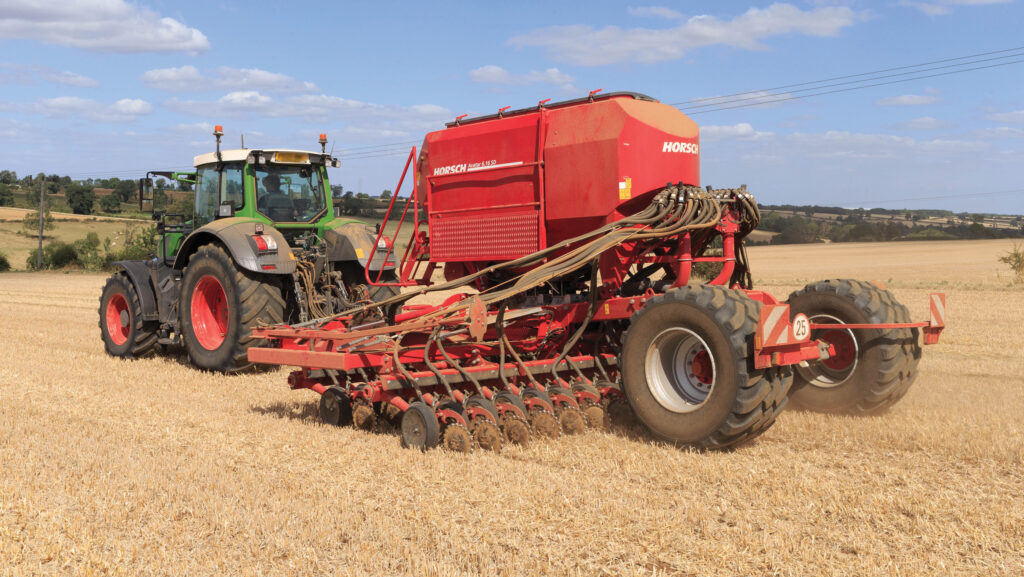 © Tim Scrivener
 UK farmers are reporting delays, uncertainty over payment timelines and lower-than-expected returns from Agreena’s soil carbon scheme, raising fresh questions about how readily such programmes deliver income in a weak voluntary carbon market.
The Danish company’s scheme allows growers to generate tradable soil carbon credits by adopting regenerative farming practices such as reduced cultivation and cover cropping.
See also: How funding fears are holding back carbon market
Under Agreena’s model, payments are made once credits are independently verified and sold on the voluntary carbon market – a process some farmers say has taken far longer than expected.
Leicestershire grower Max Chenery joined the AgreenaCarbon programme for the 2023 harvest after he says he was told his regenerative system could generate £17,000-£34,000 a year in carbon income.
More than two years later, he says he has yet to receive any payment.
Agreena said he had generated 272 Verra-verified credits for 2023, plus a further 30 credits in a “premium pool”, but said payment would depend on those credits being sold.
The company indicated a likely return of about £8,000 based on current market conditions.
“That’s significantly later than expected and far below the early projections discussed when we joined the scheme,” said Mr Chenery, who added that some fields had been excluded because they were too small for accurate satellite measurement.
Strong initial returns
Staffordshire farmer Clive Bailye said he was an early participant in the scheme and initially received strong returns. “It did what it said on the tin to start with,” he said. “I had two payments, best part of £30,000 each.”
However, no further payments had arrived in the past two years and communication had become difficult. “It does seem to be just fizzling out,” Mr Bailye said.
In Yorkshire, arable farmer Phil Rowbottom said he received an initial payment of about €3,500 (£3,030), but no further money has been forthcoming.
“I got paid the first year, but haven’t received further payments for at least two years,” he said. “I expected £6,000-£7,000.”
Mr Rowbottom said he had stopped submitting further farm data until payments were made.
Agreena response
Agreena said farmers who opt into resale agreements were paid once credits were sold, with growers retaining ownership of the credits throughout the process.
The company said that in September 2025 it became the first large-scale programme to issue soil carbon credits under the Verra VM0042 standard for the 2023 harvest year, and that hundreds of thousands of those credits had since been sold globally.
Simon Haldrup, chief executive of Agreena, said weaker carbon markets and lengthy external verification processes had contributed to delays.
“As the first organisation to implement an agricultural soil carbon project at scale globally, the audit timelines with external verification bodies were longer than initially anticipated,” he said.
“The current state of carbon markets is not as strong as the market predicted,” he added, with geopolitical uncertainty slowing climate investment and extending sales timelines.
Shortcomings
He also acknowledged shortcomings in communication with growers, saying: “We recognise that our historic communication has not met the standard farmers deserve, and we have been working hard to rectify this.”
Agreena said it had now introduced quarterly account updates, webinars and improved online tracking tools for growers.
The company added that more than €15m (£12.97m) had been paid to farmers to date.
Growers are expected to receive estimated 2024 credit numbers within the next few months, while data collection for the 2025 harvest year is ongoing.