

Advertiser content
How OSR breeding is shifting from peak yield to resilience
While oilseed rape has faced several challenging seasons, breeders have continued to back the crop’s long-term potential, with new variety development focused on reducing risk through stronger disease resistance, establishment vigour and more stable performance.
Cabbage stem flea beetle pressure, changing weather patterns and tighter input use have all tested grower confidence in oilseed rape, in what has traditionally been one of the most valuable break crops in UK arable rotations.
But for breeders, the crop’s potential has never disappeared, and there remains a need to develop varieties that do not simply perform in ideal conditions but can withstand the variation growers now face from season to season.
The future of OSR
According to Pei-Chen, OSR assistant breeder at KWS, oilseed rape continues to hold an important place in the rotation because few alternative break crops offer the same combination of market demand, rotational value and profitability.
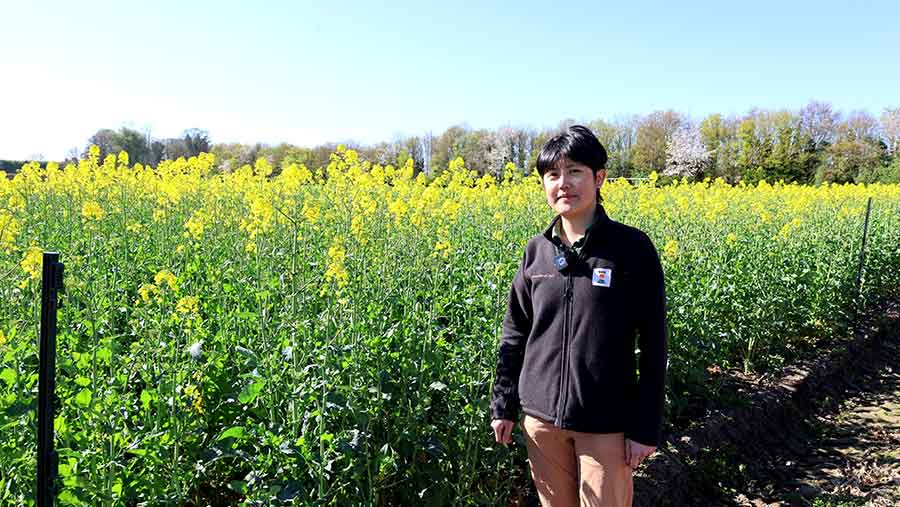
Pei-Chen, OSR assistant breeder at KWS © KWS UK LTD
“The past few years, people have been quite pessimistic about oilseed rape because of pest pressure,” she says. “But at the same time, it still seems to be the best break crop option out there.
“If it is managed well and is high-yielding, it can still be a profitable crop and beneficial for subsequent crops.
This season, lower cabbage stem flea beetle pressure in some areas and generally good establishment have helped lift the mood.
However, Pei-Chen is careful not to draw simple conclusions about why pest pressure appears to have eased.
“There are lots of open questions,” she says.
“It could be to do with lower acreage in recent years bringing pest populations down, or it could be to do with the weather. We can’t be entirely sure, but it’s allowed growers to gain confidence in reintroducing the crop into the rotation.”
That uncertainty is central to the direction of modern OSR breeding. While high yield remains a priority, the focus is increasingly on producing varieties that can minimise risk for growers.
For Pei-Chen, this starts with gross output, combining seed yield and oil content together rather than treating them in isolation.
“When we talk about yield, it is gross output, so it is a combination of seed yield and oil content,” she explains.
“Usually there is a negative trade-off. When we increase yield, we can have lower oil, so those two traits are looked at together.”
OSR resilience is a key breeding objective
“It is about performing well in all circumstances and minimising risk for growers,” she says. “Instead of looking only at maximum output, we are looking at minimal risk.”
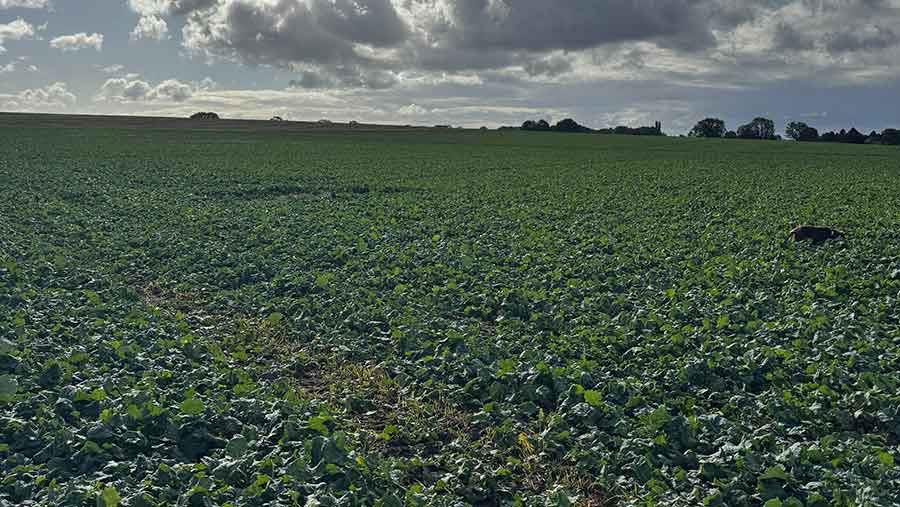
To identify that stability, Pei-Chen says KWS tests varieties across different locations, years and countries, exposing material to as much environmental variation as possible.
The varieties that continue to stand out across those trials are the ones most likely to offer the consistency growers need.
© KWS UK LTD
Pei-Chen says phoma, light leaf spot, Verticillium and sclerotinia are all important breeding targets, particularly as growers look to manage crops with greater attention to input efficiency.
“With climate change and hot weather, some diseases are becoming more severe. Having varietal resistance, especially for fungal diseases, is very important.
“We look for different sources of resistant genes and try to diversify within our portfolio. There is a mix of different genes and different combinations of genes for the same disease, and that helps maintain resistance.”
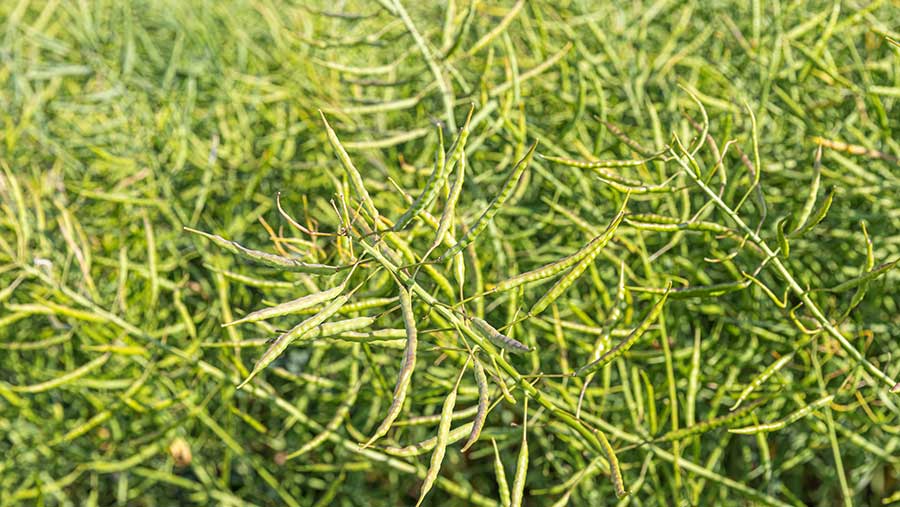
Verticillium is one area where breeding priorities have sharpened. Pei-Chen says older material showed how damaging the disease could be in high-pressure years, prompting greater focus on tolerance and resistance.
© KWS UK LTD
“For Verticillium, 10 years ago there were varieties that almost died in a heavy Verticillium year,” she says. “That is when we realised we needed to breed in resistance or tolerance.”
Establishment remains another decisive factor, particularly where growers are trying to balance soil moisture, drilling date and avoiding the cabbage stem flea beetle migration window.
Pei-Chen stresses that variety choice is only part of the equation.
“Strong establishment is mostly influenced by the drilling window,” she says. “If drilled in the right conditions, growers should have confidence that their varieties will establish well.”
Where breeding can further help is through stronger autumn vigour, giving growers more flexibility if drilling is delayed while waiting for rain or avoiding peak pest movement.
“If growers have been waiting for rain, they can drill a bit later and the variety can still catch up with stronger autumn vigour,” she says. “The canopy will still be quite dense before winter.”
Varieties such as Hinsta and KWS Domingos reflect this broader direction of travel.
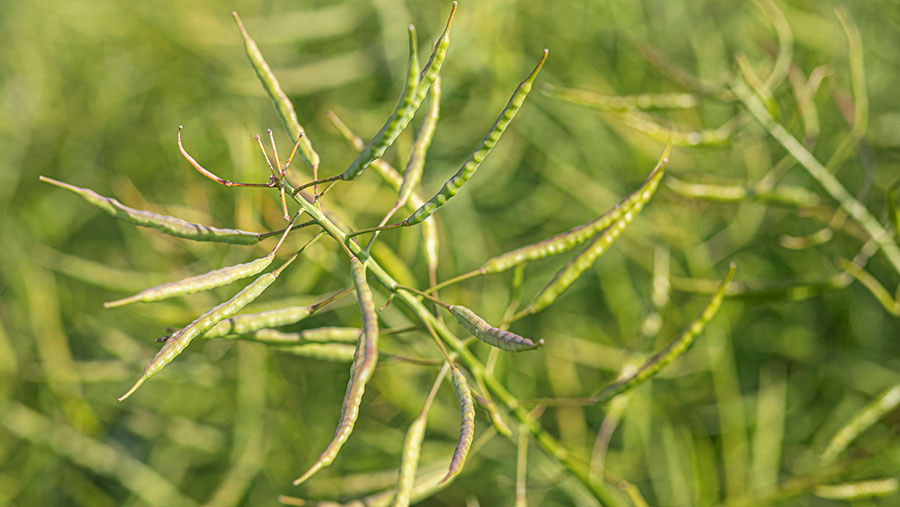
Pei-Chen describes Hinsta as a stable, well-rounded variety with good vigour, while KWS Domingos brings a stronger disease resistance package and strong yield stability.
© KWS UK LTD
“KWS Domingos is a newer variety with excellent disease resistance,” she says. “It has performed well not just in the UK, but across Europe in internal, external and official trials, which clearly demonstrates how robust and resilient it is.”
Hybrid OSR breeding
Hybrid breeding is helping bring these traits together more efficiently, using heterosis to support yield while enabling breeders to stack multiple resistances and traits such as pod shatter resistance into the same variety.
Looking further ahead, Pei-Chen says cabbage stem flea beetle resistance remains a key area of pre-breeding work, although it is not yet a commercial reality.
© KWS UK LTD
“When we look to the future and how to secure oilseed rape production, I believe this will be key.,” she says.
For now, her message to growers is positive. OSR carries risk like any crop, but with the right drilling window, stronger genetics and a clear market already in place, it remains a crop worth serious consideration.
Provided by
KWS is one of the world's leading plant breeding companies combining 165 years of heritage with leading edge technology and a commitment to develop and deliver varieties with the best yields, disease resistance, physical traits and resistance to abiotic stress.