How planning reforms help farms and rural business
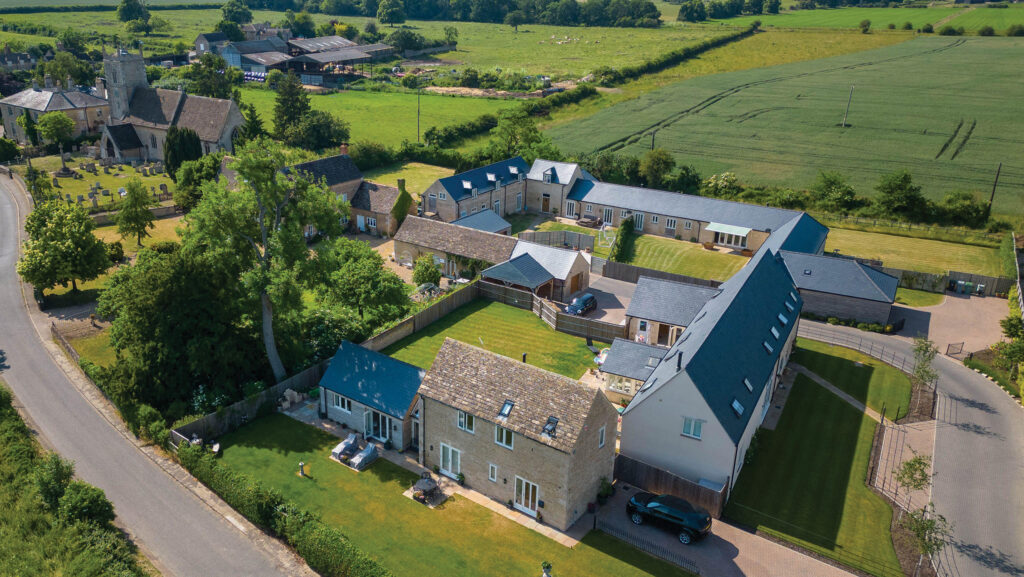 More edge of village sites should be approved under the new NPPF © Alamy Stock Photo
 Hailed as the biggest planning reform in a generation, the new National Planning Policy Framework (NPPF) is more supportive of development by farmers and landowners both in terms of their own businesses and for small rural housing developments.
It also brings a more streamlined, rules-based system which should give rise to a more predictable process, with less variation between councils.
The NPPF is essentially the planning rulebook, advising local planning authorities (LPAs) and developers on what they can and cannot do when planning developments.
Supporting farm business growth
The new framework sets out that where there are benefits for domestic food production, animal welfare and the environment this will carry substantial weight in applications aimed at modernising and supporting the growth of agricultural businesses, says Ros Trotman, a partner in law firm Thrings’ planning and environment team.
See also: What planning system overhaul means for farmers
“This is a significantly stronger starting point for applications that include the likes of livestock buildings, grain stores and other buildings and infrastructure helping to update farms,” she says.
LPAs have to make local plans which are their vision for future development in their area and the starting point for evaluating all planning applications. They dictate where new homes, businesses, and infrastructure will be built, at the same time protecting certain environments and green spaces.
A new requirement means these have to be produced within 30 months and they must be consistent with the NPPF, which directs LPAs to allocate sites to support the expansion or modernisation of businesses of all sizes to support economic growth and resilience.
Approach to best land
The quality of land holds importance in planning decisions, so applications on Grade 1, 2 and 3a land, which is defined as the best and most versatile (BMV) agricultural land will be considered on a case-by-case basis.
The new NPPF says: “To contribute positively to the natural environment, and support nature’s recovery, development proposals should take into account the quality of agricultural land (including that classified as BMV, and its grade), and if significant development of agricultural land is necessary, use areas of poorer quality land where possible.”
Ros points out that with reference to plan-making the NPPF makes specific reference to leisure and tourism, agriculture and other rural and land-based businesses which may be of particular importance in certain areas. However, she advises that there is plenty of opportunity to submit applications for sites not included in a local plan, as and when landowners are ready to do so.
A planning ‘yes’ is now more likely
“It’s a whole new world, it’s worth looking at everything again as there are a lot more opportunities under this new NPPF and there is a strong drive for housing, including on smaller sites,” says Ros.
While the new NPPF is more helpful to the rural sector than previous versions, applications still need good evidence, sound design and/or careful engagement with the LPA, whatever the project, she advises.
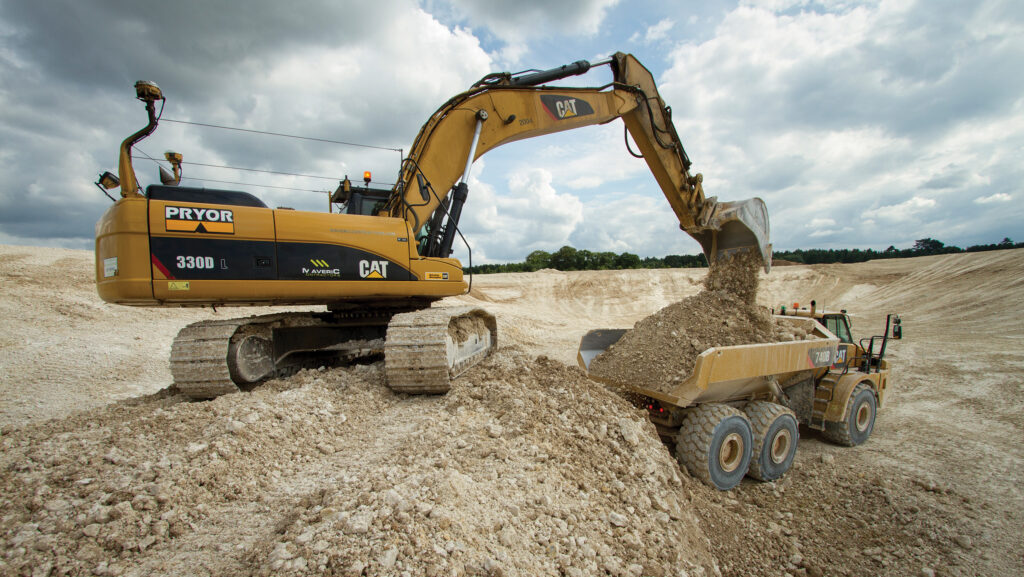
Applications for farm reservoirs should be more straightforward © GNP
The framework sets out that developments inside settlements should be approved provided their benefits are not substantially outweighed by adverse effects. The same applies outside settlements where a site falls within a set of categories in the NPPF.
Overall, farm diversification projects now have clearer and stronger national backing aimed at supporting the long-term viability of agricultural and land-based businesses, says Ros.
Key categories for positive decisions
- Development for agriculture, horticulture and forestry, outdoor sport and recreation, allotments, cemeteries and burial grounds, mineral extraction and processing, engineering operations and infrastructure (including for transport, energy, water and telecommunications), roadside facilities, national defence and security, or those which are solely for nature conservation, restoration and/or enhancement.
- Development for rural businesses and services, including tourism, where a location outside settlements is shown to be necessary.
- The reuse, extension, alteration or replacement of an existing building, provided that the existing building is of permanent and substantial construction and is lawful in planning terms. However, such projects are subject to size limits.
- The redevelopment of brownfield sites – though agricultural sites do not generally qualify as brownfield.
- Individual new homes in the countryside – those for rural workers or farming family members will still need to demonstrate essential need, which can incorporate succession planning. Other categories relate to heritage assets, reusing redundant buildings and enhancing the setting, subdivision of an existing dwelling or homes of exceptional quality.
- More agricultural development in Green Belt.
The new framework opens up a wider range for landowners in the Green Belt for development which is for agriculture, horticulture and forestry, or which is solely for nature conservation, restoration and/or enhancement.
“In practice this means farmers can use the new greenbelt exception for other forms of agricultural development, rather than being confined to ‘buildings’, as it has been in the past,” says Ros.
While there is no list setting out what might be included, Ros suggests that examples could be engineering operations, land improvements, farming infrastructure such as hardstanding and other structures which are not buildings, for example polytunnels, silos and grain bins, slurry lagoons and so on.
“This is useful if there are no permitted development rights available to use for the planned development,” she says.
Water infrastructure
Agricultural applications to increase the capacity and security of water supply also now carry substantial weight, with less work involved in preparing these as there is no longer a requirement to demonstrate an overall need for the infrastructure.
Residential development and housing market
The NPPF means smaller schemes should face more proportionate information requirements, says Charlie de Bono, of Livedin, which secures planning for self-build sites.
More types of rural land now have a route to development, whether self-build or otherwise, he says.
This includes land beside villages, gaps amongst rural houses, existing buildings, brownfield land and some Green Belt sites.
“Land previously dismissed may now be worth checking again and more small sites may now have potential. Being outside the village boundary is no longer necessarily a ‘no’”.
Smaller schemes
Smaller schemes should also face more proportionate information requirements.
An example of one of the most important new small-site opportunities for farmers and rural landowners is a paddock at the end of the village, says Charlie.
“The new policy creates a route where there is an evidenced unmet housing need (eg where there is an evidenced housing shortfall, including self-build need or lack of a five-year housing land supply), the land is physically well-related to the village, and the number of homes is small enough for existing or proposed infrastructure to cope with.
“For a farmer, the obvious candidate is therefore not an isolated field in open countryside. It is the half-acre or acre that already feels connected to the village perhaps beside the last row of houses, opposite existing development, or tucked against the built edge.”
A further example site is a gap in a roadside group of houses, with the NPPF now expressly providing for limited infilling within groups of houses.
“The strongest cases are modest gaps that would fill or complete the existing group, rather than extending a new finger of housing into farmland,” suggests Charlie.
The NPPF also extends the area around a qualifying station that can now have a new route for housing, even if outside a village and in the Green Belt.
Self-build sites may offer landowner opportunities – where there is an evidenced shortage of self-build plots, providing them can attract substantial weight to an application, says Charlie. “There is huge demand for self-build plots, but not enough suitable land coming forward.
“It can also improve the value of a small site. There is strong demand for individual building plots. A site of around one acre might accommodate two to five plots, with serviced plots potentially worth £200,000-£300,000 each in some parts of the country, depending heavily on location.”
Larger-scale developments
The NPPF includes a host of policy support designed to fast-track new homes at scale across the country, particularly around stations, whether inside or outside settlements or in the Green Belt, says Ros.
At property firm LRG, group land and development director Ian Barnett says that while the government’s agenda is very pro-development, with the NPPF the latest demonstration of this, the planning system is probably the least of developers’ and housebuilders’ concerns just now.
“It’s more about sales, viability and finance,” he says. “There are some substantial developments already built with less than 10% of the stock reserved and things are taking longer to sell.
“The NPPF is great for relaxing the shackles but there’s no momentum. It feels like a big change – the market is always cyclical but now there are so many moving parts, it’s very different from 10 years ago.”