Clarkson’s Farm star urges growers to focus on margins
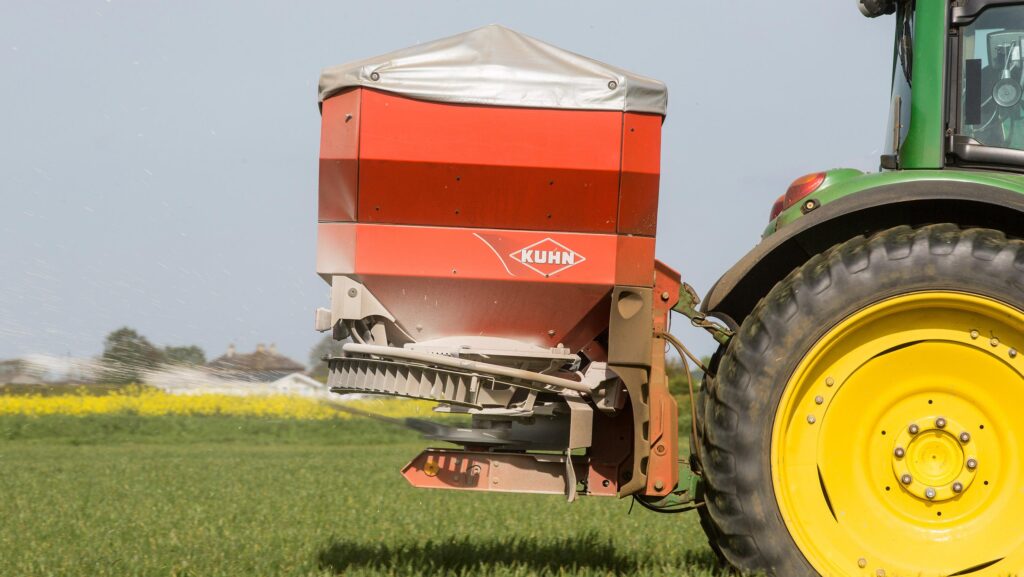 Applying nitrogen to wheat © Tim Scrivener
 Arable farmers may need to rethink cropping plans and prioritise margin over output as fertiliser and fuel costs come under renewed pressure, a leading farm adviser has warned.
Speaking to Farmers Weekly Podcast co-host Louise Impey at a Cereals 2026 crop plot preview event at Diddly Squat Farm, land agent “Cheerful” Charlie Ireland warned ongoing global instability amid the Middle East conflict could quickly feed into higher input prices.
See also: Cereals to showcase agronomy on Cotswold brash soils
He said the situation also raised the risk of potential supply constraints for key inputs.
“If 20% of the world’s liquefied gas comes out through the Strait of Hormuz, will that have an impact on urea, ammonia, nitrogen production? It must have,” he said.
“Will that put pressure on prices? Absolutely, they’re going to go up. Will it mean there’s supply problems? Potentially.”
Mr Ireland warned that reliance on imports left UK farmers exposed, particularly without a strong domestic fertiliser industry.
Against that backdrop, he said growers should take a hard look at crop profitability.
“Farmers have to be really honest about their net margin capabilities,” he said.
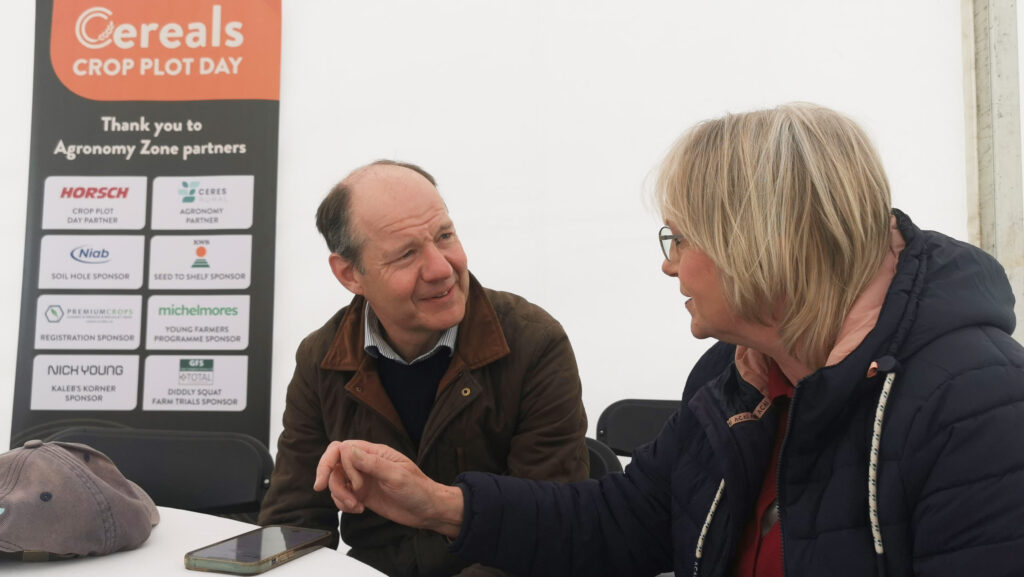
Charlie Ireland spoke to FW Podcast host Louise Impey © MAG/Philip Case
“Focus on those that give them the best margin with the least risk and the least volatility.”
He suggested some farm businesses in England may find better returns from scheme options under Defra’s Sustainable Farming Incentive than from cropping, particularly given the loss of direct support.
The scheme is due to reopen for applications in June for smaller farmers and those without existing agreements.
“We have no cushion from BPS [Basic Payment Scheme], we have volatility in commodity prices and we have this growing inflation within our crop production,” he said, describing a “three-pronged pressure” on farm businesses.
Fertiliser costs remain a major concern, with urea prices putting nitrogen applications at more than £300/ha in some cases – equivalent to roughly 2t/ha of wheat yield.
“Wheat doesn’t grow very well without nitrogen, but on other crops you have to be really confident about the ability of your crop to yield,” he said.
Buying strategies
On fertiliser buying strategies for next season, Mr Ireland urged a cautious approach, suggesting farmers secure some cover if they are committed to cropping.
“If you’re definitely going to farm, maybe getting some coverage is one part of your business management.”
Despite current low grain prices, Mr Ireland noted that global supply forecasts remain strong, limiting upside in the short term.
However, improved crop conditions this season offered some optimism.
“The yield potential is a lot better – and actually you’ve got to push that yield,” he said.
Watch the video below of Charlie Ireland, Jeremy Clarkson and Kaleb Cooper previewing the Cereals 2026 event at Diddly Squat Farm.