Early-cut barley meets with lacklustre demand
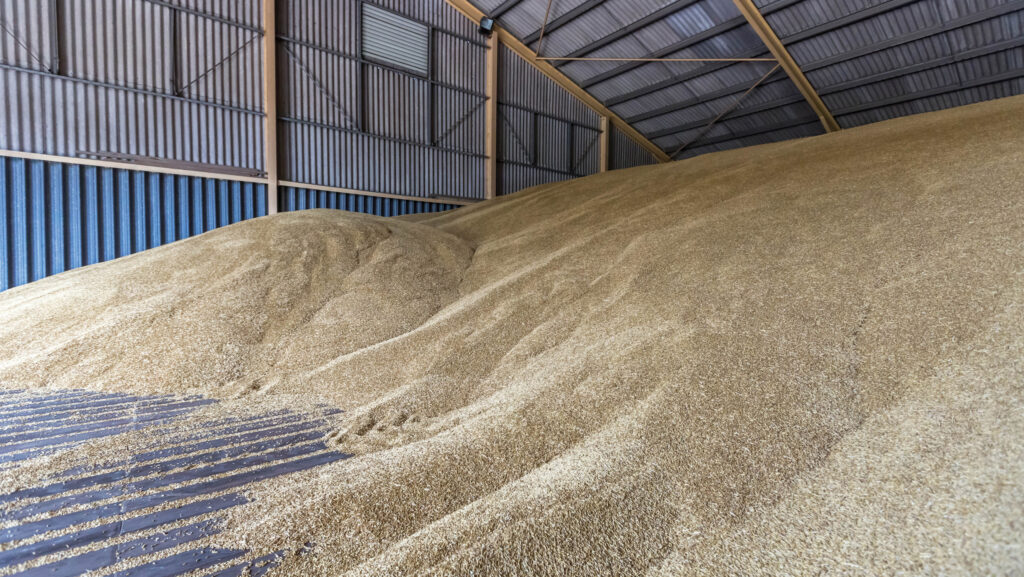 © Tim Scrivener
 First cuts of the 2026 barley harvest are coming up against weak demand and depressed prices, though prospects for the rest of the season will very much depend on quality and yields.
According to first reports, yields are very mixed, depending on soil type, with generally good quality for feed, but malting barley is suffering.
“It’s coming in very dry – around 12%,” said Rob Hess, senior trader at Wynnstay. “The specific weights are good – we’ve seen 70kg/hl. It’s a nice, bold sample.”
See also: Farmer Focus – Crops dry quickly but grains look plump
However, demand for feed barley is slow, thanks in part to strong competition from the Balkans and the Black Sea, says feed market specialist Jamie Day. Prices have not been helped by the strength of sterling against the euro.
Currently, new crop feed barley ranges from £140-150/t ex-farm, with November quoted at £158/t-£168/t depending on location. Malting barley is commanding just a small premium of about £5/t.
Malting barley is also struggling to hit specification, suggests Andrew Dewing, chief executive at Dewing Grain. “With low retention rates, and grains being too thin, many crops have been downgraded to feed,” he said.
“In areas that have had rain, there has been better quality, for example in Lincolnshire – though haulage costs will need to be factored in.”
Bottleneck
With large quantities of malting barley being downgraded, Mr Dewing predicts a potential bottleneck with feed barley supply.
“The ongoing heat may well bring [spring barley] harvest forward as things are progressing quickly,” he added. “If spring crops fail, this could mean a firmer price.
“There will come a moment when maltsters realise they haven’t bought enough to see them through, and that is likely to increase prices.”
The dynamic could therefore change when spring barley results start to come in. “If farmers have some barley in store, in good condition, there will be ready buyers,” Mr Dewing predicted.
Distilling demand slackens
The area of barley grown has reduced over recent years due to increased costs of production and low market prices, coupled with reduced demand – particularly for the Scottish distilling industry.
Out of the 1.5m tonnes of spring barley available this year, only a sixth will be required by distillers. “It’s a crop which is very much going out of favour, so I wouldn’t be surprised if the area falls again next year,” said Andrew Buck, managing director at CMG.