Government questioned on grain imports to Ensus plant
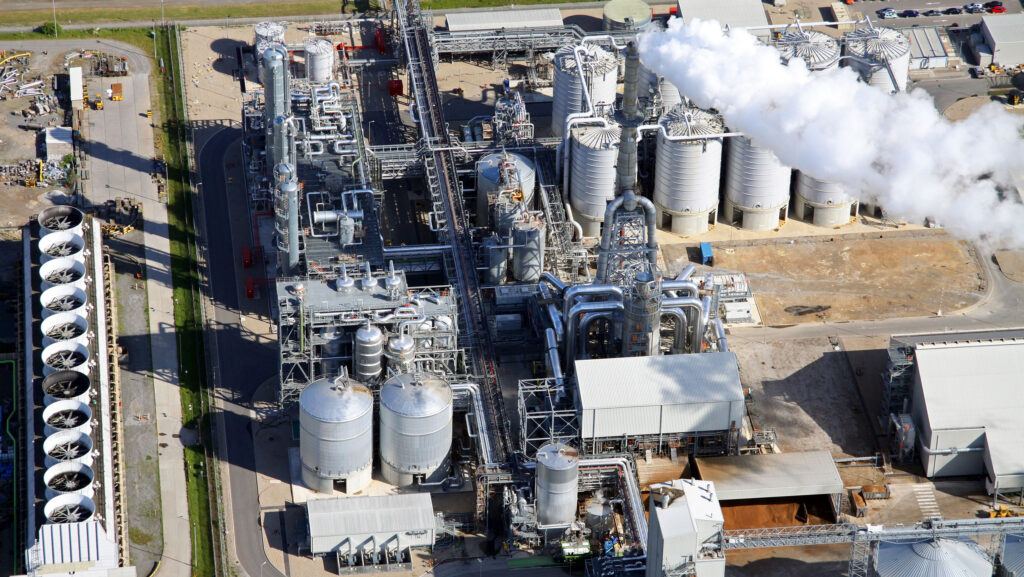 Ensus UK chemical works in Teesside © Alamy/APS
 Procurement of wheat and maize for the Ensus UK bioethanol plant in Teesside has come under scrutiny, after reports that some of the grain was being imported from France.
Questions have been put to government following its decision to award a £100m support package to Ensus to resume bioethanol production earlier this year.
Ensus is a major domestic source of carbon dioxide, a by-product of ethanol production, and provides a significant market for feed wheat in the North East.
See also: Ensus bioethanol plant to reopen with £100m funding deal
However, the government has not publicly set any conditions requiring the plant to use British-grown grain.
Conservative peer Lord Fuller has submitted a written question to the Department for Business and Trade (DBT), asking “What steps they are taking to ensure that British grain is used to produce bioethanol at the Ensus plant on Teesside?”
DBT is due to issue a formal response by 29 May.
Farmers Weekly asked Ensus for clarification on whether it had been using imported wheat and maize since reopening.
A spokesperson for Ensus said: “Since the plant restarted it has continued to operate well and we continue to buy grain, the vast majority of which is from the UK.”
The NFU has expressed disappointment that the government’s investment in Ensus was not made conditional on the use of British wheat.
NFU Combinable Crops Board chairman Jamie Burrows said: “We recognise that the decision to restart Ensus means greater stability for food and drink businesses that rely on carbon dioxide supplies for packaging and processing, amid rising uncertainty linked to the conflict in the Middle East.
“However, as we said when the plant reopened, it is hugely disappointing that the £100m investment from government was not tied to a requirement for Ensus to use British wheat.
“Ensus outlined that this deal would be supportive of UK agriculture – these words now need to be translated into actions. At a time when confidence across the arable sector remains under significant pressure, farmers must see every opportunity taken to support and strengthen our domestic food production system.
“The NFU continues to urge government to commit to supporting a viable bioethanol industry in the UK, which is not only beneficial for carbon dioxide supplies but also for the production of animal feed. As shown by the war in Ukraine and now by the conflict in the Middle East, it is vital we build resilience into our agricultural sector so it can better withstand global shocks.
“We welcome Lord Fuller’s written question and look forward to seeing the government’s response.”