UK farmers face double blow on grain supplies and yields
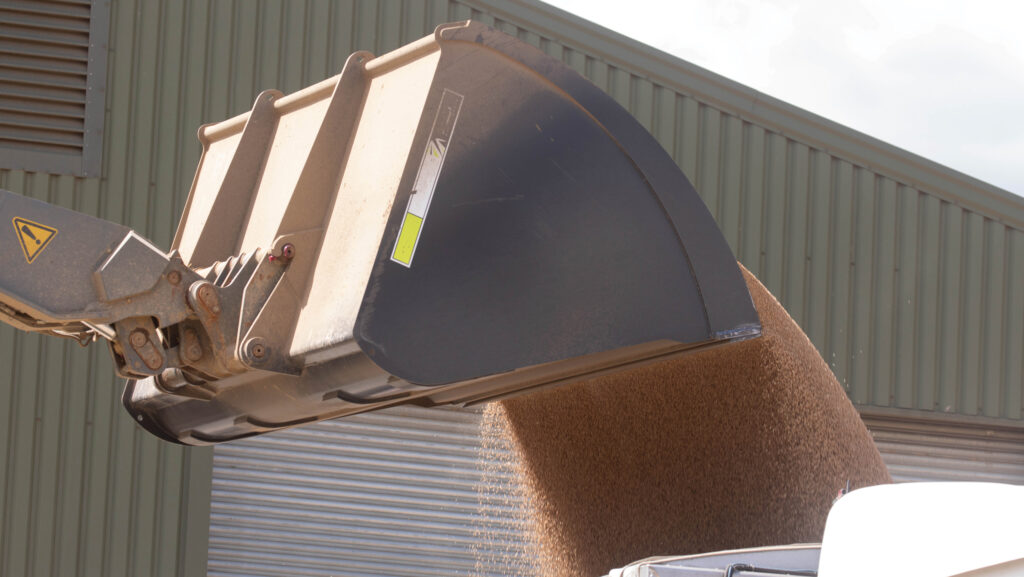 © Tim Scrivener
 Dire domestic cereal yields combined with ongoing disruption to grain supply from major exporting nations is set to deliver a double blow to UK farmers and cast further doubt on national food security.
Global grain prices have risen for the second week in succession after exports from Ukraine and Russia were halted by attacks on Black Sea grain infrastructure.
While this is good news for wheat growers like Clive Bailye, who farms near Lichfield, Staffordshire, the upward movement must increase significantly to make up for the shortfall in his harvest.
See also: Hay and straw harvest better than expected despite drought
Depending on soil type and other factors, his yield has been down by 25-35%.
“To be in the same position I was in when prices were lower but yields were average, the price must rise 25-35%, but what we have had is maybe a 5-10% rise so there is quite a way to go.
“I did some calculations the other day and to make up for what we have lost in terms of yield we need to see £250/t-type prices, not the £204/t they were at yesterday.”
Official production figures paint a bleak picture but Mr Bailye reckons the true situation is much worse.
“From my conversations with farmers, it is pretty dire, far more worrying that the official stats suggest.
“It is going to be a bleak old winter for a lot of people.”
That includes the UK’s livestock, poultry and dairy farmers amid uncertainty on feed wheat availability and prices.
Worsening situation
Grain trader Andrey Sizov, of SovEcon, an agricultural markets research firm based in Moscow, says the situation is deteriorating daily.
“The position in the Strait of Hormuz is worse for wheat than for the global crude oil market, and the longer this drags on, the bigger the consequences will be.
“All major Russian terminals in the Black Sea are shut down and so is Odessa, the main terminal for Ukrainian exports.”
Global supply of grain, which is mainly wheat, will be down by between 3-4m tonnes a month as a direct consequence, Mr Sizov calculates.
“We are likely to see higher wheat prices and that includes feed wheat.”
The European and UK heatwaves have resulted in a maize price that is substantially higher than wheat, he added.
“This implies that consumption of feed wheat will be higher than usual because of those poor maize harvests.”
For feed manufacturers, the challenge is uncertainty rather than availability.
Market volatility
Current market volatility is influencing sourcing decisions, while variations in crop quality are reflected in ration formulations and raw material selection.
Alk Brand, chief executive of feed manufacturer Wynnstay, says feed prices remain closely linked to movements in global grain markets.
Many farmers, he says, are reluctant to commit to grain sales while buyers are cautious about taking long positions within a volatile market.
But, with the autumn drilling period on the horizon and the need to fund seed and fertiliser purchases for next season, he added: “We would encourage farmers to consider current selling opportunities and take a measured approach to marketing.”