Drought means tough autumn choices for organic dairy herds
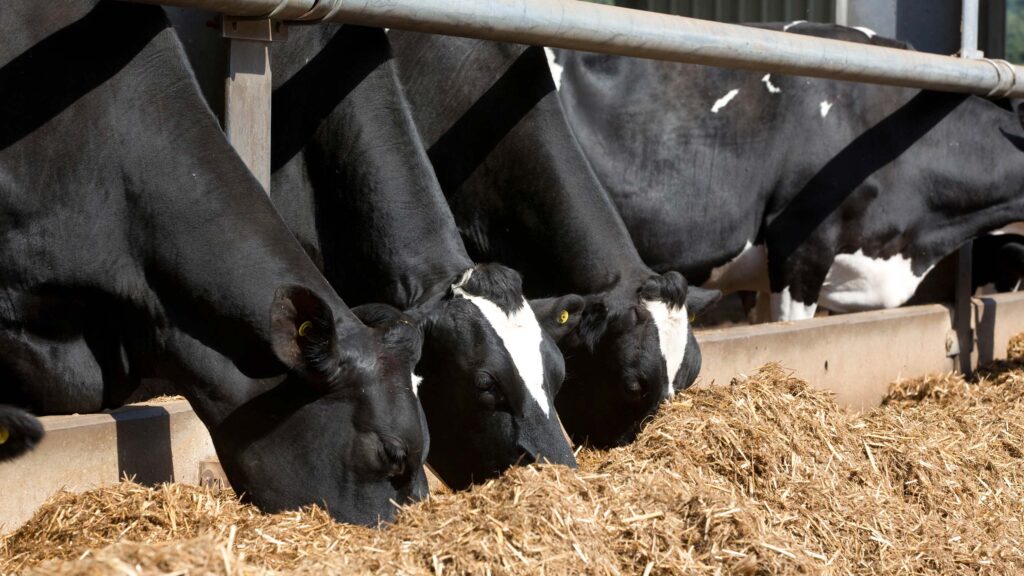 © Tim Scrivener
 Following a tough forage year in 2025, most organic producers have no surplus.
There are big regional differences in the degree of challenge, with the Midlands particularly badly affected, say advisers.
While the availability of bought-in organic feed and ingredients is good, at least 60% of dry matter intake must come from forage and there are limited options for sourcing this.
A recent drought impact survey by Kite Consulting and the Daykin Partnership received responses representing about 38% of the UK’s registered organic dairy herd, an estimated 17,385 cows.
See also: How UK milk producers score on efficiency but lose on profit
Severe impact
Eighty-one percent rated the forage availability impact significant or severe, while just over half said the overall impact on their farm was severe.
Only 5% said they were in a comfortable or near comfortable forage stocks position.
The vast majority are hoping for late summer and autumn grass, with 84% saying the August to October growing window was critical or very important.
More than 80% say an organic derogation may be needed this winter, temporarily relaxing certification feed standards.
Organic Dairy Drought Impact Survey
- 78% report grass growth more than 30% below normal
- 81% rate forage availability impact significant or severe
- 73% rate farm profitability impact significant or severe
- 97% have no confidence they already hold enough forage
- 84% rate August to October growing window as critical or very important
- 81% say an organic derogation may be needed this winter
- 86% are culling cows earlier than planned
Farms are absorbing the pressure financially and operationally, says Kite Consulting, with the impact not yet showing up in animal condition or in the milk.
The single most widely used countermeasure is to cull cows earlier than planned, with 86% of respondents doing so, while 65% are extending grazing and 62% buying in additional forage. Close to a fifth are cutting youngstock numbers.
“We are starting to hear that people are culling to manage forage stock.
“But it’s not clear whether that is exceptional culling or simply drying off cows not in-calf a couple of months earlier than would normally be the case in spring-calving herds,” says Becki Reay, Kite Consulting’s head of corporate.
“Organic heifers are simply not there to replace animals culled above normal rates, certainly not in the next couple of years, so it is crucial that organic dairy has the confidence to invest and to mitigate against these drought impacts,” she says.
Organic dairy markets
Farmgate prices for organic milk have remained relatively stable over the past 12 months, widening the organic:conventional premium gap.
Demand for organic milk and dairy products is growing, with supply and demand in overall balance, although the more seasonal nature of organic production can present some challenges, says Becki.
Feed and forage strategy
There are options to buy in forage stocks but they are limited, says consultant Rob Daykin of the Daykin Partnership.
Rob works with farmers from Cornwall to the north of Scotland, advising on feed markets and sourcing feed for organic producers.
Availability of non-forage feed and ingredients is generally good, though not as good as in 2025, says Rob.
“We had a drought last year but we had record autumn grass growth and quality, and feed prices were probably at their lowest for five years.
“It was the first time for quite a lot of years that cows could be fed nutritionally rather than to budget.”
The milk-to-feed price ratio for most organic producers is currently in the 1.13-1.14 range, which is the lowest it has been for about 14 months, says Rob.
However, buying in more feed is still affordable, he says, as long as the 60% dry matter from forage threshold isn’t breached.
Organic feed ingredients, mainly lucerne, maize and other grains, are imported from Ukraine and other Black Sea countries, as well as from Europe.
Organic protein in the form of soya and rapemeal comes mainly from China, with some from India and Europe, but the European material tends to be more expensive.
“Organic feed is a small market and vulnerable at any time to market movements in other parts of the world. We’re certainly higher on raw material prices than a year ago,” says Rob.
“Soya has touched £700/t delivered to farm compared with probably in the early £600s/t a year ago and there were times when it dropped below £600/t, but we’re not in a disastrous place now.
“If you need to secure raw materials, whether to stretch forage stocks, or for your winter feeding strategy, it really needs to be looked at now rather than getting to January, where you’ve got nothing.
“Grass will come but don’t rely on late grazing and cows being out until November – do the budget on real numbers.”
Lucerne and palm kernels are the two main options for extending fibre in organic rations, says Rob.
Organic compound feeds are costing £10-£20/t more than a year ago, he says, putting an 18% protein ration typically between £485 and just under £500/t depending on load size and location.
A year or more ago, some producers fixed their price at last winter’s rate through to September 2027, which looks like a smart move, he says.
Lower freight costs and a more favourable exchange rate are helping keep a lid on prices but rises may come when new stocks come through, he says.
The extent of the droughts this year and last means herds should be aiming for a 50% forage stocks buffer, says Rob, while acknowledging the challenge this presents.
Among the big unknowns are how damaged swards and undersown organic crops will respond.
Philip Day advises across Dorset, Somerset, Hampshire and parts of Sussex and says that in his area forage stocks are better than at this time last year, with a better first cut and many getting a second cut in.
“Maize yields are not good, but they are not as disastrous as it was expected they might be.”
However, it has been a more challenging grazing season, he says, echoing the call to plan now for winter and for the long term.
“We have to assume that the same will happen next year and that this is the norm, so we need to build forage stocks to a surplus of half to two-thirds as an insurance,” says Philip.
“And maybe stock numbers are not realistic and we should be carrying less.
“We need to be looking at what we’re growing – it’s all about soil health, which has been neglected for too long.
“Swards will have to become more diverse with less reliance on ryegrass, and mixed species are needed in cutting leys,” he says.
Heat impacts – cows, kit and cash
This year, the issue has been not just drought but the heat, says Rob Daykin of the Daykin Partnership.
“Cows can stand daytime heat if they can cool down overnight, but we’ve had really hot, humid nights.
“The other part of the heat impact is the bits that nobody really budgets for.
“A lot of farms, not just organic herds, will have spent a lot of money they were not expecting to.
“Electricity costs have gone up and lot more has been spent on cooling milk, and fans that have usually only run for a few days have been running for weeks on end.
“Boreholes have run dry, so people have had to go to mains water not just for drinking and cleaning down but for misting cows, too.”
Rob warns the heat will also have had an impact on kit, much of which is designed to run well in the UK’s cold and wet weather.
Electronics, compressors and other plant could be wearing as result of operating in the prolonged heat, he suggests.
Forage from other organic farms
Buying in forage from other certified organic producers is an option, but Stephen Clarkson, chief executive at certifying body Organic Farmers & Growers, warns that buyers need to ensure sellers are certified producers.
“There has been a case of someone passing themselves off as certified, involving a fraudulent certificate, so if a buyer has any doubts, they should check with their certifying body who can look into it for them.
Checks can also be made on www.bioc.info, which lists all certified producers.
Individual derogations possible in very limited circumstances
Certification standards detail that under catastrophic circumstances, including adverse weather, individual derogations can be granted allowing the use of a portion of non-organic feed.
Organic Farmers & Growers has had some requests, says chief executive Stephen Clarkson, stressing that this is very much a last resort, but any producer concerned should contact their certifying body to see what can be done, he says.
In England, applications must be made initially to Defra, detailing the circumstances and what a producer has done to try to source organic feed.
“Defra then delegates each case to the relevant certifying body,” says Stephen.
“Criteria have to be followed, and if a derogation is granted, it will specify what non-organic material can be fed and for how long.”
Producers granted such derogations have to keep records showing how they have used the derogation, and Stephen says that bought-in, non-organic feed should be fed to non-productive stock such as heifers and youngstock first.