Carbon import tax less impactful than feared in 2027
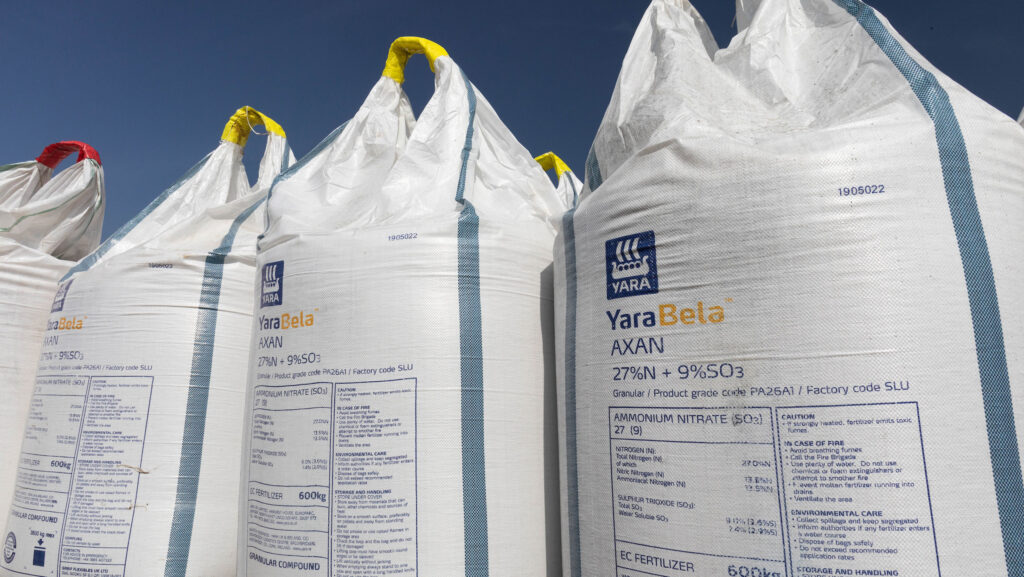 © Tim Scrivener
The UK’s incoming carbon tax on fertiliser imports is expected to have a limited immediate impact on prices, but growers are being urged to secure supplies ahead of potential delivery delays.
Edward Downing, of Frontier, said the Carbon Border Adjustment Mechanism (Cbam), due to take effect on 1 January 2027, was unlikely to cause the sharp price increases previously feared.
Some estimates had suggested the scheme could add £50-£70/t to fertiliser prices from the outset. However, the government’s initial figures indicate a much smaller charge, with a greater impact expected as the scheme develops.
See also: Government presses on with fertiliser import tax
The mechanism applies a carbon cost to certain imported goods, including fertiliser, to put them on a more equal footing with UK-produced products subject to carbon costs.
It will affect most nitrogen fertiliser used in UK agriculture, as the country no longer has primary ammonia production.
Based on the third-quarter 2026 average UK carbon price of £58.15/t of carbon dioxide equivalent (CO2e), and a 97.5% free allowance for 2027, Whitehall has put the initial Cbam rate at £1.45/tCO2e.
HMRC’s illustrative figures suggest this could equate to a charge of about £3.77/t for ammonium nitrate, based on a default emissions estimate of 2.6t CO2e/t of ammonium nitrate.
However, the actual liability will depend on the emissions associated with manufacturing each specific fertiliser product, so importers could well end up being charged less.
The first official Cbam rates are expected before the end of 2026.
Deliveries
Mr Downing said the tax should not be the main driver of purchasing decisions this season, with elevated natural gas and ammonia production costs continuing to influence the market.
He warned that the bigger immediate concern was whether suppliers could deliver fertiliser before spring demand increased.
“Purchasing across the UK remains behind where it would normally be at this point in the season,” he said.
“With a limited number of delivery days remaining before the end of the year and a large proportion of fertiliser still to be purchased, logistics could become increasingly stretched.”
Mr Downing recommended growers aim to have at least 75% of solid fertiliser requirements ordered and delivered before Christmas, while covering a similar proportion of liquid fertiliser needs through tank fills and spring delivery commitments.
He also advised growers to use a measured, regular purchasing strategy for remaining requirements and base decisions on all market factors, rather than Cbam alone.
Although the initial cost of Cbam is expected to be modest, the longer-term impact could be more significant as free allowances are reduced annually until they are removed in 2035.
Mr Downing said independently verified emissions data would become increasingly important, as fertiliser manufactured using lower-carbon technologies could attract lower liabilities than products relying on default emissions figures.