Feed price rises point to tighter margins this winter
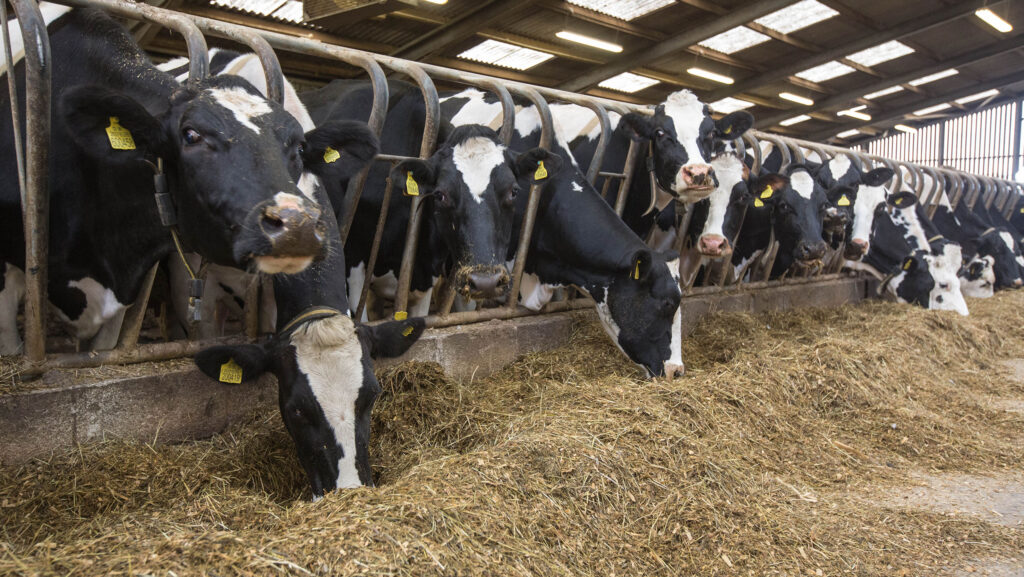 © Tim Scrivener
 Livestock feed prices are rising heading into winter thanks to a combination of geopolitical issues, concerns over the US harvest and a shortage of forage.
Tighter grain availability is putting pressure on prices as global conflicts disrupt trade flows, coming at a time when some farmers are already feeding their winter supplies. Although rain has returned, grass growth will take some time to recover.
See also: Find all our market price info in one place
Illustrating the firmer market, November 2026 London feed wheat futures reached a new season high last week at £219.25/t, settling back to close at £215/t on Tuesday 8 September.
“From a price point of view, the biggest factor has been geopolitics, with a reintensification of the conflict in Russia and Ukraine, in terms of impacts on grain exports and availability from the region,” said Helen Plant, lead cereals analyst at the AHDB.
“We have seen exports slow quite notably over August compared to July.”
For much of the year, the global market has been banking on good crops coming out of the US. However, with harvest imminent, concerns over soya and maize crops are emerging following the periods of hot, dry weather in July and August.
“It is putting more focus and pressure on how much could come from the US and other countries to meet demand, especially given the issues in the Black Sea and Europe,” said Ms Plant.
Maize yields
From a global pricing perspective, all eyes will be on early yield indications, particularly as the maize harvest starts across Europe. The EU Commission has recently cut its forecast of the EU-27 maize crop by 1.8m tonnes to 50.1m tonnes.
Soyameal and soya hull prices are also moving up, by £19/t in August to £355/t ex-store, and by £25/t to £218/t ex-store, respectively.
“Less-favourable weather in the US as the soya bean crop ripens has led to a downgrade of crop ratings ahead of harvest,” said feed market analyst Jamie Day. “At the same time, after months of deliberation, China has resumed its purchases of US soya beans.”
Sugar beet pulp is another potential pinch point, with the dry weather hampering root development. “The start of the beet factory campaign may be delayed, allowing crops some recovery, but pulp stocks are likely to be both lower and later this year,” Mr Day predicted.
Looking ahead, an end to conflict in the Black Sea and Middle East regions would certainly ease the upward pressure on prices. However, the effect of the El Niño weather pattern on palm oil production in Southeast Asia could support oilseed meal prices.
Deforestation-free dairy feed
Dairy UK has announced that from 30 December milk processors will expect all feed supplied into the UK dairy supply chain to meet recognised “deforestation-free” requirements for certain “at-risk” commodities.
This covers soya beans, soya meal and soya hulls, as well as palm oil and palm kernel expeller, supplied as straights, compound feed or blended feed. Such ingredients are expected to comply with the terms of the Agricultural Industries Confederation Sustainable Commodities Scheme, or equivalent.
“Dairy processors are moving ahead of regulation by committing to best practice in forest risk commodity sourcing,” said Dr Judith Bryans, chief executive at Dairy UK.
“Protecting our planet’s precious resources is a core part of responsible dairying. Dairy processors will continue to work with suppliers to support the transition to traceable deforestation-free sourcing.”