Lamb trade sees ‘muted’ seasonal decline
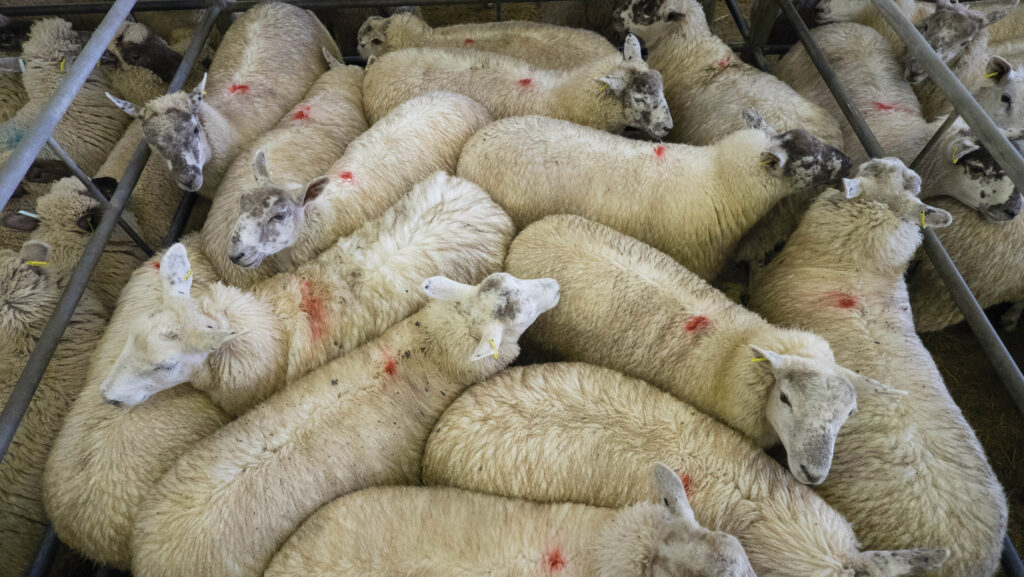 © Tim Scrivener
 Finished lamb prices are on the way down as the seasonal surge in numbers starts to pressure the market.
AHDB data showed a 32p/kg drop in the New Season SQQ price to 906p/kg deadweight in the week to 20 June, followed by a further 36.8p/kg last week (to 27 June) – bringing the deadweight price down below 900p/kg for the first time since mid-May.
“This is very much the seasonal norm as we are past the peak demand periods of Easter, Ramadan and Ede, and are now seeing weekly increases in new season lamb supplies,” said Becky Smith, senior livestock analyst at the AHDB.
“But we should remember that this is still more than 150p above year ago levels, driven by the smaller breeding flock and continuing strong demand from the Continent, with exports up 12% in the first four months of this year.”
Ms Smith also suggested that any seasonal downturn will be more muted than in previous years, with prices expected to remain relatively well supported through the summer months.
“Despite the fact we had reasonable lambing percentages last spring, there will still be fewer lambs coming forward, while numbers on the Continent are tight,” she said.
Live trade
The weaker tone to the market was seen in the auction ring at Sedgemoor in Somerset on Monday (29 June). While best finished lambs still topped £200 apiece, equivalent to 424p/kg liveweight, average values came to 389p/kg lw for standard lambs, compared with 416p/kg lw last week, and 437p/kg lw the week before that.
This was despite a reduced entry of just under 600 lambs – a consequence of the late June heatwave which auctioneer Robert Venner of Greenslade Taylor Hunt said had caused some farmers to hold their lambs back. “The trade was still better than expected, having come down from a very high price,” he added.
It was a similar sentiment at Bakewell where auctioneer Peter Oven of Bagshaws achieved an overall average of 418p/kg lw, marginally up from the previous week.
“Even bigger lambs are still in demand as they kill out better, though the numbers are not coming through perhaps as fast as we’d like,” he said. “It seems there is still enough grass, and people have started harvesting too, which can slow things down.”