Scottish cattle numbers still falling but decline slows
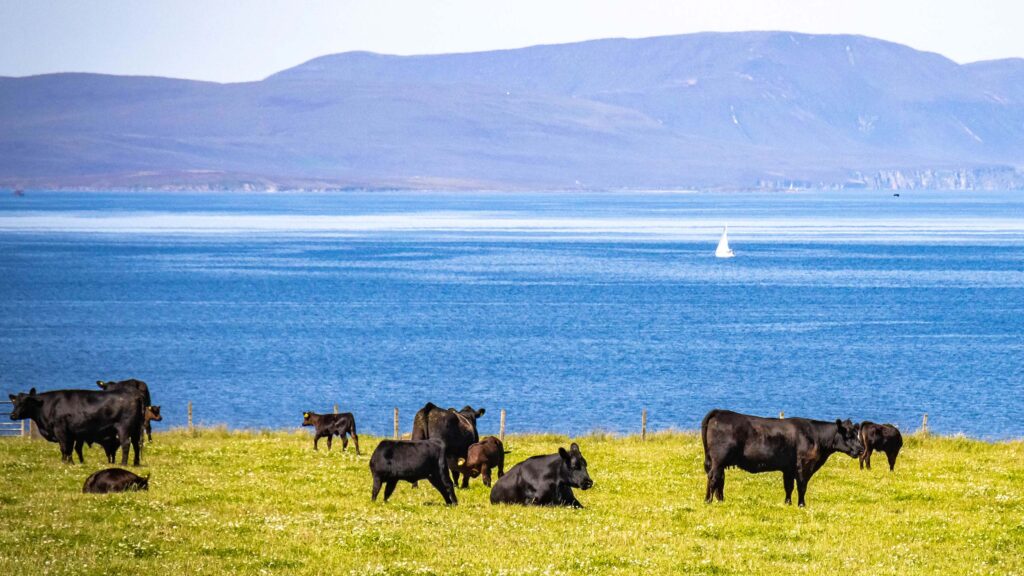 © Adobe Stock
 Quality Meat Scotland (QMS) has projected that UK beef production could be on course for an 8% decline by 2030, if the domestic beef herd continues to fall.
The Scottish red meat levy board estimates that for Scotland to maintain its existing self-sufficiency levels until 2030, it needs to increase production by 6%, equivalent to an additional 79,000 breeding cows.
High finished and store cattle prices throughout the past year have helped restore some optimism within the sector, but prices will need to remain elevated for some time before producers feel willing to invest again and increase output.
See also: Strong beef prices fail to prevent falling cattle numbers
In early March prime cattle in Scotland averaged 642p/kg deadweight at abattoirs and 378p/kg liveweight at auction marts.
At the QMS Red Meat Conference in Edinburgh on 10 March, QMS chief executive Sarah Millar said the rate of decline in the beef herd had slowed, but numbers were still falling by 2% a year.
She added that Scotland had lost more than 52,000 head of cattle in the past 15 years, while the UK as a whole had had a 12.7% reduction in cattle numbers, equating to 200,000 head.
“This isn’t just an economic challenge, but is a genuine issue of national food security, and it’s something that we can no longer accept as being the status quo,” she said.
Poor profitability, a lack of labour and no succession were listed as some of the most common drivers for farm businesses to reduce cattle numbers.
QMS chairman Kate Rowell said: “While retail demand remains strong, margins are tight and confidence is fragile.
“As a result, our processing sector is operating at below capacity with critical mass at risk.
“Economic modelling shows there is a huge opportunity in domestic and export markets for our red meat, and increasing production in the beef sector alone could add around £400m in output and £100m in GVA [gross value added] to Scotland.”
A shift to dairy beef may help offset some of the declines in the beef suckler herd, with QMS saying dairy beef accounts for at least 20% of production currently and continues to grow.
Rural affairs secretary Mairi Gougeon reiterated that the Scottish government did not have a policy to reduce livestock numbers.
She said: “As a listening government we have heard your concerns loud and clear and that is why last year we sent a very clear signal to the sector that we would reach our climate targets in a way which works for rural Scotland. Central to that is our policy on livestock.
“Our iconic livestock sector is central to the very identity of Scottish agriculture.
“That is why we continue to invest strategically in areas such as animal health to protect your herds and flocks.”
However, National Beef Association chairman Neil Shand warned that the sector was fighting for survival, and that the whole supply chain relied on robust beef production.
Richard Wood, category director of meat, fish, poultry and eggs at Tesco, said declining cattle numbers would put pressure on the availability of product to meet the demand.
“We have to work collectively together to solve that challenge we face,” he said.
Mr Wood added that retail inflation on beef had accelerated and was leading to some consumers switching towards poultry and pork.
Sheep and pigs
QMS is continuing its Meating Our Potential campaign to encourage growth in the beef sector and hopes to expand the initiative to other sectors later this year.
Ms Rowell said: “Scottish lamb slaughter fell by 28% between 2013 and 2023 and our pig sector has faced renewed challenges in recent months with supply chain challenges leading to backlogs on farms.”
Peter Myles, former chairman of the National Sheep Association Scotland, added: “There looks to be a potential shortfall of sheepmeat of about 37,000t in 2030 and there is a huge market there.”
The numbers
642p/kg Prime deadweight cattle average in Scotland
8% Potential fall in UK beef production by 2030
79,000 Additional breeding cows needed to maintain self-sufficiency levels by 2030