Tight supplies underpin slightly firmer beef market
 © Tim Scrivener
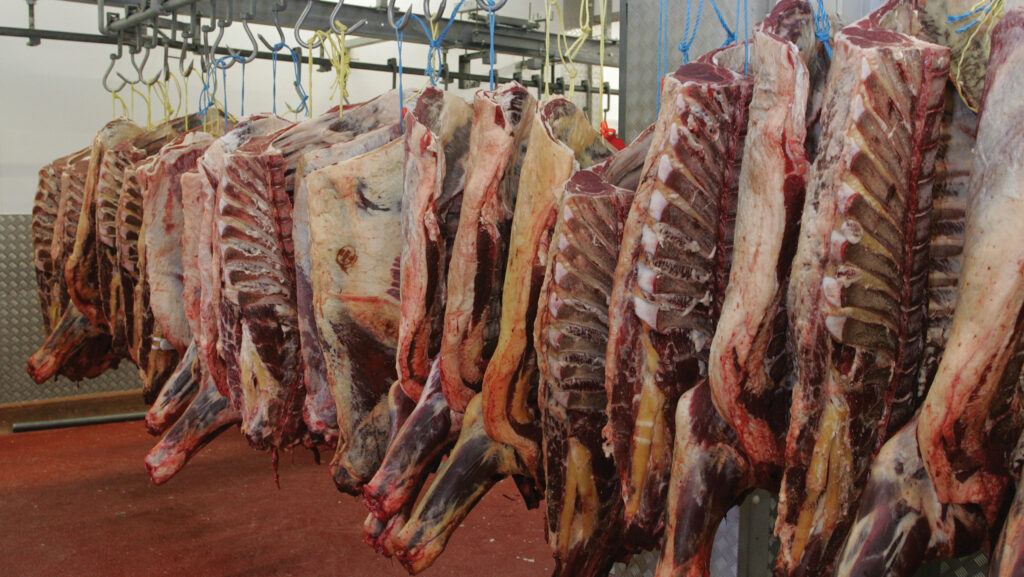
 Tight supplies are supporting GB cattle prices, with steers gaining nearly 8p in the week ending 26 September, to average 631p/kg deadweight. Heifers rose by 7p to average 627p/kg dw, while young bulls saw the largest gain of 11p, to 615p/kg dw.
The gains come despite a marginal increase in prime cattle throughput. An estimated 29,500 were slaughtered during the latest week, down 3,000 head on the same week in 2025.
See also: Find all our market information in one place
“Continued tight availability of finished cattle is helping support prices as processors compete for supply,” said Mollie Corbett, AHDB livestock analyst.
“The uptick in prices also follows the usual seasonal trend ahead of typically stronger demand in the run up to Christmas.”
In the year to August, UK prime cattle slaughterings were 1% below 2025, although heavier carcasses (up by 9.5kg/head) helped offset the lower numbers, meaning UK beef production was actually 1% higher year-on-year.
There are now signs however, that the GB beef sector is stabilising as reduced slaughter levels help build prime cattle numbers on farms.
In Scotland, levy body QMS said the decline in the breeding herd had slowed again. There were 1.8% more Scottish cattle aged 12-30 months year-on-year in July, while the key 18-24-month group increased by 2.2%.
“In Scotland, the data points to a more stable supply than we have seen for several years, although the market remains finely balanced,” said Iain Macdonald at QMS.
“Lower-than-expected slaughter numbers remains a feature of the market. A reduced heifer kill, possibly as producers look to stabilise herds, is also continuing to limit throughput, alongside the combination of slower demand and heavier carcass weights.”
Across GB however, cattle aged 24-30 months remain 3% down on 2025, highlighting continued tightness in the main slaughter-age population.
In the EU, beef production fell 2% in the first half of 2026, while imports increased 9%, reflecting tighter domestic supplies.
Brazilian beef had become the EU’s largest overseas supplier before the 3 September suspension of Brazilian animal-product imports, creating further uncertainty around European supply.
For the UK, the impact of the ban could be mixed; strong EU demand needs to be met, but displaced Brazilian product could be redirected to alternative markets, including the UK.