New income data confirms squeeze on cereal farms
 © Tim Scrivener
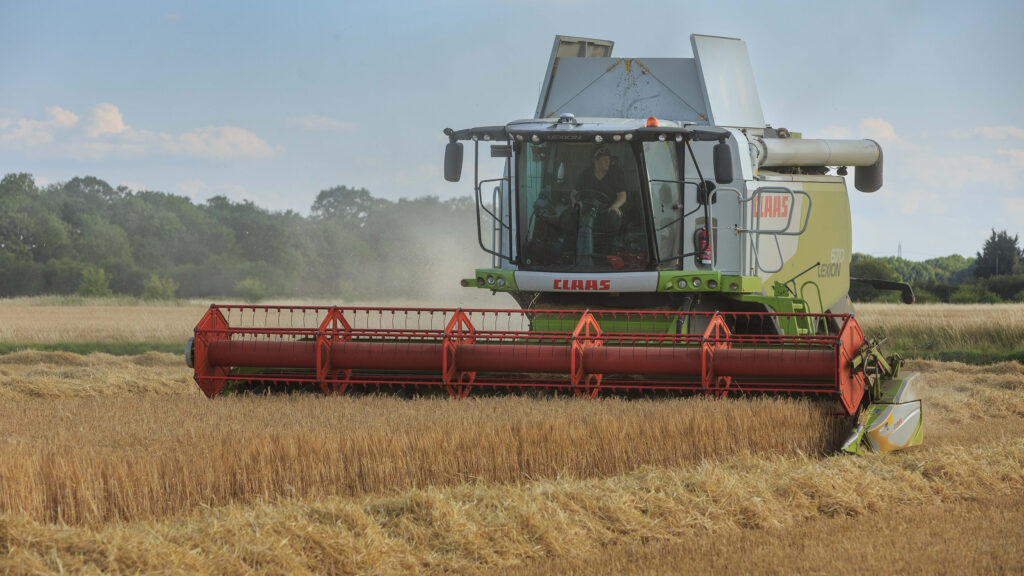
 Farm incomes on cereal farms in England were at their lowest level on record for the year to February 2026, according to new estimates from Defra.
Average farm business income (FBI) for cereal farms is put at just £17,000, down two-thirds on the previous year and the lowest since the current dataset began in 2004-05.
Defra said the downturn for arable businesses was being driven by lower cereal prices and extremely variable yields in the 2025 harvest, compounded by reduced contributions from the delinked Basic Payment Scheme (BPS).
See also: Farmgate milk prices stabilise as dairy markets improve
The NFU said the data reflects the increasing volatility affecting the cereals sector in recent years.
Dry conditions earlier in the season led to poor crop establishment in some areas, while summer drought caused significant stress to crops, especially on lighter soils. At the same time, plentiful global supplies pushed grain prices down.
As a result, wheat output fell by about 6% and barley output by 22%, with barley also hit by a 10% reduction in cropped area. Overall crop output on cereal farms from the 2025 harvest is forecast to be 9% lower than in 2024-25.
Farm support payments from government also dropped sharply. Income from BPS is forecast to have fallen by 72% for cereal farms, while net income from agri-environment payments is expected to have declined by about 11%.
Across the wider arable sector the picture is similarly weak. FBI on general cropping farms is forecast to be down by half, at £54,000, largely due to lower crop output.
Dairy incomes
However, dairy farm incomes show a 45% rise to £224,000. Defra said this growth was primarily driven by higher milk production – up about 7% across England and Wales – rather than stronger farmgate prices, which declined towards the end of the period.
Except for dairy and lowland grazing livestock farms, overall incomes for most farm types are forecast to have fallen in 2025-26.
These figures cover years from March to February. Actual survey results for this period will be published in December 2026.
NFU response
Commenting on the pressures in the cereal sector, NFU president Tom Bradshaw said: “There is so much out of farm businesses’ control, from extreme weather to erratic global markets.
“And, with the reduction of Basic payments – which provided a layer of resilience for many – we are more exposed than ever.
“We only need to turn on the news to see why resilience matters to our food security. War, whether in the Middle East or Europe, increases volatility and makes it more expensive to produce food, with farmers and growers shouldering a huge amount of risk.”
He added: “If we are to avoid further food price inflation, we must build resilience in our food supply chains.
“This isn’t just about farm profitability, which is important, but having a clear ambition for UK food production, an enabling regulatory framework and a supply chain which shares risk and reward.”