BNG update: What the latest rule changes mean for farmers
 © Tim Scrivener
 Recent rule changes mean many small building projects will no longer have to comply with the biodiversity net gain (BNG) regime.
While this will remove some demand for biodiversity units, it will benefit some farm-based developments.
The changes apply to new planning applications submitted from 6 August 2026, making sites of 0.2ha or smaller exempt from having to provide environmental improvements to make up for their effect on habitats.
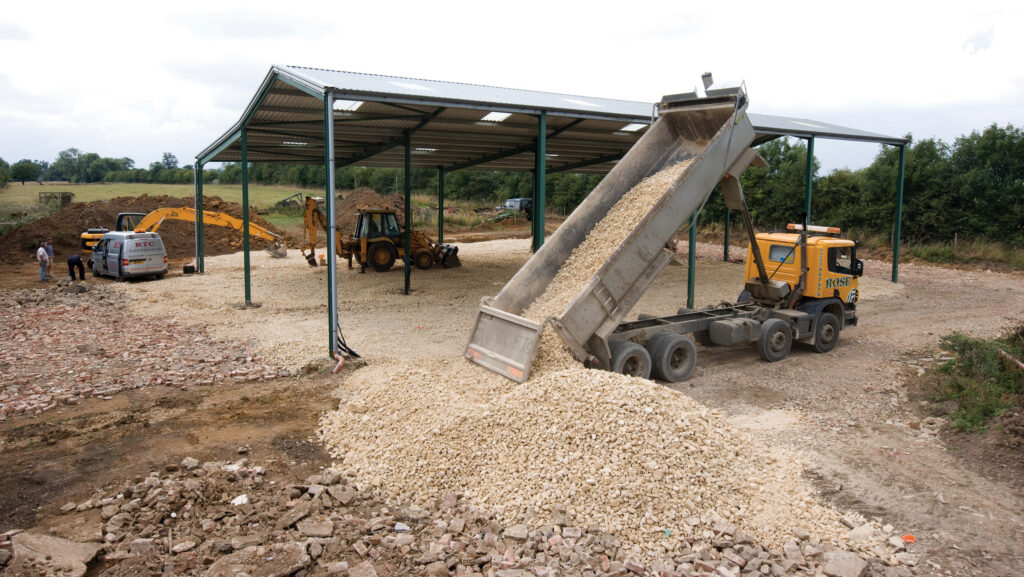
This includes many farm developments such as livestock sheds and slurry lagoons, alongside smaller housing developments, provided they do not affect priority habitats. It should also improve the viability of some marginal rural housing schemes, according to advisers.
See also: Farm accommodation: the planning options and process
The changes will cut the cost and complexity of getting planning permission, in many cases removing the need for ecological surveys and the 30-year legal agreements that accompany BNG commitments.
For farmers undertaking affected projects, it also means they will no longer need to use some of their land to provide the environmental mitigation or, alternatively, buy biodiversity habitat units from another provider.
“Many farm businesses have previously had to commission ecological surveys and provide biodiversity mitigation for projects that are essential to the day-to-day running of the farm,” says Andrew Boles, environment and conservation adviser at H&H Land & Estates.
“In some cases, this has meant taking productive land out of agricultural use and committing to management obligations that can last for 30 years.
“These new exemptions remove one of the barriers within the planning system for many smaller developments, helping to reduce both costs and timescales while allowing businesses to invest with greater confidence.”
© Tim Scrivener
Priority habitats protection
However, Andrew warns that it is not safe to assume all developments smaller than 0.2ha will be exempt – projects affecting priority habitats will still require ecological input as part of the planning process.
Priority habitats are mapped by Natural England and defined in the Natural Environment and Rural Communities Act 2006.
At land agent and adviser Robinson & Hall, principal planner Abel Bunu adds that projects benefitting from the 0.2ha site size exemption will still need to satisfy the environmental protection requirements set out in local plans and under national planning policies and guidance, alongside other wider regulatory requirements.
“Local planning authorities will continue to refuse planning permission where significant harm to biodiversity cannot be avoided, adequately mitigated or, as a last resort, compensated,” he says.
The costs and administrative requirements involved in setting up and achieving the 10% BNG were disproportionate relative to the scale of many smaller developments, advisers say.
“From my experience, a good number of our clients deferred their projects till after 6 August 2026 to benefit from the new exemption,” says Abel.
“In the current volatile market, this is understandable given that profit margins are small. This is why the new exemption category will have a significant effect on improving the viability of small-scale projects.
“When the ‘deferred’ projects are finally activated, there will be an influx of applications, which is likely to create a huge workload for local authority planners who are already struggling to deal with a heavy caseload, so delays should be expected.”
The new exemption is likely to capture a significant proportion of smaller agricultural developments, including some farm buildings and yard extensions, where the site area within the red line [planning] boundary is 0.2ha or below, says Abel.
He also points out that many agricultural buildings already benefit from permitted development rights and therefore do not trigger BNG requirements in the first place.
At Batcheller Monkhouse, planning adviser and associate Christine Dadswell says the exemptions will allow some previously unviable farm projects to go ahead. Examples include farm tracks, some glamping and other diversification projects, as well as equestrian developments such as sand schools.
Residential development on farms
“The exemption could be particularly useful for smaller residential schemes on farms, such as single dwellings for family members, farm worker accommodation, barn conversions involving new development, or small clusters of homes for sale or rent,” says Abel.
© GNP
BNG market update
Demand for biodiversity net gain (BNG) units increased substantially in the first half of 2026 compared with the same period of the previous year, says broker Hugh Townsend of Townsend Chartered Surveyors.
The firm put more than £7m of BNG unit sales in place in the second half of 2025 and had demand for £4.4m worth in the first half of this year. At 19.33 units, the average lot size was lower in January to June this year than in the same period of 2025, when it was 25.81 units.
So far this year, individual sales have ranged from 0.01 units to 260 units, says Hugh, with 46% of purchasers wanting grassland units. The firm has seen four times the demand for heathland and shrub units so far this year compared with 2025.
Changes like this illustrate what the firm considers the common mistake of thinking that demand for different unit types will remain the same going forward. “The market is ever-evolving and its unpredictability cannot be over emphasised, especially when creating a habitat bank,” says Hugh.
“The rule, if there is one, is to set up the bank with the greatest amount of flexibility you can, so that where possible you can react as quickly to market demand as the local planning authority or responsible body will allow.”
Strong demand across the market
While confidence in the BNG market is growing, there is an oversupply of certain habitat unit types in some areas.
The inclusion of nationally significant infrastructure projects (NSIPs) from November this year should boost demand, but slowly, say advisers, as it will apply only only to development consent order applications submitted from 2 November for these projects.
Environment Bank is a habitat operator that leases land from farmers to create biodiversity units, paying an annual rent for this plus a share of biodiversity unit income once a certain threshold of sales is reached. The landowner is generally contracted and paid separately for creating the habitats producing the units.
While the 0.2ha exemption is likely to reduce demand for off-site biodiversity units from some smaller schemes, there is strong demand across the wider market, says Environment Bank chief executive officer Catherine Spitzer.
“Developers have become increasingly familiar with the requirements, a healthy private market has developed, and we are already working with many of the UK’s leading infrastructure [NSIP] developers as they prepare for implementation. We have supported over 910 development sites across England.”
Improve accessibility
For farmers and landowners supplying habitat units, the changes and new exemptions could make the market more accessible because developers may be more inclined to purchase off-site units at an earlier stage, says Abel Bunu of Robinson & Hall.
“However, it will also remove some smaller developments from the BNG regime altogether, so there may be a modest reduction in demand from that part of the market. Overall, demand is still expected to remain strong, particularly as larger developments continue to require units.
“Landowners considering habitat banks should continue to take a long-term view, as demand is increasingly being driven by strategic infrastructure and larger residential and commercial developments.”
Early expert advice should be sought and, where appropriate, pre-application advice from the relevant local planning authorities, he says.
Biodiversity Units UK sources habitat units for developers and says it facilitated 11% of BNG unit market transactions in 2025.
The firm’s most recent pricing report says that despite northern England having fewer habitat banks than the South (71 compared with 149), it accounts for a larger share of market activity by both allocation volume and estimated revenue, with the North transacting an estimated £42.5m in unit sales compared with £38.9m in the South.
Among habitat types, other neutral grassland, lowland meadow and mixed scrub dominate both supply and demand, says the report, reflecting their widespread applicability across development projects and planning requirements.
Other changes to BNG rules from 6 August
- Temporary development will be exempt from having to provide biodiversity net gain (BNG) where land will be fully reinstated within five years, unless priority habitat is affected
- Minor developments will be allowed to use off-site biodiversity measures as a first choice. Previously they had to undertake on-site measures as a priority. A minor residential development is nine or fewer dwellings on one site of 0.5ha or less, while minor commercial developments are those creating less than 1,000sq m of new floor space, or on a site area smaller than 1ha. Any application involving mineral extraction or waste development would be considered a major development
- Self-build and custom-build developments are no longer exempt from BNG requirements, but may benefit from the 0.2ha exemption
Further changes are expected to be confirmed later this year:
- Developments whose primary purpose is to conserve or enhance biodiversity will be exempt from BNG requirements in future, as will some improvements to parks, playing fields and public gardens
- On the statutory biodiversity metric, the main change will be to adjust the spatial risk multiplier, which thus far has effectively made it more expensive for developers to source biodiversity units from outside the local planning authority or national character area in which their development falls. Local nature recovery strategy areas will in future be used to determine a wider area from which units can be sourced before any penalty is imposed.