

SFI26: Make the most of some ‘easy wins’, says Ceres Rural
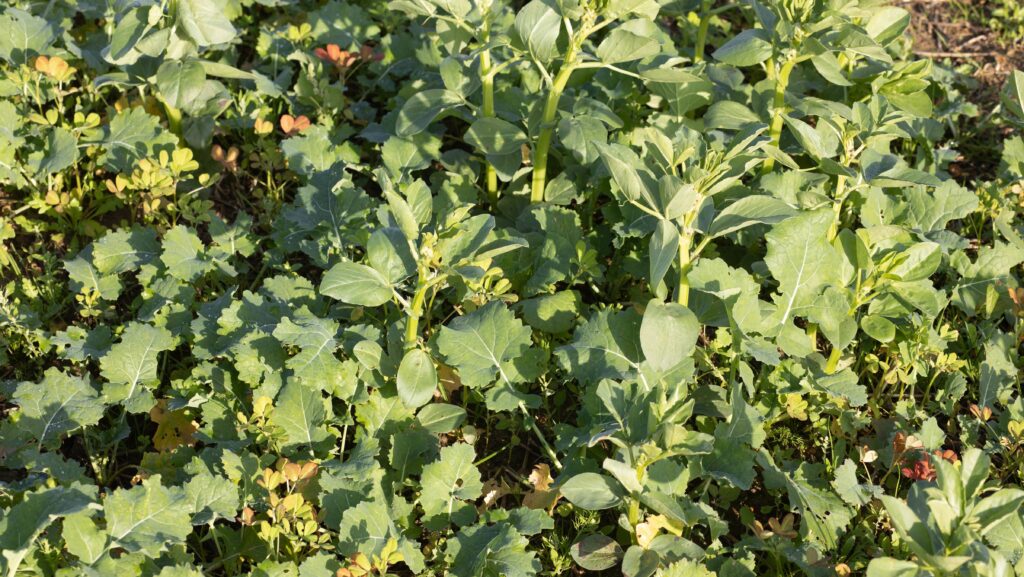 OSR growing with a companion crop of beans © Tim Scrivener
With the new Sustainable Farming Incentive (SFI26) set to open at the end of June, farmers in England are being encouraged to familiarise themselves with certain key changes and look out for some “easy wins”.
Rosie Uden, an associate with rural consultants Ceres Rural, says there are several differences between the new SFI26 and its previous 2024 iteration.
For example, the number of actions that will be restricted to 25% of the farmed area has been increased from six to 10, including for the first time enhanced overwinter stubble (AHW7).
See also: SFI 2026 launch date confirmed as new details emerge
“Paying £589/ha, this has been a popular option on some farms, but will now to be restricted to just a quarter of the farm,” said Ms Uden.
Furthermore, unharvested cereal headlands (AHW9) will now be limited to 24m in width – and only allowed specifically on headlands.
“This represents a change from how the option has been used previously, when it was possible to cover a wider area of a field [worth £1,072/ha],” said Ms Uden.
Pesticides
Another change involves payments for farmers who agree not to spray any insecticides on their crops (CIPM4).
Previously, this covered arable and permanent crops, with a payment of £45/ha.
Under the new scheme, maize is included on the list of crops that may not be sprayed.
In another change, farmers availing of the PRF1 “variable rate application of nutrients” action, worth £27/ha to encourage the use of precision farming techniques, will be allowed to use non-variable spreading for an initial “wake up” application of nitrogen to arable crops in late winter or early spring.
The new SFI26 – which is initially being opened for farmers with less than 50ha or those with no pre-existing Environmental Land Management revenue agreement – also includes some notable payment reductions.
Some of the more popular options are being targeted – for example, legume fallow will now pay £532/ha instead of £593/ha, winter bird food will pay £648/ha instead of £853/ha, and herbal leys will receive £224/ha instead of £382/ha.
Easy wins
Ms Uden has, however, identified a number of “easy wins” for farmers going into SFI26, especially if it means taking areas of unproductive land out of management.
But she also advises farmers to carefully consider the costs to establish each option.
“Sometimes a higher payment rate doesn’t mean better returns, as everything is based on income foregone,” she says.
One easy win might be establishing grassy field corners (CAHL3) on a farm, especially as these can now be extended to a whole field parcel.
“The payment rate is £590/ha, but costs are low apart from topping in the first year to get it to establish, and it can then be left to naturally regenerate.”
Enhanced overwinter stubble is also seen as a good option, despite the 25% area cap, with little associated cost, and it is still possible to spray off grass weeds after the middle of May.
Another option, also under the 25% cap, is “cultivated areas for arable plants” (AWH11) paying £660/ha.
“You can cultivate in the spring then leave it to the end of August before planting a cash crop,” said Ms Uden.
Companion cropping (CIPM3) is another a viable option.
“Even if you spend £10/ha on seed, that still leaves a £45/ha gross margin across the whole sown area and that does all add up.”

Explore more / Transition
During the series we follow our group of 16 Transition Farmers through the challenges and opportunities as they seek to improve their farm businesses.
Transition is an independent editorial initiative supported by our UK-wide network of partners, who have made it possible to bring you this series.
Visit the Transition content hub to find out more.
