

SFI26 attracts just 125 moorland agreements
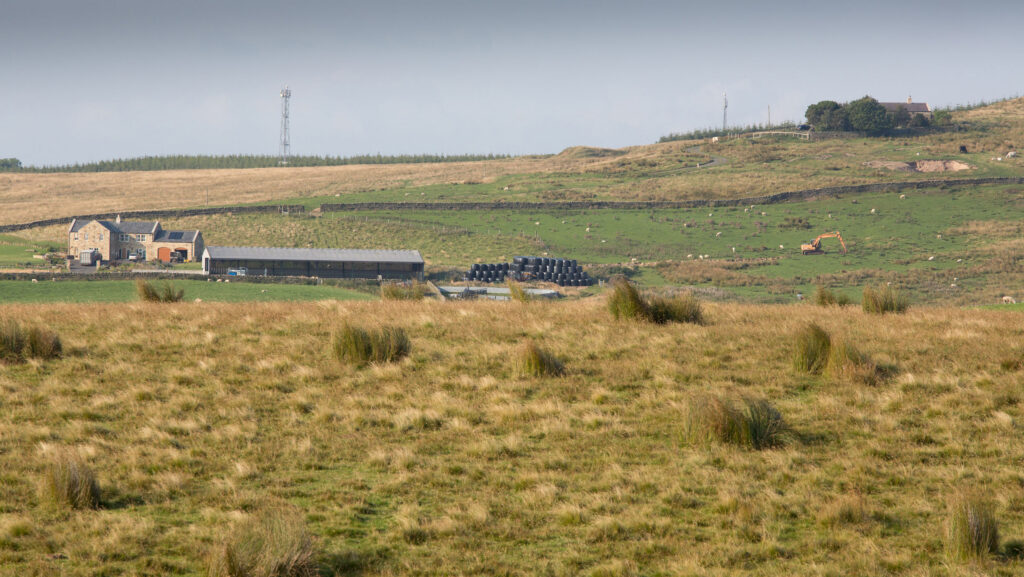 © Tim Scrivener
 Just 125 agreements included moorland actions under the Sustainable Farming Incentive 2026 (SFI26), prompting concerns over whether the scheme is reaching large areas of England’s uplands.
Newly released Defra data shows that 52 agreements included moorland actions in Window 1 and 73 in Window 2 of SFI26.
However, the Rural Payments Agency (RPA) has not yet released the number of hectares under each action or the geographical distribution of agreements.
See also: ‘Computer said no’: Allerton Project left in limbo after SFI chaos
The low uptake has been described as “pitiful” by uplands advocate and common land expert Professor Julia Aglionby, who said it was particularly concerning given the amount of moorland currently without an agri-environment agreement.
More than 260,000ha – 33% of England’s moorland – has no Higher Level Stewardship, Uplands Entry Level Stewardship or Countryside Stewardship agreement, according to Prof Aglionby.
She said these “naked” hectares were eligible for SFI26, but scheme design and practical barriers had discouraged farmers and land managers from applying.
Reduced stocking rates
Rules around stocking rates were among the factors making the scheme difficult for upland farmers to access, she said.
Other barriers included the exclusion of common land, the September application deadline – which coincided with a busy livestock auction day – and limited adviser capacity.
Prof Aglionby said policymakers should urgently review the design of future SFI and other Environmental Land Management schemes, as well as how farmers are expected to apply.
“In the uplands, this is critical to ensure viable farming businesses deliver better for nature, climate resilience, sustainable food, heritage and recreation,” she said.
Robin Milton, a hill farmer on Exmoor and chairman of Exmoor National Park Authority, said payment rates could also be deterring some upland farmers.
“Above the moorland line, there is an awful lot of good grassland suitable for SFI options such as low-input grassland,” he said.
“However, many businesses would need to reduce stocking densities significantly, and the payment rates may not compensate for the resulting loss of income.”
The SFI is intended to pay farmers and land managers for sustainable land management activities that protect and benefit the environment while supporting food production and farm productivity. The 2026 scheme has now closed for applications.
Alternative proposal
Prof Aglionby has proposed a Universal SFI scheme under which every farm business would have access to up to £230/ha of eligible land through a three-month application window.
Under her proposal, unclaimed funds would be redirected to Countryside Stewardship Higher Tier (CSHT) or capital grants.
Farming minister Stephen Morgan said he was determined to work with farmers to learn lessons from this year and shape SFI27, including exploring alternatives to a first-come, first-served application process.
Defra said it is moving into a trial phase for CSHT common land applications, with results to be evaluated ahead of a wider rollout.

Explore more / Transition
During the series we follow our group of 16 Transition Farmers through the challenges and opportunities as they seek to improve their farm businesses.
Transition is an independent editorial initiative supported by our UK-wide network of partners, who have made it possible to bring you this series.
Visit the Transition content hub to find out more.
