

Farmers Weekly Awards 2026: Environmental Champion of the Year
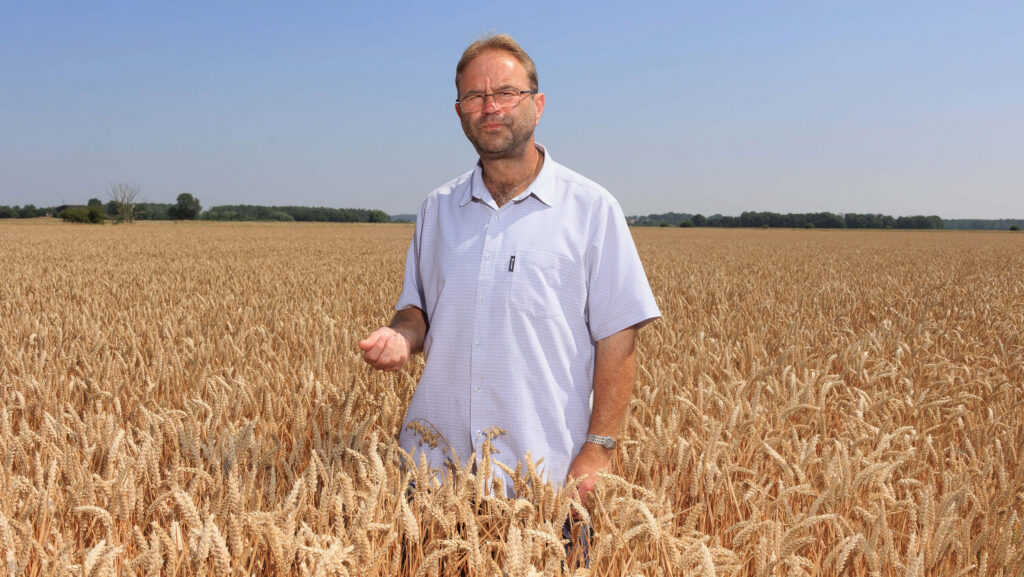 Colin Chappell © Tim Scrivener
 Lincolnshire arable farmer Colin Chappell is Farmers Weekly’s Environmental Champion of the Year 2026.
Colin’s award recognises his success in cutting the farm’s carbon footprint, regenerating soils and dedicating one-quarter to stewardship. He is seeing greater biodiversity, such as fish, back in the ditches.
See also: FW Awards: Meet the 2026 Environmental Champion finalists
His proudest achievement over the past five years is the large reduction in his carbon footprint, with the farm now sequestering 100t/ha CO2e (carbon dioxide equivalent) each year.
This reduction is partly down to an improved nitrogen use efficiency brought about by applying urea with carbon, along with reduced fuel use resulting from less intensive cultivations and a streamlined machinery fleet.
Farm facts
- Area: 555ha of arable cropping
- Cropping includes winter wheat, forage winter barley, marrowfat peas, spring malting barley, winter beans, maize, milling oats and miscanthus
- Establishment: Owns a 4m Vaderstad Rapid and 4m Triton side press. Has access to a 6m Weaving Sabre tine drill and a 6m Horizon DSX
- Soils: Heavy clay, home farm at sea level
- Staff: Colin, plus two full-time
Any soil movement is accompanied by applications of fish hydroslate, potassium humate and nurture carbon to minimise the impact on microbes. He sees it as an investment on his heavy clay soils.
Cover and companion cropping has also been introduced at Gander Farm to improve soil health.
More than 25% of the farm, the more challenging areas to crop, is in environmental measures including margins which also have a role in helping to protect water quality along with adoption of pesticide stewardship such as bentazone. Insecticides haven’t been used for six years.
Colin’s dedication to helping sees him using specific seed mixes aimed at bird species such as grey partridge and yellow hammer by encouraging insects that birds use to feed chicks.
Renewable energy crops also play a role, with miscanthus grown on the poorest areas supplying a local power station while forage barley and maize are grown for a nearby anaerobic digestion plant. These crop help widen the rotation and have blackgrass control benefits.
Soil health is improving. Biodiversity has returned and he is seeing eels back in the ditches and greater bird numbers. In two hours, one birdwatcher saw 36 species of birds, including six species of warbler (including a Cetti’s warbler), lots of skylarks and a marsh harrier.
In conclusion, Colin has not only created a net-zero farm producing human-quality food, it is also bringing big environmental benefits in terms of carbon, water quality and wildlife.
Above all, he has a more resilient business, as demonstrated in 2024 when, in mid-April, 80% of the farm had no cropping due to wet soils and flooding. Yet Colin managed to fulfil his 350t milling contract and crops still made a profit.
Winning ways
- Achieved an impressive reduction in the farm’s carbon footprint
- Shows huge enthusiasm for improving soil health
- A strong focus on water quality
- Created a more resilient arable business to cope with environmental extremes
- Encouraging nature on his farm and leaving a legacy for the next generation
The other finalist
- James Chapman, Hill Farm, Great Yarmouth, Norfolk
The Farmers Weekly 2026 Environmental Champion of the Year Award is sponsored by Map of Ag
“Map of Ag proudly sponsors Environmental Farmer of the Year, celebrating farmers whose work drives real environmental progress. This award reflects our mission through our FarmMetrics platform – helping supply chains improve productivity, animal health and resilience to drive a sustainable future.”
Caroline Hope, client technical manager – team lead.