FW Awards: Meet the 2026 Farm Manager of the Year finalists
 Dean Broadberry, Will Jones and Cameron Knee © Tim Scrivener, Jim Varney, Kathy Horniblow
 This year’s finalists share a drive to deliver premium produce while managing a large business in a rapidly changing landscape.
See also: FW Awards: Meet the 2025 Farm Manager of the Year Finalists
The finalists
- Dean Broadberry, Haverholme Park Farm, Lincolnshire
- Will Jones, Albanwise Farming, North Yorkshire
- Cameron Knee, Emily Estate, Somerset
The judges
- Al Brooks – Independent judge Al is estate director at the Faccombe Estate in Hampshire. He was also FW’s 2010 Farm Manager of the Year.
- Ryan McCormack – 2025 winner Ryan manages Dennington Hall Farms in Suffolk, focusing on improving soil health and adding value at every opportunity.
- Suzie Horne – Farmers Weekly’s business editor since 2011 and formerly deputy editor of Big Farm Weekly.
Dean Broadberry, Haverholme Park Farm, Lincolnshire
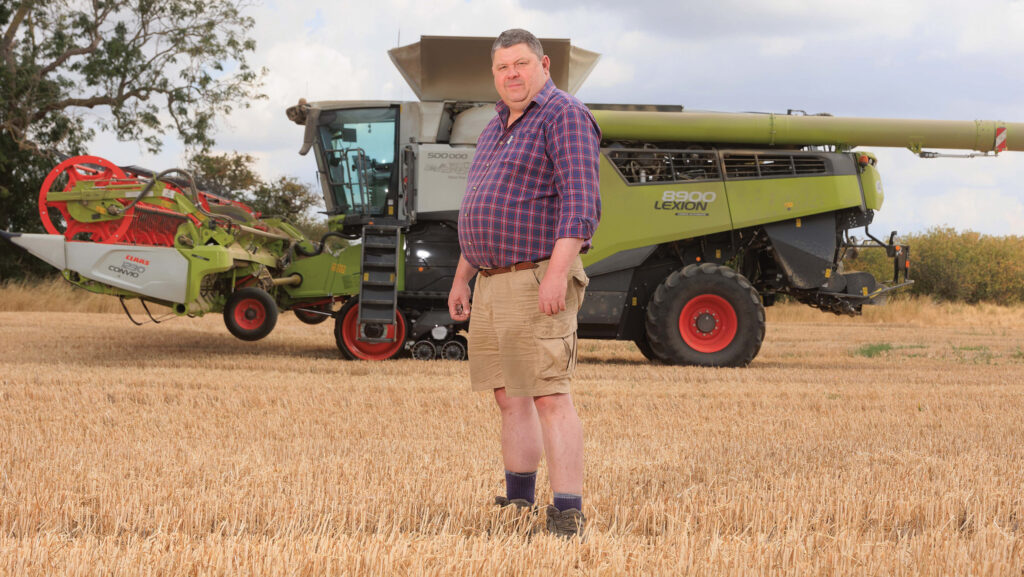
Dean Broadberry © Tim Scrivener
Dean was employed by the Haverholme Farm Partnership in 2014, joining as a tractor driver when the farm was run by Velcourt.
He became manager in 2017 and in 2021 the farm owners’ arrangement with Velcourt ended.
Prior to joining, Dean was a tenant on land which the business owned in Nottinghamshire. He took a payment to surrender the tenancy and now manages that land.
Responsible for all farm operations, he is in regular contact with two of the partners, while three formal meetings a year are held with all four partners to present budgets, cashflows and updates and to discuss policy, investment or sales plans.
The farming business pays a market rent to the family owners, reviewed annually.
Innovation
Dean introduced 12m controlled traffic farming after the 2021 harvest and has improved soil structure through a staged transition to direct drilling in 2025.
This has cut fuel use by about 50% since 2017 while maintaining profitability, with labour costs also down. Fuel use in 2025 averaged 67 litres/ha and this year 58 litres/ha .
Some shallow soil loosening is done as required, with cover and catch crops also contributing to soil structure improvement and nutrient availability.
His rotation of two wheats and a fallow/overwintered stubble/cover crop means about 1,100ha is combined each year.
Most of the kit is owned and on service agreements, while the combine is on a three-year hire.
Two significant Sustainable Farming Incentive agreements include fixed and rotational elements and no insecticide.
Over last few years Dean has been building a full picture of plant nutrient uptake, with comprehensive sap testing leading to a switch to only foliar P and K.
Further foliar nutrition includes molasses, humic acid, fulvic acid and a range of amino acids which he says gives improved plant health and resilience.
All straw residues are returned to the soil, adding to soil health and organic matter, which now averages around 6%, up from 3.5-4% a few years ago.
Dean is Basis and Facts qualified and is doing a range of trials on foliar N, seed treatments and seaweed.
Environmental measures
Insecticides are no longer used and wildflower areas around the farm increase beneficial insect predator numbers.
The farm has also submitted a higher tier woodland management plan application.
Dean has carried out extensive ditch clearing, improving drainage and soil health on farmland and in adjoining woodland.
He is liaising with the Environment Agency to develop a new wetland to encourage wildlife and help protect the local community from flood risk.
Grain is sold to four merchants over a two-year period for each harvest, starting when markets open for a cropping year and selling relatively small tonnages at a time. He has already made some sales of the 2027 harvest. Min-max deals for milling wheats secure a known premium and aid budgeting.
Dean feels the business is well-placed to take advantage of the growing market interest in low carbon and sustainable farming methods.
Fuel price risk is addressed by lower use and being able to store enough for the season. Using a wide range of suppliers helps secure good deals on inputs, including options each year for nutrition. Reducing reliance on artificial products also limits exposure to price increases on these.
Staff
Alongside Dean are two experienced and motivated full-time staff members, with part-timers returning each year as needed.
Dean involves the regular team in all decisions, welcoming their observations and opinions, and is regularly approached by people wanting to work for him.
Further cost reduction will be achieved in future, using less artificial product while maintaining quality and profitability, says Dean.
Opportunities to expand will be assessed as there is potential to do more with the current kit.
Outside the farm, Dean is a parish councillor.
The numbers
- 2 full-time farm staff in addition to farm manger
- 1,615ha total acreage farmed
- 1,100ha cropped
- 9.5 t/ha – five-year average first wheat yield, 2021-2025
- 7.3 t/ha – five-year average second wheat yield, 2021-2025
Farm facts
- Family-owned business, 1,215ha owned land, mainly arable on heavy Grade 3 land
- Contracting on a further 400ha, mainly on stubble-to-stubble basis
- Main farm near Sleaford, Lincs with a further block 30 miles away in Nottinghamshire
- Managed as one unit and block cropped since 2022
- All combinable crops, three-year rotation of two wheats and overwintered stubble/cover crops
What the judges liked
- Focus on and results in improving soil health
- Good understanding of figures and finances
- Keen interest in and trials of foliar feeding and supplements
- Wide interest in technology for both environmental and production improvements
What the judges say
Running a streamlined, low-cost operation on challenging land, Dean has soil management at the heart of his decision making. He knows his costs and is always looking for opportunities that will help move the business forward to improve his margins.
Will Jones, Albanwise Farming, North Yorkshire
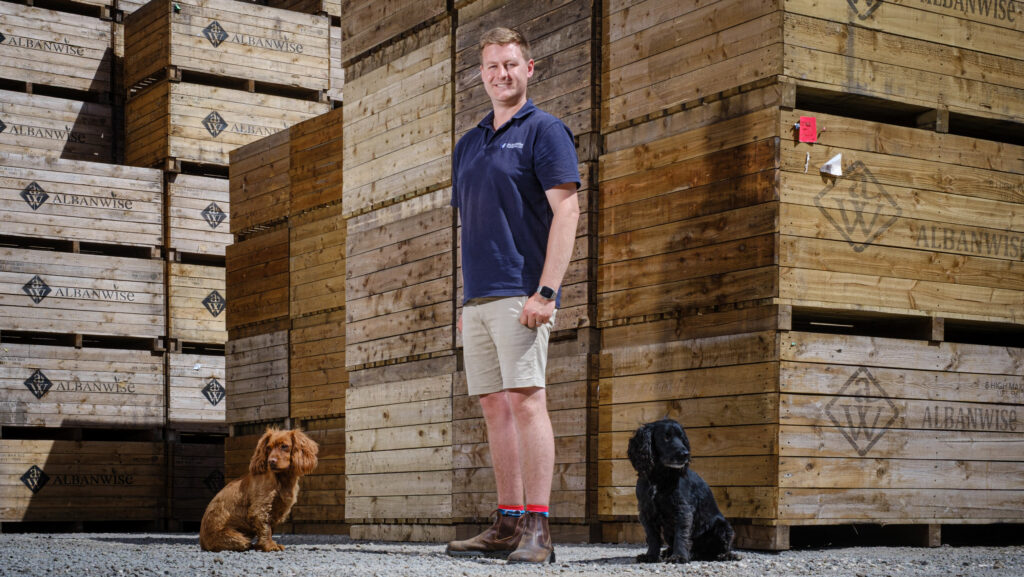
Will Jones © Jim Varney
Will manages a large, diverse and complex estate which is still expanding, where he is responsible for both the strategic direction and day-to-day operations.
He has progressed rapidly since being recruited as a trainee assistant farm manager in January 2020 to overseeing all the Yorkshire operations of Albanwise Farming.
As well as crop planning and budgeting, contractor and staff co-ordination, stewardship and environmental schemes, he manages a large residential and commercial property portfolio alongside relationships with tenants, graziers, and commercial partners.
A 75,000-tonne commercial grain store business also comes under his remit.
Will’s approach to improving long-term resilience includes the development of several joint ventures, so far these include pigs, potatoes and sheep. He is in almost daily contact with the owner of the business.
Innovation
Efficiencies in labour, machinery use and crop planning have been achieved by merging two farming units across multiple holdings into a single management structure, introducing block cropping across geographically spread landholdings.
This has made better use of labour and kit, reducing machinery movements and improving timeliness.
Will took the decision to come out of growing potatoes on the farm’s own account, which has cut fixed costs from the £900/ha mark to about £600/ha.
Staff
He manages 18 people including an assistant manager and six farm staff, an administrator, three builders, three grain store staff and two on environmental work.
Building a strong single team culture has been a key mission for him, bringing together not just the farming staff, but also the building services and commercial grain storage teams.
This has encouraged better communication, accountability and collaboration, with regular operational meetings, aligning cropping and machinery strategies.
Will gives responsibility within roles while ensuring support is available when needed.
Health, safety and welfare are priorities, with no “hero hours” allowed. Apps are used to record hours and machinery maintenance. Staff are entitled to two free meals a week in the pub owned by the business and tractors are equipped with mini ovens and freezers stocked with ready meals.
Several major projects have been undertaken or are in development, including a partnership to establish a 750-sow breeding unit, the implementation of renewable energy opportunities, including wind turbines, solar generation and battery storage.
Environmental delivery is also a key part of the business strategy, including extensive wetland habitat restoration, which is expanding under Will’s management.
Markets
Premium markets are aimed for, including malting barley, milling wheat and high oleic low linolenic oilseed rape. The farm is a member of vining pea group Swaythorpe Growers and this season grew its first 4ha of onions, for use in the farm’s pub and for direct sales to local customers. The plan is to increase to 20ha next year.
Will maintains strong relationships with merchants, marketing groups and processors to track changing specifications, premiums and market opportunities, including those that reward improvements in soil health, biodiversity and water management.
He regularly hosts food manufacturers and other supply chain partners so everyone can better understand the practical pressures and challenges others face.
Risks
Weather risk is managed by focusing on robust agronomy, strong rotations and careful variety selection.
The breadth of enterprises, including joint ventures he is developing, spreads risk. Opportunities are considered through land purchase, new farming agreements and strengthening existing partnerships, with plans to unlock more value from the estate’s property portfolio through refurbishment and improvement.
Will hopes to develop a joint venture with the pub, potentially incorporating accommodation and leisure facilities.
He is a champion for the Voluntary Initiative and has a strong interest in the role of technology in agriculture, particularly the potential for AI, robotics and precision farming to improve efficiency and sustainability at scale.
The farm held its first Open Farm Sunday event in 2025 and this year had about 1,000 visitors. On the evening prior to this, a barbecue was held for neighbours, partners in the joint ventures, as well as suppliers, customers and anyone associated with the business.
The numbers
- 18 – number of staff Will manages
- 7 farming sites
- 108 residential properties
- 28 commercial lets
- 25 miles distance between furthest farming sites
Farm facts
- 6,000ha-plus mainly arable in-hand land, plus Agricultural Holdings Act and farm business tenancies, and contract farming agreement
- Energy and environmental schemes, joint ventures, residential and commercial lets, hospitality interests
- Wheat (milling, feed), barley (malting, feed), oilseed rape, vining peas, cover crops, forage rye, forage maize
- Mid-Tier Countryside Stewardship and Sustainable Farming Incentive agreements
What the judges liked
- Improving efficiency and productivity while lowering costs
- Good staff management through clear communication and empowerment
- Collaboration and joint ventures with other businesses
- Ability to prioritise across multiple fronts, including diversification, environment and infrastructure projects
- Great vision to increase profits across the whole business, building long-term resilience
What judges say
Will makes use of every acre to generate income. His no nonsense and collaborative approach underpins a desire to expand the business and build a positive reputation that incorporates technology, efficiency, and staff welfare.
Cameron Knee, Emily Estate, Somerset
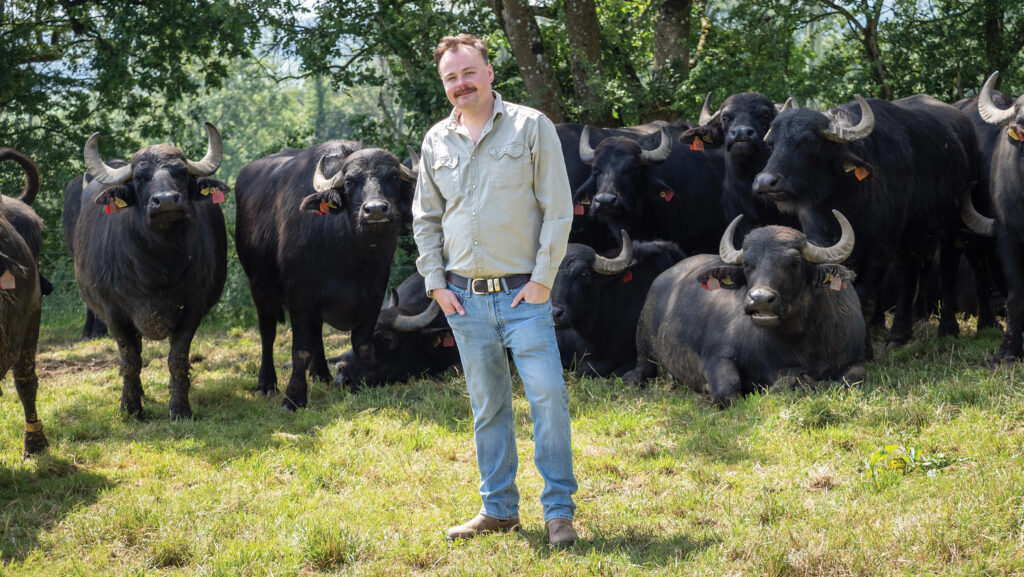
Cameron Knee © Kathy Horniblow
Cameron manages a large, diverse and growing mixed farming business including arable, rare breed beef cattle, sheep and a dairy water buffalo herd.
Premium produce is the aim from all enterprises, supplying the wider integrated business which includes two farm shops, a luxury hotel and four restaurants, as well as local sales and nationwide online sales.
Farming on soils from heavy clay to light brash, he has made some big changes in four years, with the arable acreage expanding from 121ha to 324ha.
All fieldwork was previously carried out by contractors who now do only spraying and drilling.
Most of the arable produce is consumed by or used for the stock, while meat and buffalo milk are supplied to the internal butchery, dairy and hospitality enterprises at market prices.
Innovation
Cameron has improved the quality of beef from the farm’s British White cattle, now supplying 120 carcasses a year to the butchery compared with 40 a year when he joined.
He has improved beef performance, taking finishing times for rare breed native steers from 30-months and -O3 carcasses, to 24 months with an R4L carcass, and daily live weight gains from 0.7kg to 1.1kg.
With just a month’s planning he set up the dairy water buffalo herd. This is milked twice a day, with yields up 55% to a current 9l a cow a day with a target of 11l.
Cameron has also added value by developing a system of grass-fed buffalo veal and is pioneering the creation of a new beef breed – the “Somerset White”.
This will combine excellent maternal instincts, the lower input nature of British native breeds with improved beefing characteristics and larger carcasses, by crossing the British White, Charolais, Simmental and Italian Chianina.
After taking on new land with a heavy blackgrass burden, yields are up 45%, with first wheats averaging 10.8 t/ha and winter barley yields of 9.3 t/ha across the 2024 and 2025 harvests. All straw is baled for stock.
A Sustainable Farming Incentive agreement includes extensive summer and winter cover crops, direct drilling, variable rate applications, no insecticides, herbal leys, grass field margins, low-input grass fields, winter bird food mixes, wildflower meadows and nectar mixes.
Summer cover crops are mob grazed by 500 store lambs, reducing weed burdens and adding organic matter.
Investment
He is closely involved in the construction of a multimillion-pound farmyard with four large roundhouses for the dairy and beef operation, and fully automated feeding and handling.
This will transform the operation which has been working from five different yards, with the mixer wagon travelling 22 miles a day.
Staff
Cameron reports to the estate director and the owner once a week and manages 12 farm staff, whose responsibilities have been reorganised since he was diagnosed with muscular dystrophy and heart failure about 18 months ago, aged 32.
The disease has made physical activities very tough. While fully managing day-to-day operations, he also focuses on the bigger picture for the farm, its financial and technical performance and strategic direction.
Cameron has invested heavily in technology, machinery and people, making internal promotions and ensuring the training needed is provided.
Staff work only one in three weekends outside of harvest, with days off during the week after weekend working. There are free lunches in the staff canteen and annual performance bonuses.
As well as weekly management meetings, the whole farm team meets every six months to look at farm performance, plans and objectives. Staff opinions are included on grazing strategies, cropping plans and machinery purchases.
A two-day farm show this summer was expected to attract 5,000 visitors.
Cameron is looking forward to some stability in about five years and has a target for the arable area to grow to 525ha by 2030.
The numbers
- 450 pedigree rare breed British White cattle
- 150 dairy water buffalo
- 180 breeding ewes & 500 store lambs
- 324 ha of arable
- 120 deer
Farm facts
- Fast growing large regenerative mixed farming operation
- Most produce sold to other arms of the Emily Estate business – a luxury hotel, two farm shop, four restaurants, plus local direct sales and nationwide online sales
- Multimillion pound building project under way for dairy buffalo and beef cattle
- Developing new beef breed
- Extensive SFI agreement
What the judges liked
- Focus on future proofing the business by improving infrastructure
- Exploring genetics in cattle to maximise return per animal, improving beef performance
- Keen to implement technology
- Restructured staff and delegated to adapt to changing circumstances
- A passion for showcasing the farm and operations to the public and other farmers
What judges say
Cameron has a keen eye on business management while integrating his passion for genetics. This goes hand in hand with the overarching group strategy of complimentary enterprises that are both public facing and ultimately profitable.
A word from our sponsor
“This award recognises managers who lead with skill, experience and vision, particularly through the challenges and pressures facing our industry. It celebrates those who protect their people, strengthen their businesses and create the foundations for sustainable growth.”
Managing director, Mia Bambury