Farmer adapts to life with stage 4 kidney disease
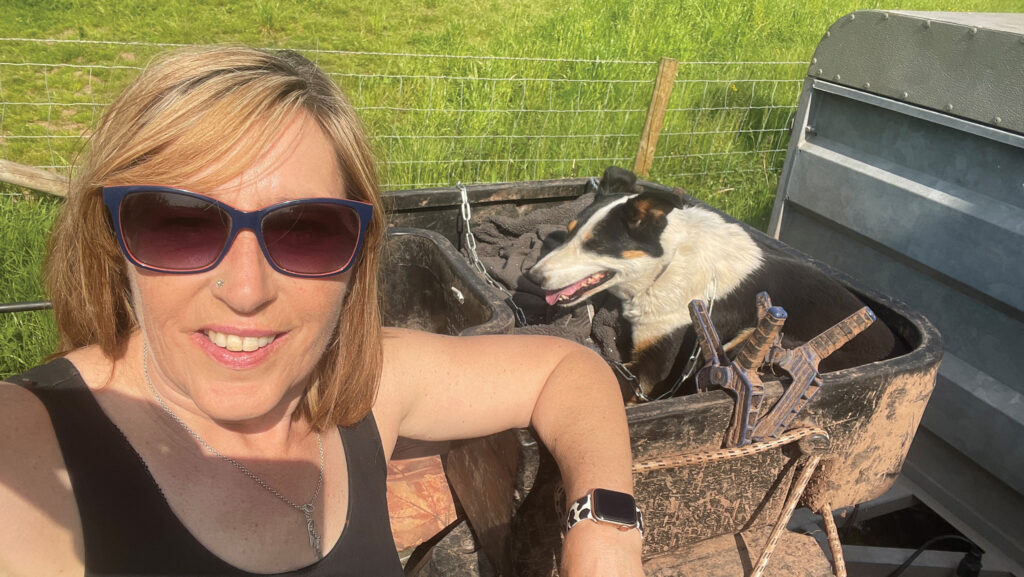 Helen Arnold © Helen Arnold
 A Welsh hill farmer has described how adapting her working day, accepting help and listening to her body has enabled her to continue farming despite living with stage 4 chronic kidney disease.
Helen Arnold, who farms 93ha near Llanishen, Monmouthshire, was first alerted to a problem six years ago when routine blood tests before shoulder surgery suggested kidney failure. After hearing nothing further, she assumed the issue had resolved.
Two years later, however, severe leg pain prompted another visit to her GP. Three rounds of blood tests, scans and specialist investigations confirmed chronic kidney disease, initially stage 3b before progressing to stage 4, leaving her with about 28-35% kidney function.
See also: How on-farm adaptations are helping ease physical strain
Further tests also revealed an autoimmune condition causing her immune system to attack both her kidneys and liver.
“I’m in the 2% in the UK. There’s no known reason, but basically, my own immune system is attacking my liver and my kidneys, but they don’t know why,” she says.
The illness brings constant fatigue, severe muscle cramps, breathlessness, swelling, itchy skin caused by toxin build-up and frequent infections. “Every day is a struggle. Some days I don’t want to get out of bed,” she says.
Despite this, Helen and her husband continue to manage about 280 sheep, including pedigree Welsh Black Mountains and Welsh Balwens, alongside a herd of Aberdeen Angus cattle. She also works three days a week managing an ambulance station and helps care for her 78-year-old father.
Adapting work
Rather than giving up farming, Helen has learned to adapt.
Heavy jobs are tackled when her energy is highest, while lifting is made easier using equipment such as sack trucks and a sheep turnover crate.
During lambing and calving, her husband and self-employed builder son share the workload, allowing her to rest when needed.
“I do it when I’m physically well,” she said. “I know when I’m tired, and that’s when my body’s telling me to rest.”
Looking after herself remains one of the biggest challenges. During busy periods she admits it is easy to miss meals or forget to drink enough water before suddenly realising half the day has disappeared.
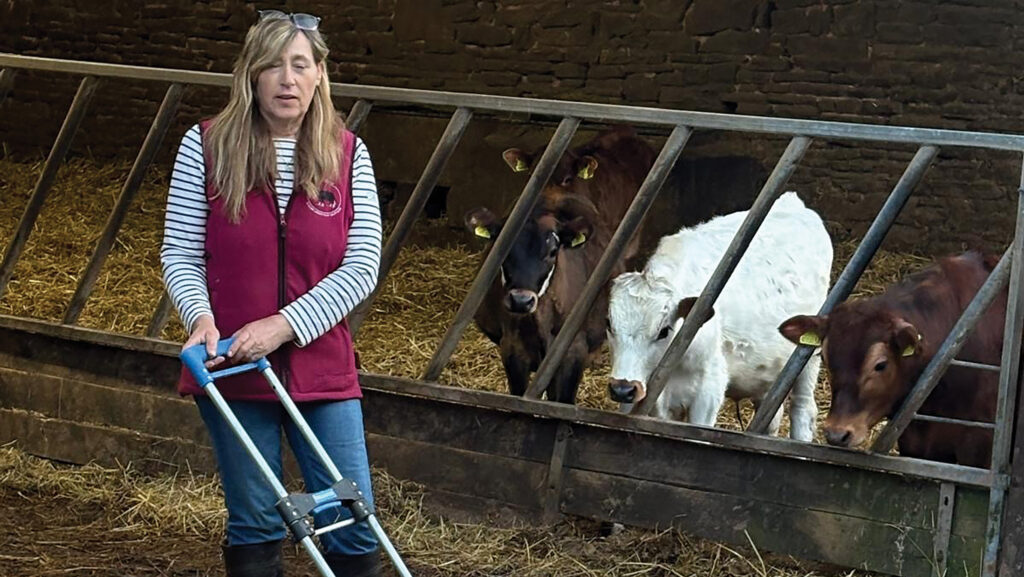
© Helen Arnold
“The hardest thing is trying to maintain a healthy eating lifestyle and making sure you drink plenty, because obviously I’ve got to make sure I take plenty of fluids. That’s the hard bit.
“When you’re on your feet all day and you’ve got lambing left, right and centre, one minute you look at the clock and it’s six o’clock in the morning, and the next minute it’s lunchtime, and you think, ‘Hang on a minute. I haven’t had breakfast’,” she says.
Seeking support
Helen believes early diagnosis is vital and encourages anyone experiencing symptoms such as swelling, itching, headaches or foamy urine to seek medical advice.
“The sooner the diagnosis, the sooner you can be on top of it,” she says.
She credits counselling through Kidney Care UK, music and taking occasional breaks away from the farm with helping her cope mentally.
Her positive outlook is shaped by both farming and her previous work in the ambulance service.
“Every day you’re here is a bonus,” she says.
Building a community
Helen is now hoping to support others facing similar challenges through Farming Pulse, a new social media community for farmers living with chronic illness, which she has set up on Facebook, Instagram and TikTok.
The online network aims to provide a safe space where people can share experiences, practical coping strategies and signpost one another towards medical, emotional and financial support.
“Family don’t always understand it,” she said. “It’s important to get people together with similar conditions who better understand the daily reality of living with chronic conditions.”
Although currently focused on building a peer community, Helen hopes it will eventually develop into a charity working alongside healthcare professionals to improve support for people living and working with long-term conditions in agriculture.