

How on-farm adaptations are helping ease physical strain
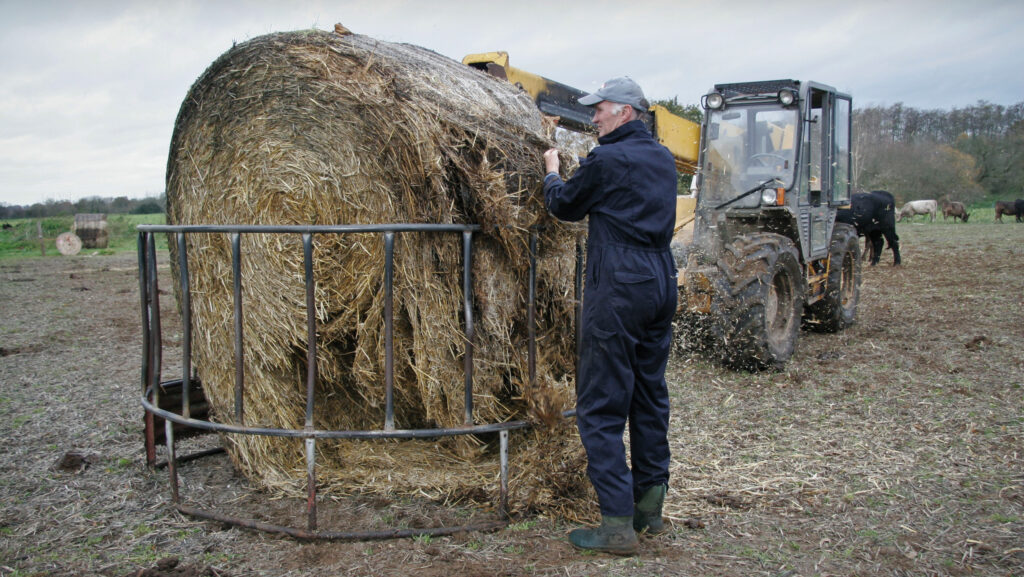 © Tim Scrivener
 Bad backs, bad necks, bad knees, bad shoulders. For many farmers, problems like these are simply part of the job – the result of years spent lifting, carrying, bending and working in awkward positions to get things done.
The results of our latest Level the Field research shows pain becomes part of the working day for lots of people in the industry, long before they are ready to stop.
But with changes to working routines and equipment, some farmers are showing how to keep working well with a physical health condition.
See also: Level The Field survey reveals widespread physical challenges
Loss of vision
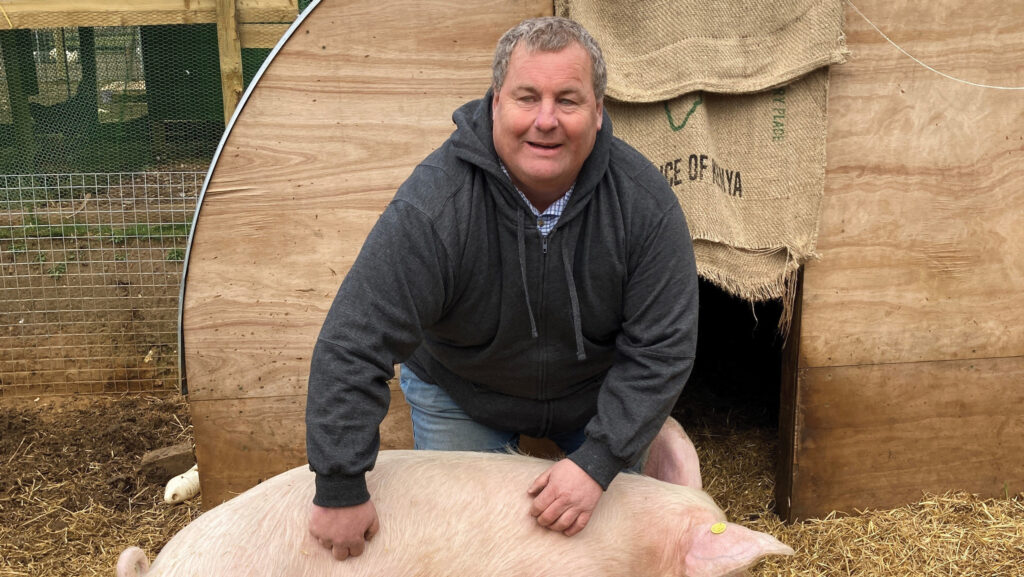
Mike Duxbury © MAG/Ed Henderson
For Mike Duxbury, adapting the job has never been optional. Blind since childhood, he has spent a lifetime finding ways to work safely and independently and now runs Inclusive Farm, helping others do the same.
For him, the biggest misconception is that adaptation has to be expensive or obvious.
“Everybody comes on my farm and goes, ‘it doesn’t look like it’s accessible’,” he says. “But it’s not about big statements.”
Instead, it’s about making the farm work for you.
On his own farm, that starts with layout. He uses different types of fencing so he can tell where he is by touch, and changes in flooring inside buildings so he can navigate even when carrying feed.
But many of his ideas translate directly to reducing physical strain, particularly around joints, backs and long-term wear and tear.
“If you’re going to put sheep in a field, think about how far you might have to walk to get to those sheep,” he says.
The same thinking applies across other sectors. On arable units, for example, it might be finding ways to reduce handling of heavy inputs.
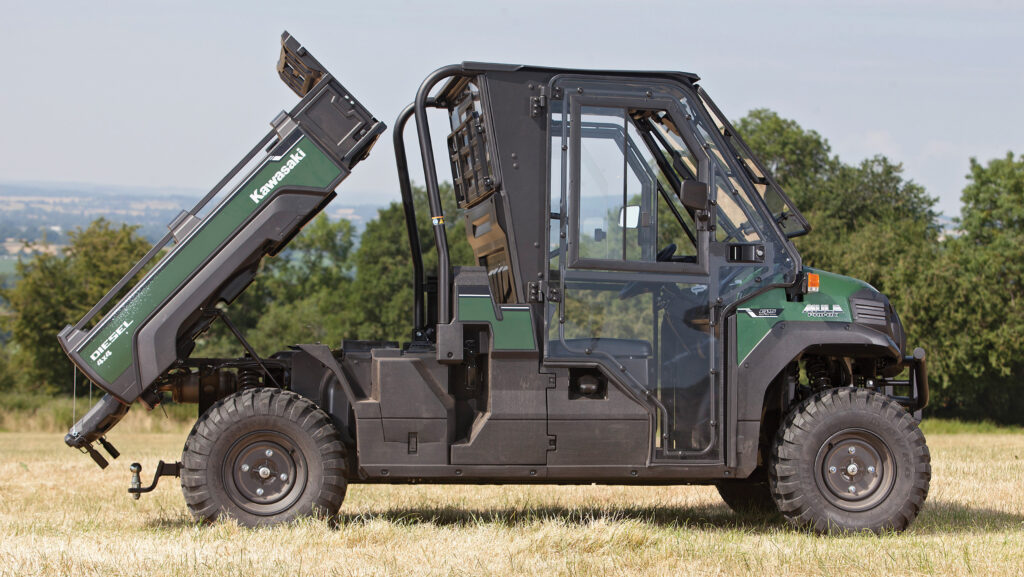
© MAG/Oliver Mark
This mindset has led Mr Duxbury to rely more on vehicles that reduce strain. He regularly uses a side-by-side utility vehicle, a Kawasaki Mule, which allows him to move around the farm, carry equipment or tow a small trailer with minimal exertion.
“I use that more and more because it takes the weight off my joints,” he says.
Where handling stock is concerned, his advice is to remove unnecessary effort.
One example is using a double-ended crook – a crook with a hook at one end and a clip or fixing at the other – which can be attached to a gate or hurdle once a sheep is caught.
“Simple things like that take all the pressure off you,” he says.
Mr Duxbury also highlights the value of small, practical tools that are often overlooked.
On his farm, that includes a talking tape measure and an audible spirit level, which lets him know when something is level without needing to see it.
Increasingly, he is using digital tools. “I can go outside now and photograph something, and it converts it to speech for me,” he says.
For Mike, the point is not the technology itself, it’s recognising that solutions to many problems already exist.
“How do you get in and out of a tractor if you’re really struggling? Build yourself a block so you can step on it and step into the tractor,” he suggests.
“This stuff isn’t rocket science, but people don’t think about it because they’ve not had to.”
Slipped disc
That same mindset runs through the experience of Su Roys, whose family farm sheep in the Lincolnshire Wolds.
Her father slipped a disc in his neck while reaching over to trim a tup’s feet – an injury layered on top of an already damaged knee.
The immediate solution was bringing in a shepherd to cover him, but that was never going to last.
“People like him, as much as he was a lifeline, don’t come cheap,” she says. “That is an emergency resource, but it’s not a long-term solution.”
Instead, the family changed how they worked. A sheep race and turnover crate reduced the need for physical strength and allowed jobs to be done more efficiently.
“If you’ve got to handle a sheep, you’re going to give it everything you can whilst it’s in that race, so you’ve only got to do it once,” Ms Roys says.
That approach is common on many farms, but it needs to be managed carefully.
A large proportion of time spent on tasks like shearing is taken up moving sheep through yards and races, and overloading days with too many additional jobs can mean fatigue and strain build quickly.
How sheep are presented matters too. Full, wet or poorly prepared sheep are harder to handle and increase physical strain, while well-prepared sheep reduce effort and risk.
Now in his mid-70s, Ms Roys’ father is still involved in managing the flock, helped by further adaptations, including a 360-degree “lamb cam”.
“Lamb cam allows my dad to be able to be in the house, not traipsing around in the dark, in the wet and the cold,” she says.
It also improves how sheep are managed, minimising disruptions at a stressful time.
Back surgery
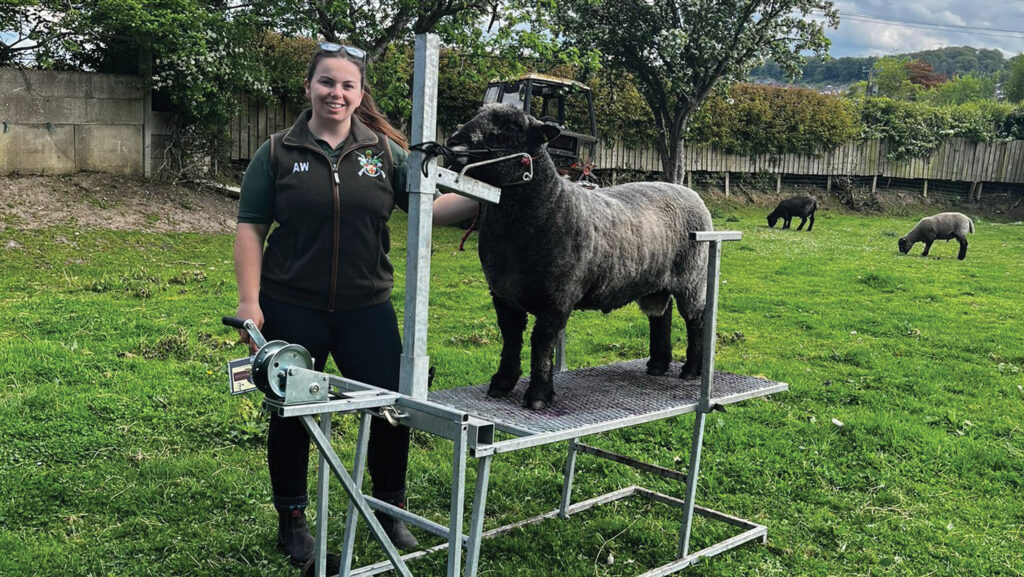
Alys Williams works with an adapted trimming stand to help ease her back pain © Alys Williams
For smallholder Alys Williams, from Flintshire, the challenge came in her early 20s after a back injury followed by surgery. When she started rearing calves, the physical demands quickly became clear.
“There were things like carrying buckets that I started to notice were really quite tough for me,” she says. “My back just couldn’t really do it at all.”
Her solution was an automatic calf feeder. “It helped with the calves and that heavy lifting job,” she says.
When she later brought sheep onto the holding, another issue arose. The race was too low, keeping her in a constant half-bent position.
Rather than replace it entirely, she and her father adapted what they had, raising the race using girders, welded poles and a ramp.
Even then, some jobs still proved difficult. Preparing sheep for showing meant long periods bent over, trimming.
“I just couldn’t stand up straight. The pain was just unbelievable,” she says.
Her answer, following a conversation at the Royal Welsh Show, was a trimming stand made about 22cm higher than standard. The difference was immediate.
“I would feel so guilty asking my parents who are almost in their mid-60s to help me,” she says. “It’s allowed me to be so much more independent.”
Ms Williams believes better-designed, more ergonomic equipment would not only support those managing injury or illness, but help prevent problems developing in the first place.
“I think there’s definitely a market that hasn’t been explored yet in making things more for ease,” she says.
She has also found, however, that newer kit does not always solve the problem.
“If somebody’s kind enough to lend us their tractor, with the new suspension in those seats, that’s one of the worst things for my back,” she says.
“They are so bouncy that I can’t sit on them, it’s horrific. The little passenger seats with the hardboard are far more comfortable for me.”
It is a reminder that not all improvements work for everyone, and that adaptation often comes down to finding what works for the individual, rather than assuming newer means better.
For arable farmers in particular, long days in the cab bring a different kind of strain. Repeatedly twisting to monitor implements, constant climbing in and out of machinery, and vibration from rough ground all take their toll over time.
Small changes, from properly adjusted seats and armrests to better mirrors, camera systems or improved access steps, can make a noticeable difference across a busy season.
Where to start with making adaptations on your farm
1. Identify the job causing the problem – be honest about what hurts, whether it’s lifting calves, climbing into tractors, or long hours in the cab.
2. Change how the job is done first – before buying equipment, ask if the task can be done less often, combined with another job or moved somewhere more accessible.
3. Adapt what you already have – many effective changes are simple, such as:
- Raising handling facilities or work surfaces
- Adding blocks or handrails to access machinery
- Improving access around yards.
4. Focus on high-frequency tasks – feeding, handling stock, moving materials and getting in and out of machinery – small improvements here make the biggest difference.
5. Reduce lifting and repetition – look for ways to remove the heaviest daily jobs through layout, use of equipment, or breaking down loads into smaller containers.
6. Talk to other farmers – some of the best ideas come from conversations at shows, markets or with neighbours.
7. Don’t assume newer kit is better – what works on paper may not work in practice. Try before you invest where possible.
8. Think long-term – if a job is already causing strain, it will cost you later in time, labour or injury.
Level the Field
Our campaign, Level the Field, aims to make agriculture fairer, more equitable and more inviting for everyone.
By engaging people and organisations across our industry, Level the Field will champion inclusivity for the benefit of farm businesses and all who work in them.
This year, the campaign puts the spotlight on physical health in agriculture. Previous years have focused on neurodiversity and women in farming.
See more on our Level the Field campaign hub.