‘It happens here’: Farming urged to confront domestic abuse
 © Stephen Bridger/iStockphotp
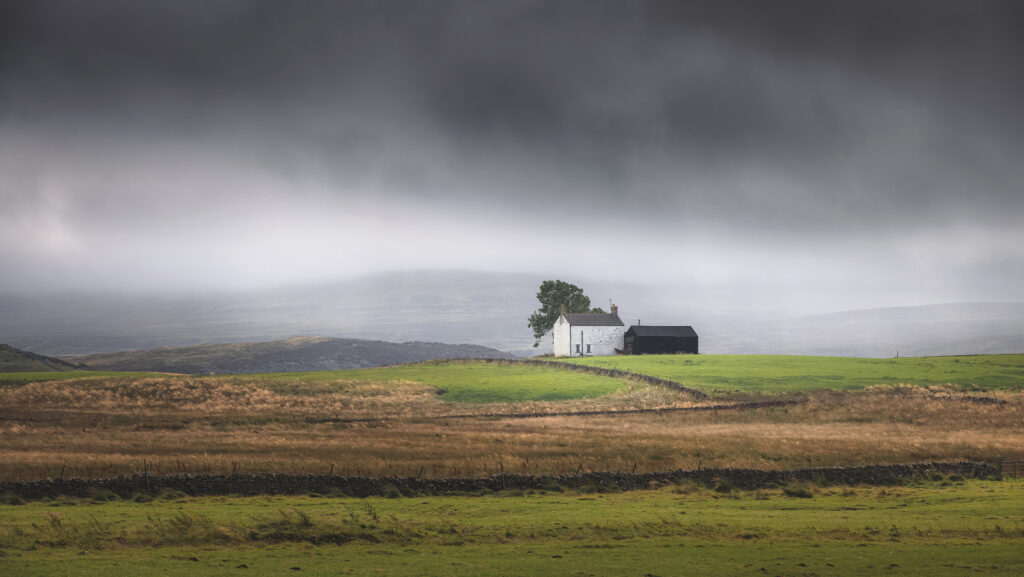
 Domestic abuse is not an urban problem that occasionally reaches the countryside. It happens behind farmhouse doors too, where aspects of rural and farming life can make it extraordinarily difficult to identify and escape.
Isolation, financial ties, livestock, land, poor transport and close-knit communities can all become additional barriers for victims, while abuse can remain hidden in places where everybody appears to know everybody else.
See also: A hidden rural issue that needs exposing
An estimated 3.8m people aged 16 and over experienced domestic abuse in England and Wales in the year to March 2025, according to the Office for National Statistics.
Yet survivors and campaigners told a Women in Agriculture network event that the true scale of the problem in rural communities remains poorly understood.
Rhianon Bragg, a rural domestic abuse and stalking survivor and campaigner, said her perpetrator had “maximised the aspects of rurality to his benefit”.
“I can remember having conversations with people, and in my head thinking, ‘Please ask me. Please say something’,” she said.
“I couldn’t bring myself to say it. Shame, fear, whatever it was.”
She questioned whether one of the fundamental problems facing rural communities was simply recognising that abuse was happening.
“Is it so established and embedded over the centuries that they’re not even seeing it for what it is?” she asked.
Additional opportunities
Judith Vickress, founder and managing director of advice group Rural Initiatives Tackling Abuse, stressed that domestic abuse itself was no different in the countryside, but rurality could give perpetrators additional opportunities to exercise control.
Those choosing to abuse could restrict access to money or transport, while the tightness of rural communities – ordinarily one of their greatest strengths – could allow perpetrators to build a respected public persona that bore little resemblance to their behaviour at home.
“Behind those closed doors, that coercion and control look very, very different for the victim survivor,” she said.
Llinos Owen, High Sheriff of Gwynedd, said agricultural communities needed to accept that society had changed.
“We need to sit down. We need to think positively. How can we help? How can we support these women – and children, because we need to consider children living on the farm as well?”
Veil of silence
Recognising abuse also means looking for signs beyond obvious physical injury.
Ms Vickress said “behaviour sometimes is disclosure”, with sudden mood changes in children or adults potentially offering clues that something is wrong.
Perpetrators might gradually reduce a victim’s world by accompanying them to appointments, waiting outside shops, controlling vehicles, or restricting access to bank accounts.
“Isolation is not just geographic; it’s relational,” she said.
© PeopleImages/iStockphoto
Reducing somebody’s ability to interact with friends, colleagues or services could make them less visible and less able to seek help.
Domestic abuse therefore needed to be viewed in the same way as other safeguarding concerns rather than dismissed as a private matter, she added.
That did not mean depicting farming or rural communities as inherently abusive.
“The majority of men are are good,” Ms Vickress said. “The majority of people are good.”
But she added that the prevalence of abuse meant victims would inevitably be present within agricultural communities.
“Particularly in the agricultural community, which is still dominated by men, we have the responsibility to lift that veil of silence.”
Leaving the farm
For victims on farms, the question “Why doesn’t she leave?” can overlook both what leaving involves and the danger it can pose, with Ms Vickress stressing that separation is a particularly high-risk period in an abusive relationship.
“Victims and survivors know their risk. They know that if they leave, they are more likely to be killed.”
The home may also be the workplace and business, with livestock to care for, children in local schools and finances, vehicles and assets intertwined.
Close-knit communities can create another barrier. “Everybody knows one another, so it is very, very difficult for somebody to ask for help,” said Ms Owen.
Michelle Grosse, of Rural Action Derbyshire’s Willow Project, asked: “How do you leave your seventh-generation farm? How do you walk out the door when there are animals that need to be cared for?”
Refuge accommodation may be equally impractical.
When abuse survivor Ms Bragg asked what would happen if her perpetrator arrived after being released from prison, she was told she could enter a refuge.
“Really? Me, four children, 40 sheep, two horses, four dogs, five chickens and the rabbit? It is so not set up.”
Laws written for cities
Campaigners argue that policies intended to protect victims can contain assumptions better suited to urban life.
Ms Bragg, who lives about 20 minutes from the nearest town, questioned how quickly police could reach her in an emergency.
Even if an officer responded immediately, she said, “they still wouldn’t get here in time”.
While the Domestic Abuse Act 2021 strengthened recognition of economic abuse, coercive and controlling behaviour and the risks around separation, Ms Vickress argued its application had not been properly “rural-proofed”.
Services including policing and healthcare can also cost more to deliver across dispersed populations, while funding may be based largely on population.
“Rural local authorities, rural policing – they actually need more money, despite having a smaller population,” Ms Vickress said.
Ms Bragg highlighted offender restriction zones as another example.
Rather than relying on geographic distance, she argued rural restrictions should consider time – including whether police could reach an offender who breached any exclusion zone before they could reach the victim.
It demonstrated, she said, how apparently reasonable protections can fail to account for rurality.
Who notices?
Improving support does not mean turning every vet, farm adviser, teacher or police officer into a domestic abuse specialist.
Campaigners instead want people routinely working within rural communities to recognise signs, ask questions safely and know where specialist help can be found.
Ms Grosse said fear of opening a “can of worms” could deter people from intervening because they worried they would then become responsible for solving the situation.
“You don’t need to fix everything for them, because you can’t,” she said.
She compared it with “leaving the light on” – letting somebody know help is available even if they are not yet ready to accept it can be helpful in itself.
There was also a role for visitors to a farm – be they vets, union officials, feed reps or even firearms officers – to be aware of the issue, to pick up on any signs, and to be able to offer and signpost to support.
Power of community
However, campaigners stress that rural communities should not feel they are the problem. “They are absolutely part of the solution,” said Ms Vickress.
The close relationships that can make disclosure difficult can also become a source of support when people recognise the signs of abuse.
Ms Bragg said it was important to remember the positives of rural life.
“We do know each other, we are connected,” she said, highlighting the “almost therapeutic power of living rurally” and working with animals.
Farming has confronted difficult conversations before, with years of work helping break the stigma around poor mental health.
Domestic abuse requires a similar shift – not by blaming farming communities, but recognising their potential to notice, ask and support.
But first, agriculture must accept: it happens here.
What agriculture can do now
- Provide confidential support routes – Farming organisations should have clearly visible links to specialist domestic abuse support on their websites.
- Keep the conversation going – Include information regularly in newsletters and at agricultural venues, including discreet posters and stickers in toilets.
- Train staff and employers – Build domestic abuse awareness into workplace training so people can recognise warning signs and respond appropriately.
- Know where to signpost – People do not need to become domestic abuse specialists but should know where someone can access professional help.
- Have the confidence to ask – Simple questions such as “How are you?” or “What’s really happening?” can leave the door open for someone to seek help.
- Educate young people – Teach children about healthy relationships and acceptable behaviour from an early age.
- Push for rural-proofed policy – Encourage politicians to ensure domestic abuse policy, funding and services reflect the realities of rural communities.
Organisations that can help
England – National Domestic Abuse Helpline (Refuge): 0808 2000 247
Wales – Live Fear Free (call welcome in Welsh): 0808 80 10 800 or Text: 07860077333
Scotland – Domestic Abuse and Forced Marriage Helpline: 0800 027 1234
Northern Ireland – Domestic and Sexual Abuse Helpline : 0808 802 1414