Rural poverty in Britain: The crisis hiding in plain sight
Rural poverty in Britain is a structural and often overlooked issue that risks widening inequality and weakening local economies if left unaddressed.
That is according to a report that highlights the growing pressures facing farming and rural communities, where higher living costs, limited services, and economic fragility are placing increasing strain on households and businesses.
See also: Maddening Trump tips UK farmers into the red
Published by the Labour Rural Research Group (LRRG) and funded by the Countryside Alliance, the report says policies designed for urban areas have failed to account for the distinct challenges of rural living.
It suggests that without decisive action, the economic and social fabric of rural Britain, including its farming communities, will come under increasing strain.
The LRRG, made up of more than 40 rural and semi-rural MPs, argues that rural communities have too often been seen as relatively affluent or politically marginal. As a result, targeted policy responses have been lacking.
“Rural poverty is not a marginal concern; it is a structural failure hiding in plain sight,” says Tim Bonner, chief executive of the Countryside Alliance. “The evidence gathered in this report is unambiguous.”
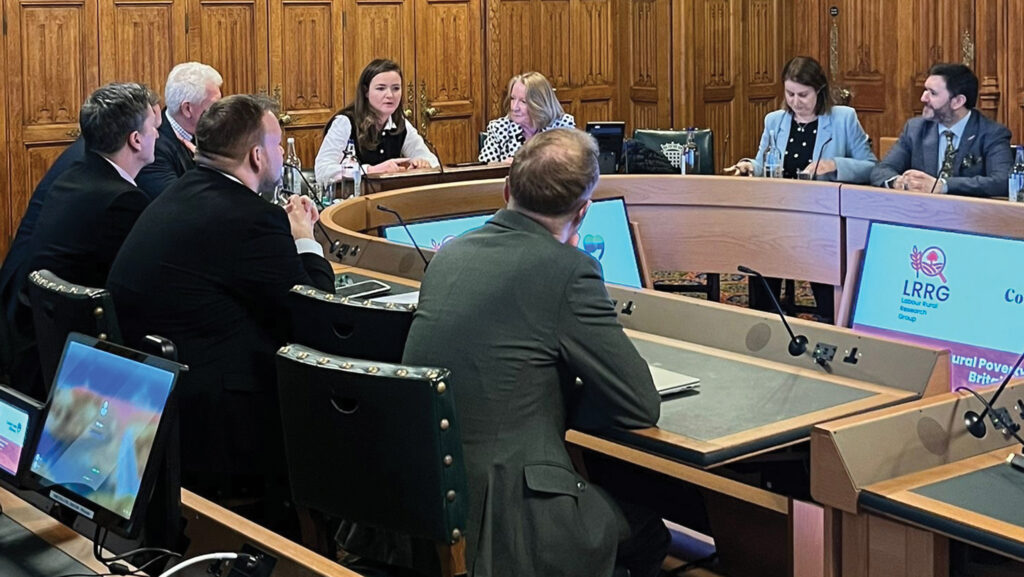
Members of the LRGG at the report launch © LRRG
Cost of living
The report identifies the higher cost of living as the primary driver of rural poverty, with farmers and rural households facing what many describe as a “rural premium”.
People living in the countryside often travel further for work, education and essential services, while access to lower-cost retailers can be limited.
Gavin Lane, Country Land and Business Association president, says: “It is often more expensive to live and work in rural areas, as highlighted by the doubling of heating oil prices in recent weeks, placing households and businesses under huge financial pressure.”
Official data shows rural households also spend an average of £39 a week more on transport than urban residents.
Combined with higher energy and food costs, this adds up to thousands of pounds in extra annual spending.
Rural homes
Energy costs are identified as a particular contributor to rural hardship.
Many rural homes are older, larger and less energy efficient, resulting in higher overall consumption.
Government data shows the average annual energy cost for rural households stands at £2,740, compared with £1,978 in London.
For those not connected to the gas grid, reliance on heating oil or liquefied petroleum gas (LPG) pushes up the bills.
These fuels are not subject to the same price cap as mains gas and electricity, leaving households exposed to price volatility.
Evidence submitted to the report suggests oil heating can cost 50% to 100% more than gas, while electric heating may be up to three times more expensive.
A spokesperson for the Department for Energy Security and Net Zero, however, told Farmers Weekly that tackling the affordability crisis was the government’s number one priority.
Under the Warm Homes Plan, £15bn is being allocated nationally to help upgrade up to 5m homes and potentially lift up to 1m families out of fuel poverty by 2030.
These funds will be available to rural residents as well as those living in towns and cities.
Another challenge is the way fuel is purchased. Rural households often have to buy heating oil in large volumes, placing additional strain on cashflow.
Jenny Riddell-Carpenter, MP for Suffolk Coastal and chairman of the LRRG, highlights the impact of global events on fuel prices.
“In a matter of days since the war began with Iran, we’ve seen off-grid oil prices surge by more than 100%, leaving thousands of UK rural households extremely vulnerable,” she says. Many rural families now fear they may not be able to afford to heat their homes.
Barriers to healthcare add to the pressures
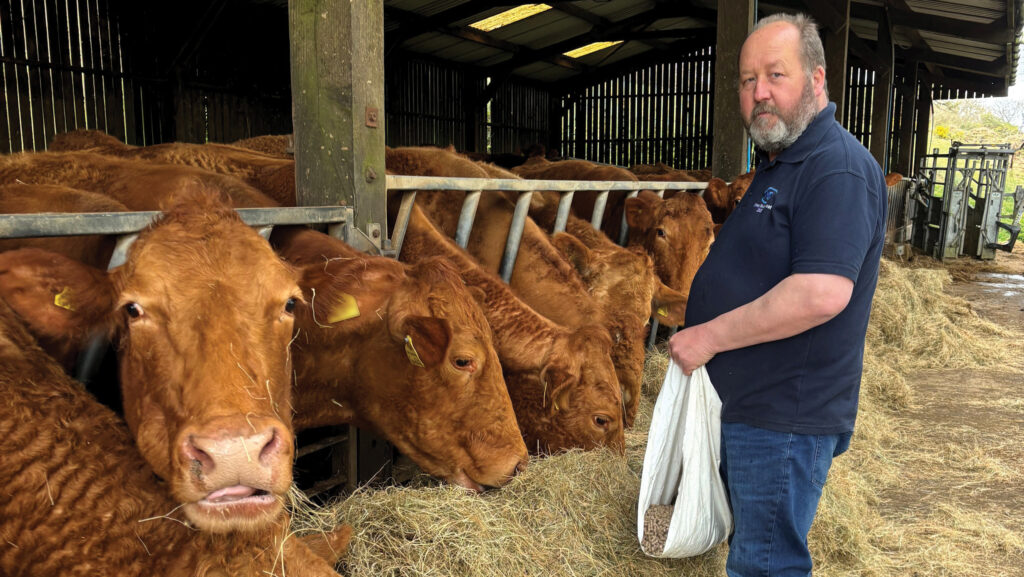
Devon farmer David Gregory has faced long, costly journeys to access cancer treatment © FCN
Access to healthcare remains a significant issue in rural areas, with distance and transportation barriers being major factors.
This was the case for north Devon beef and sheep farmer Dave Gregory, who has spoken about the challenges of accessing cancer treatment in rural areas.
Mr Gregory was diagnosed with prostate cancer in 2018 and continues to manage other health conditions, including diabetes and a heart issue requiring a stent.
“You can access a GP or your A&E department usually fairly locally, but cancer treatment takes place in the larger hubs. That means you have to travel,” he says.
For Mr Gregory, treatment required regular journeys of more than 90 minutes each way to hospitals in Taunton and Exeter. “I had excellent treatment at these centres, but the travelling became an issue not just for me but also my family,” he adds.
Following a relapse in June last year, he faced further travel for diagnostic scans and radiotherapy. Daily trips to Exeter for a month meant a 150-mile round journey.
“I can drive myself, but there are many people who can’t and it’s exhausting,” he says.
“We are a long way away from what is needed for cancer treatment. There are huge inequalities that affect all rural people,” he says.
The Rural Communities Cancer Project, a UK-wide partnership between the Farming Community Network (FCN) and Macmillan Cancer Support, highlights that a lack of public transport in rural areas affects many cancer patients.
Centralising healthcare improves overall efficiency but can exclude rural patients, causing delayed treatment and worse health outcomes.
Linda Jones, FCN Cymru manager, says: “Most people living in rural areas have limited means to attend hospital or GP appointments by public transport. This often means that people have to rely on the availability of family and friends.”
Tenant farmers
Poor housing conditions and rising rural living costs can take a particular toll on tenant farmers, according to the Tenant Farmers Association (TFA).
Many are required under tenancy agreements to live in properties that are larger than necessary and often fall below modern standards of repair and energy efficiency.
These homes can be more expensive to heat and maintain compared with those in the wider private rental sector, adding to pressure on already tight household budgets.
TFA chief executive George Dunn says: “Tenant farmers are some of the hardest working and most cash-constrained inhabitants in our rural areas.
“They routinely work to tight budgets which can be thrown off course by cost increases in fuel, food and energy.”
The TFA also highlights concerns over council tax, noting that farm tenancy properties are often rated higher than comparable urban homes.
Mr Dunn is seeking a rebalancing of property ratings in future reviews.
Cost of farming
For farming families, rising energy and fuel costs come on top of wider business challenges, including volatile markets and input inflation.
“For agricultural businesses, there are huge increases in input costs, with substantial rises in the price of diesel adding significantly to business costs as we head into the critical spring and summer months,” says Kath Withrow, chairman of NFU Cymru’s less-favoured area board.
These pressures reduce margins and increase financial risk at a time when many farms are already operating on tight budgets.
Rob Powell, who manages livestock and poultry alongside a contracting business near Builth Wells in west Wales, says red diesel has risen from about 68p/litre to £1.28/litre.
This will add about £2,800 to routine fieldwork, which the farm business must absorb. Fertiliser prices have also climbed by a third to more than £500/t for ammonium nitrate, with orders taking up to three weeks to arrive.
“Fat lambs and store cattle are selling well, but we can’t just add a surcharge to our produce. It all comes off our bottom line,” he says.
The report suggests that without targeted support, these combined pressures could undermine the viability of some agricultural businesses, with knock-on effects for rural economies.
Recommendations to government
Tackling rural poverty requires a clear shift in policy, with solutions designed specifically for countryside communities. Key recommendations in the report include:
- Expanding support for off-grid energy users, including targeted fuel poverty measures
- Investment in rural retrofitting and energy efficiency programmes to close the energy performance gap
- Improving transport policy by factoring in cost, accessibility and reliability
- Ensuring rural areas are prioritised in healthcare reforms, including the rollout of community-based services
- Recognising rural poverty as a distinct issue that requires tailored interventions.
Tim Bonner at the Countryside Alliance says: “We urge the government to treat the recommendations in this report seriously and to move with pace. Rural people have heard warm words before – what they need is action.”