Will’s World: The timeless pull of a ploughing match
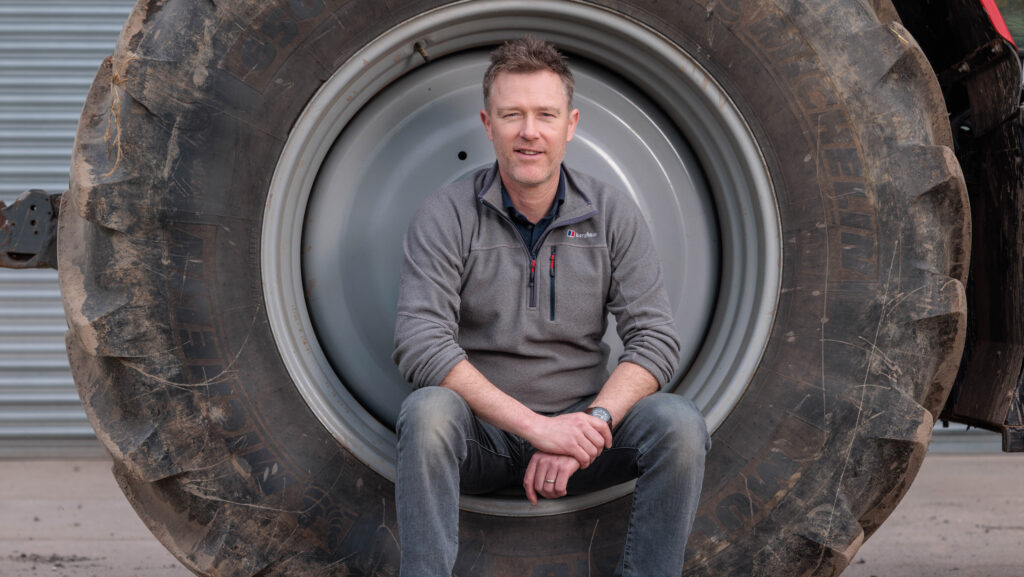 Will Evans © Lee Boswell Photography
 There’s something tremendously evocative about a ploughing match.
It might be the smell of freshly turned earth combined with diesel fumes and the faint whiff of distant tobacco.
See also: Ways housed herds can plan for the next heatwave
Perhaps it’s the array of brightly coloured tractors standing out vividly against the stubble, and the multiple lines of arrow-straight furrows stretching off towards the horizon.
Maybe it’s the chinking of heavy horse harness and the purring of engines that still sound as sweet as the day they were put together all those decades ago.
People watching
I suppose it’s all these things combined, but it’s the people that interest me the most.
The weathered-faced older gentleman driving a pristine Massey Ferguson 35; flat cap pulled low, lips pursed in concentration as he cast a self-critical eye back over his handiwork.
The boisterous toddler excitedly bouncing up and down on his dad’s shoulders shouting “Tractor! Tractor!” at the top of his voice.
The self-assured young farmer in the world ploughing class with his name on the Ford 8630’s bonnet in large letters, and a plough with more modifications and gadgets than James Bond’s Aston Martin.
We added to the multi-generational aspect of the day ourselves, with the old man, me, and the daughter most interested in farming heading east over Offa’s Dyke to see what Shropshire’s finest ploughmen and women had to offer.
Rather wonderfully, the first Cruckton Ploughing Match took place in 1927, with the society formed that year as a result of two farmers having a bet as to who could plough the straightest furrow.
The wager took place in the Hare and Hounds pub, and the winner received a tankard of beer along with the bragging rights.
I don’t know if that fine and noble tradition has been kept up, but I really hope so.
If you’re interested, you can find a short British Pathé video online entitled Premier sees the People, of the then Conservative prime minister, Harold Macmillan, visiting the match in 1958.
The commentator describes the scenes in the beautifully clipped BBC English of the time, but they don’t look too far different from today’s.
A few more pipes being smoked, and ties and headscarves worn, perhaps, but otherwise it’s largely unchanged.
My favourite part is Macmillan chatting with an immense looking character in a straining waistcoat and tattered cap called George Metcalfe, who “claimed to have been a hedger for so long that there was no fresh place on his hands that thorns could make bleed”. I bet that was true, too.
“Ploughing with horses is still done with the inherited skill of centuries,” the commentator enthuses.
I wonder if they could have imagined then that 68 years later, it still is, and there were several superbly turned-out specimens in action this time.
Shire beauty
The three of us sat and watched enraptured as a youngish man with a pair of black Shire horses produced some of the smartest ploughing that you could hope to see anywhere.
Perfectly even, with furrows standing up beautifully, it was a privilege to see a true artist at work, and we marvelled at the control he had over the gentle giants as they turned on a sixpence at his command at the end of each furrow.
We told my daughter stories of her great grandfathers ploughing with horses as young men, and the dramatic changes they saw with the advent of mechanisation.
I silently wished they were still here to tell her about it themselves – how they’d have enjoyed it.
In this rapidly changing world, it’s a comfort to know that old farming practices remain.
Long may they continue.