Alice Littlewood: What I learned about farming from Peru trip
 © Adobe Stock
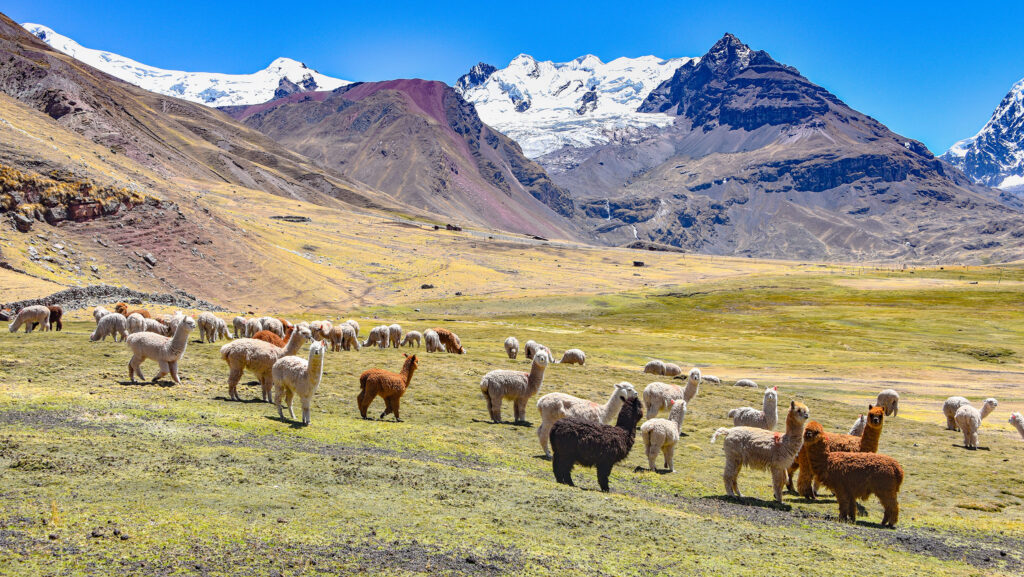
 I’m writing this in a lull from my project work in a small camp in the Andes of Peru, a few hours out from Cusco.
The sky is clear and, from where we are at the top of a valley, we can see for miles.
Farming here is worlds away from anything I’ve ever seen. Firstly, I’m struck by the size of the farms.
The locals have divided land into plots of about one fifth of a hectare. Harvest is a completely different undertaking to that in the UK.
See also: Alice Littlewood – farmers need to show what they’re fighting for
About the author

A few weeks ago, some friends and I helped a maize farmer husking produce. It took about 10 of us all day to do little more than a tenth of a hectare’s worth of maize, which had taken the farmer a few days to cut and stack into piles.
He owned six similar-sized fields, two of which were growing quinoa that had been harvested the previous month, and three pigs, as well as a donkey and a mule.
The terrain he farms is on a mountainside, about 4,300m above sea level.
Then there’s the scale of machinery and the community involvement. In Maras, there were only three small combine harvesters, and in Tarawasi I saw maybe four, all from the 1990s and shared between farmers across the whole town.
We take for granted the mechanisation and self-determination on most farms in the UK. It made me wonder about how our grandparents and their parents farmed, when we had smaller fields, more biodiversity and a shared community working together.
The huge variety of potatoes being grown also stood out. We met a farmer who, with her husband, grew 214 different varieties of potatoes on the mountainside.
There are more than 500 varieties across the Cusco region, all with different medicinal or cosmetic properties.
In England, I have only ever been aware of a handful of varieties being grown commercially, and supermarkets lined with identical produce – so seeing such diversity was fascinating.
The crops and farming methods are closely connected to the local landscape and traditions. Perhaps UK agriculture has more to learn from Peru than we might think at a glance.