FW Awards: Meet the 2026 Ag Student of the Year finalists
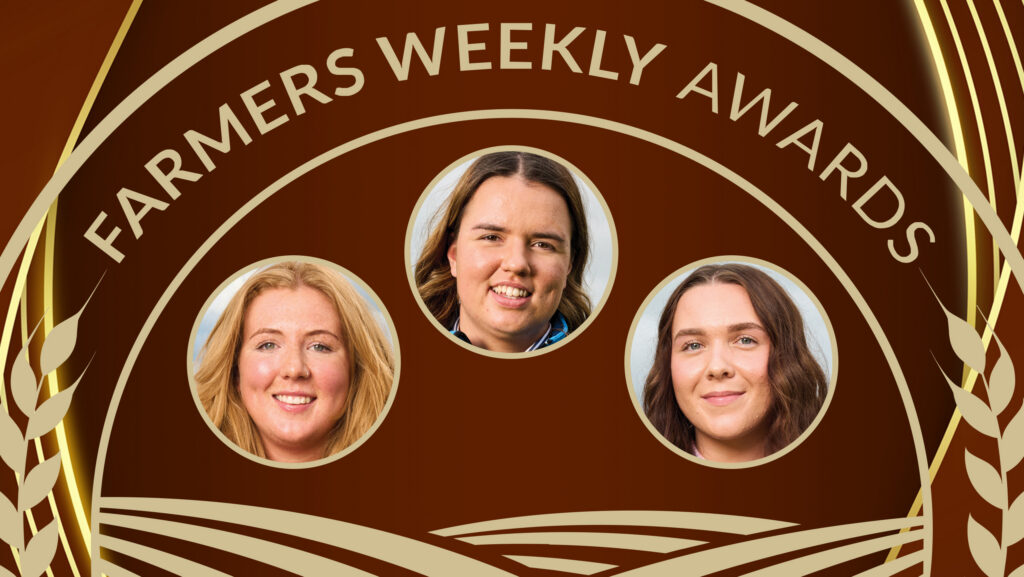 Betty Battarbee, Emma Burgess and Rhian Griffiths © Oli Lees
 Three female finalists from dairy and livestock backgrounds blew the judging panel away with their grit, determination and passion.
See also: FW Awards 2026: Meet the finalists
Finalists
- Betty Battarbee, Goosnargh, Lancashire
- Emma Burgess, Quendale, Shetland
- Rhian Griffiths, Llanddewi-Brefi, Ceredigion
The judges
- Joe Stanley – Joe is head of sustainable farming at the Allerton Project, combining livestock and arable expertise to develop resilient, future-fit British farming systems.
- George Elliott – FW’s 2025 Ag Student of the Year, George helps to deploy a new generation of tractors for JCB, while championing better use of farm data.
- Anne Dunn – FW’s News and Community reporter Anne has a passion for agriculture policy, animal health and politics.
Betty Battarbee, Goosnargh, Lancashire
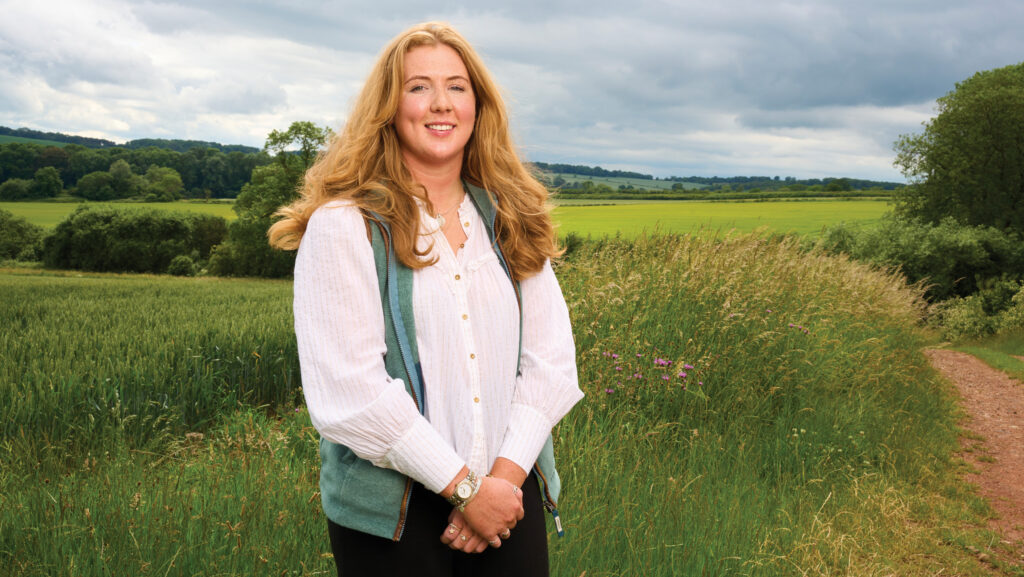
Betty Battarbee © Oli Lees
One of six siblings, Betty grew up on her family’s dairy farm and always knew she wanted a career in agriculture. But before starting university at Harper Adams in 2021, she lost her father, a blow that brought new responsibilities alongside the challenges of higher education.
During her first year, Betty helped her mother keep the dairy business running, working with advisers on feed and cropping decisions while taking charge of the herd’s breeding programme after gaining her artificial insemination (AI) qualification.
“I made key decisions, including selecting a new AI company, implementing breeding strategies and managing reproductive performance,” she says.
Tragedy struck again during her second year when her mother died from cancer in December. Betty returned home and assumed full responsibility for the farm, overseeing its eventual sale.
“I identified and negotiated with buyers, co-ordinated with the auctioneer, and managed the transition process,” she says. “Alongside this, I trained a new team on the parlour system and day-to-day operations, ensuring continuity throughout the handover.”
Harper Adams lecturer Louisa Dines described Betty as exceptional. “She has shown such resilience and chosen to just carry on. She wouldn’t think she’s worthy or recognise what she’s achieved,” she says.
“I’ve taught and tutored a lot of ag students and never met anyone so remarkable or resilient as Betty has been.”
Academia
Despite the upheaval, Betty continued her studies and secured a George Crawford Scholarship, which enabled her to spend a year in Canada as assistant herd manager at Hesdon Holsteins.
“One of my last conversations with mum was when she told me to travel,” says Betty, who adds that the experience has made her a better student.
“This experience allowed me to directly apply academic knowledge and further develop my interest in genetics and herd improvement,” she says.
The placement strengthened her interest in genetics, an area closely linked to her father’s career, and reinforced ambitions to work in the sector. After returning to the UK and moving in with her grandparents, she resumed her final year.
Her dissertation examines mental health and help-seeking behaviour among UK cattle farmers and the influence of policy and regulation.
“Losing my parents and the family farm at the age of 21, I understand poor mental health,” she says.
Betty has also completed projects on farm business planning and gained experience in calf rearing, genomic selection and AI. This year, she received the Clyde Higgs Scholarship in recognition of her academic and industry achievements.
Extra-curricular
Practical farming experience has shaped much of Betty’s life. At 17, after saving for her first car, she took a job on a 350-cow dairy farm near Penrith, working long hours away from home.
She continued developing skills in herd management and breeding and remains particularly proud of taking responsibility for breeding decisions early in her career.
Although personal responsibilities have left little time for hobbies, she still managed to complete the Vancouver Sun Run 10km race while in Canada.
What next?
Betty will return to Canada this summer for a further placement before travelling to Australia later in the year.
Eventually, she hopes to work in genetics with either Genus or Cogent. “That was dad’s background and that would mean a lot to me,” she says. “I can’t improve things on our farm but I can help other farmers.”
She also hopes to become more involved with mental health charities and support services.
Student notes
- Studying at: Harper Adams University
- Course: BSc Agriculture
- Study year: Fourth
- 3 words to describe herself: resilient, optimistic, “for mum”
The judges liked
- Awe-inspiring resilience and ability to overcome adversity
- Outstanding passion for specialist topics, genetics and technology
- Ability to push herself out of her comfort zone and excel academically
- Valuable experience of farming systems in other countries and the ability to practically apply knowledge
What the judges say
Despite significant early challenges, Betty has shown remarkable determination and resilience. Inspired by her parents’ passion for farming and travel, she has the ambition, skills and drive to make a lasting contribution to agriculture.
Emma Burgess, Quendale, Shetland
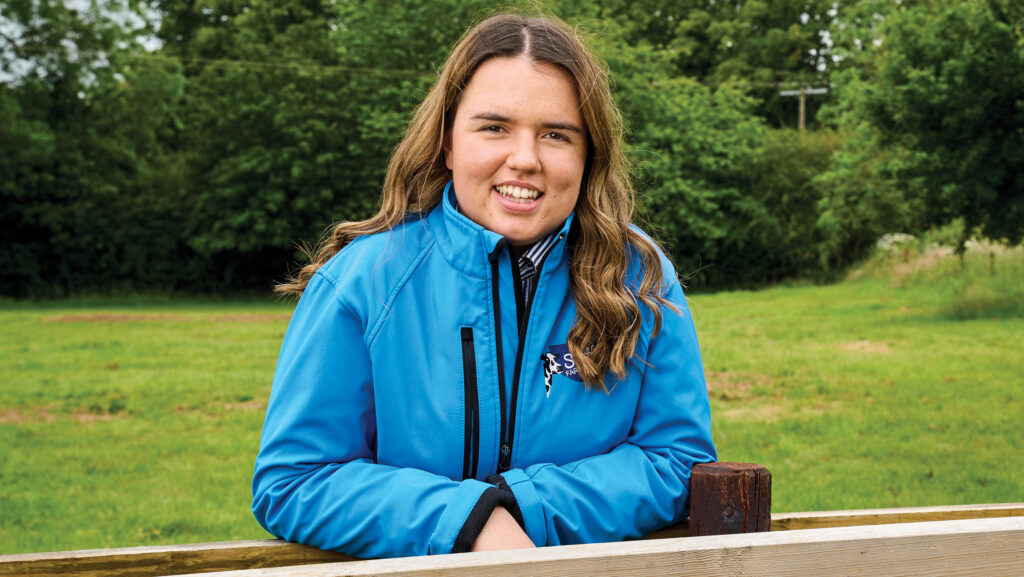
Emma Burgess © Oli Lees
Emma farms alongside her father on the south side of the Shetland Islands, where they run a sheep and dairy enterprise, as well as the island’s creamery.
Shetland lies 220 miles from mainland Britain which, says Emma, means farmers often miss out on the opportunities available elsewhere.
“The island can be very traditional, with the same methods followed for decades,” she says. When she was born there were 12 dairy farms on Shetland. Today, only two remain.
Recognising that change was essential if the family business was to survive, Emma left the island aged 17 to take a lambing job in England, despite not everyone being on board with the idea.
“Dad was sceptical, school didn’t really help – they wanted me to become a home-ed teacher. The seeds of doubt were sown.
“But I decided to go anyway. This opened my eyes to how small and niche our farming system was in this sector.”
That experience led her to Harper Adams University, where she saw the chance to gain practical knowledge to strengthen both her family’s business and the wider farming community back home.
“I always get asked why I didn’t study in Scotland. But for me, I wasn’t going to university to get a certificate at the end. I wanted to have the resources to learn about different sectors in the industry to bring back home.”
Academia
Emma says Covid-19 disrupted her education, leaving her to spend much of her final school years working full-time on the family farm, an experience that ultimately gave her the confidence to leave Shetland.
In her second year at Harper Adams, she was diagnosed with dyslexia and dyspraxia. Weekly one-to-one support helped transform her academic performance, while the Farm Business module equipped her with the practical financial skills she now uses on the family farm.
“From barely being able to work a spreadsheet, now having the ability to understand and draw up farm accounts at home – it’s a huge difference.”
Her fourth-year business report, which scored 64% and placed her in the top 10 of her cohort, was a particular highlight.
A placement year at an Angus stud in New Zealand also influenced her career ambitions after witnessing the poor treatment of young agricultural workers.
“Agriculture employment is so topical with the workforce ageing, but how can we expect to encourage young people into the industry if we don’t treat them right and provide them with the opportunity to grow,” she says.
Lecturer Russell Readman says Emma has always been driven to improve the home farm rather than simply earn a degree. He praised her determination, noting she raised her classification from a 2:2 to a 2:1 after receiving learning support.
“Emma inspires others and pushes out of her comfort zone. She wants the whole experience,” he says.
Emma has also been awarded the CLA Charitable Trust Scholarship and the Duchy of Lancaster Agriculture and Environment Scholarship.
Extra-curricular
Alongside her studies, Emma’s responsibilities on the farm have expanded beyond livestock management to include business planning, staffing, customer relationships and creamery operations.
While in New Zealand she played second row for Waitete Women’s Rugby Club and has continued playing for Harper Adams and Shetland, saying rugby has strengthened her communication and leadership skills.
She also served as a Harper Adams student ambassador and previously held the role of assistant treasurer for Shetland Young Farmers.
What next?
Emma aims to further grow the family dairy by increasing herd efficiency, generating more milk with fewer cows, implementing cropping methods that enhance soil health, and strengthening customer relationships.
She also hopes to make the creamery’s packaging more sustainable by replacing plastic butter tubs with wrapping.
Longer term, she wants to improve training opportunities for young people on Shetland.
“I really believe it was important for me to go away and bring back new ideas and knowledge, not just for my benefit but to help, teach and create opportunities for our young staff and young farmers.”
Student notes
- Studying at: Harper Adam University
- Course: BSc Agriculture
- Study year: fourth
- 3 words to describe herself: motivated, business-minded, community-focused
The judges liked
- Strong understanding of farm business and consumer issues
- Inspires the next generation through farming and food education in Shetland
- Committed to strengthening her community by bringing home new agricultural knowledge
- Has overcome dyslexia and dyspraxia by pushing beyond her comfort zone
What the judges say
Leaving Shetland to study agriculture transformed Emma’s confidence and leadership. She is returning with the skills, ambition and experience to strengthen her family’s business and help shape the future of farming across the islands.
Rhian Griffiths, Llanddewi-Brefi, Ceredigion
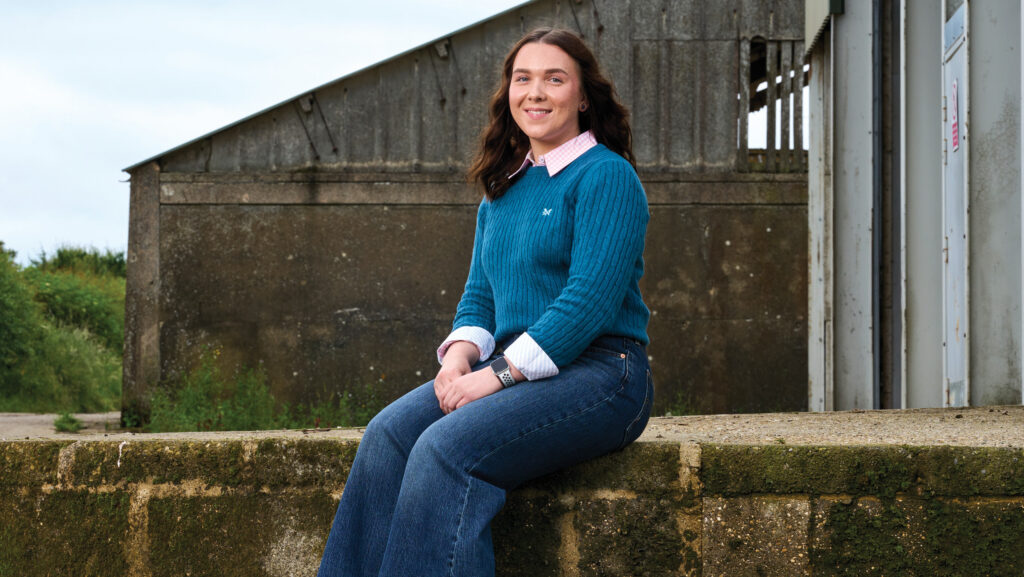
Rhian Griffiths © Oli Lees
Growing up on her family’s dairy farm in Ceredigion, Rhian Griffiths always loved farming but was encouraged to pursue what was seen as a more secure career.
“I was always told that agriculture wasn’t a career I should aspire to and that there was ‘no money’ in farming. Although I loved the industry, I was encouraged to take a different path,” she says.
After starting a law degree at Cardiff University, she realised it was not where her future lay and transferred to study agriculture at Aberystwyth University.
Changing course also brought criticism and stigma. People saw agriculture as a “lesser” choice compared with law.
“Over time, I’ve grown to love being asked why I chose agriculture, because I get to explain the exciting, world-changing opportunities this industry offers,” she says.
Academia
Rhian’s studies were interrupted by a serious car accident caused by a drunk driver. She suffered multiple fractures, a punctured lung and spent months confined to bed and a wheelchair before learning to walk again.
The lengthy recovery left her feeling disconnected from farming and university life.
“Listening to the farming seasons pass me by outside my window while my friends progressed through their degrees and choosing their dissertation topics – I felt like I had lost everything that made me who I am, including my sense of purpose,” she says.
After returning to Aberystwyth, she achieved first-class results despite managing mobility issues and PTSD. Her interests in dairy cattle mobility, hygiene and body condition scoring later shaped her research work.
She received a special commendation for a grassland essay examining white clover in grazing leys and achieved 83% for a consultancy poster on improving forage quality through multi-cut silage systems.
More recently, she won first place in the Farmers Club Pinnacle Awards for Excellence in Business Management.
Dr Manod Williams, lecturer in livestock science, describes her as an excellent student with first-class grades.
“She does not realise how talented she is,” he says, adding that she is an excellent science communicator who “will, without a doubt, be a leader in policy and agriculture in the future”.
Extra-curricular
Away from university, Rhian has remained deeply involved in the farming community. She serves as vice-chair of her local Young Farmers’ Club, previously acted as treasurer of Aberystwyth Agricultural Society, and chairs her local tug-of-war team.
“Although I can no longer take part physically, I support them whenever I can. I still reminisce over my time in the team, I was proud to represent Wales at the UK and Ireland Championships in Ulster in 2019, an unforgettable experience that meant the world to me,” she says.
She has also helped a neighbouring sheep farm tackle lameness and parasite problems and works Saturdays at Clynderwen and Cardiganshire Farmers – a farmer owned co-operative providing a range of farming and country products.
“I love chatting to my regular customers and being able to brighten someone’s day by asking about their farm, horses or garden. It’s a small thing, but it means a lot to me,” she says.
Where next?
Rhian hopes to become an agricultural adviser working directly with farmers across Wales, specialising in grassland management, parasitology and livestock production.
“I want to be someone farmers recognise, trust, and feel comfortable coming to for practical, evidence-based advice,” she says.
Long-term, she hopes to help bridge the gap between farmers and policymakers.
“I strongly believe that more agricultural voices need to be heard in decision-making, especially voices that understand both the science and the lived reality of farming.”
Her ambition is to translate science, legislation and practical experience into solutions that work for Welsh farming businesses.
Student notes
- Studying at: Aberystwyth University
- Course: BSc Agriculture
- Study year: Third
- 3 words to describe herself: resilient, passionate, empathetic
The judges liked
- A high level of personal resilience that shows in her academic achievement and attitude to work and life.
- An excellent scientific communicator who is able to bridge the gap between policy and grassroots farmers.
- A well-considered and sophisticated view on what better looks like for food and farming.
What the judges say
Rhian is exceptionally bright and engaging and had to fight harder than many others to complete her degree. Despite significant setbacks, she has excelled in her field of study, showing true grit and determination.
Farmers Weekly Awards 2026 sponsors