FW Awards: Meet the 2026 Young Farmer of the Year finalists
 © Angus Findlay and Jim Varney
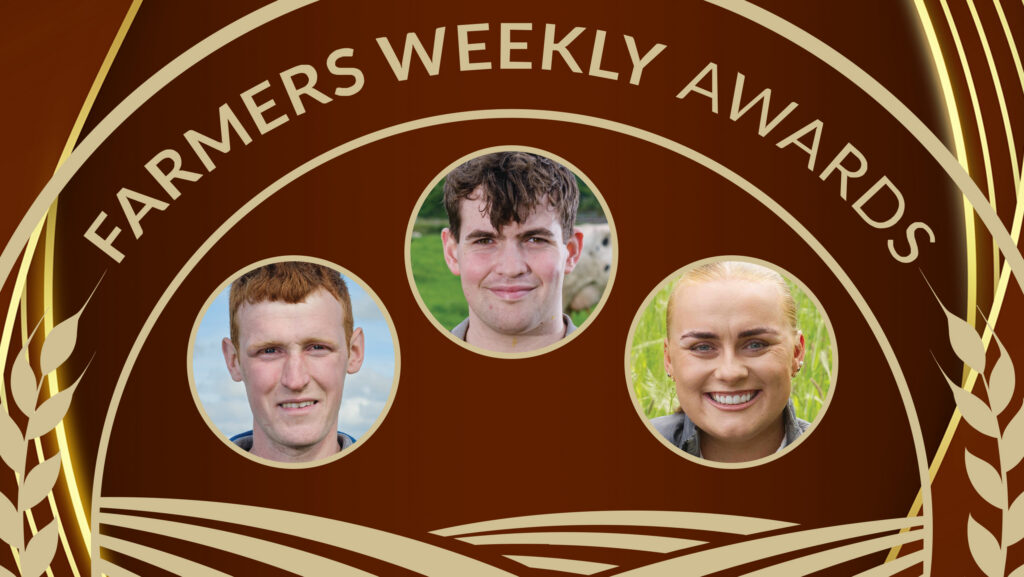
 These three next-generation farmers, all under the age of 30, are accelerating progress on their family farms, strengthening profitability and steering the business towards a positive future.
See also: FW Awards 2026: Meet the finalists
The finalists
- Matthew Anderson, Layton Fields, Yorkshire
- Joe Lyall, High Oaks Farm, Cumbria
- Iona Smith, Turnberry, Ayrshire
The judges
- Independent judge Charles Mayson is chairman of agricultural adviser CXCS, which offers bespoke support on compliance, health and safety, assurance and subsidies.
- Luke Brignall is vice-chair of the National Federation of Young Farmers’ Clubs council and works full time in agriculture on a country estate in East Yorkshire.
- Debbie James is a freelance writer for Farmers Weekly, combining journalism with dairy farming on a coastal grassland farm in Pembrokeshire.
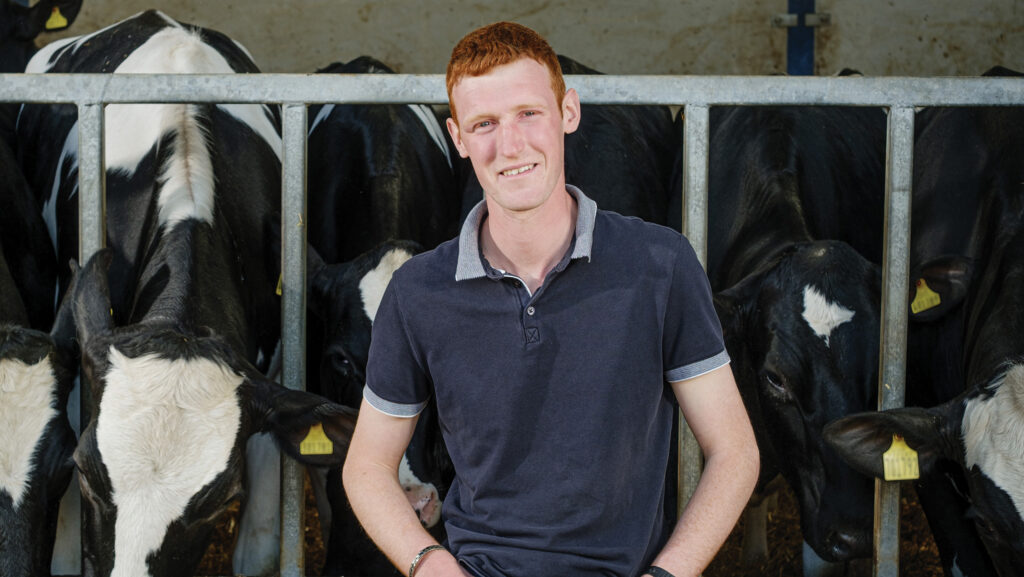
Matthew Anderson, Layton Fields, Yorkshire
© Jim Varney
Matthew Anderson has an “all or nothing” approach to life. At just 22, the third-generation farmer reckons “if you’re going to do it, then do it properly”.
He applies that outlook to the dairy farm – which he runs with his father Mark and twin brother James – and it’s a perspective that is yielding benefits for the business.
“I will always put the farm first, I have to give 100% to everything I do,” he says.
That level of commitment is evident beyond the farm in things such as his readiness to assist neighbours with clearing a fallen tree from a public road.
“That’s one of the things I love about the farming community, the willingness farmers have to help in times of need,” says Matthew.
This was brought into sharp focus more recently when his quick thinking and actions prevented a neighbour’s home from catching fire after an incinerator reignited in a storm.
Matthew doused the flames and kept the blaze under control until the Fire Brigade arrived.
Getting started
Growing up on a farm was a “great adventure’’ for Matthew, who learned to milk, rear calves and take on multiple other jobs.
He gained technical skills from his father and other mentors, notably in stockmanship, building on that practical experience with knowledge acquired at college.
These days he can turn his hand to all the day-to-day operations on his family farm.
Innovation
In the three-and-a-half years since Matthew started farming full time after studying engineering at Bishop Burton College, he has introduced initiatives that have enabled improvements in the herd and grassland performance.
Eighteen months since he took charge of artificial insemination the herd’s services-to-conception rate stands at an impressive 1.5.
He selects specific sire traits and breeds animals that perform well in a low-input grazing system and maximise the farm’s milk constituents contract with Arla.
“The herd is running at 4.8% for butterfat and 3.7% for protein, so constituents are already high but we are breeding to maintain that and also milk yield.
“If a cow is high-yielding we breed her to a bull with high butterfat and protein, and vice versa.”
In the fields, Matthew has introduced more clover into grass leys to reduce fertiliser use.
Fertiliser application rates are more efficient too since he introduced GPS-guidance technology, taking the guesswork out of spreading.
The future
Matthew’s ambition is to grow the family business – perhaps buy more land and scale up cow numbers.
He and James are taking on more of the decision-making as their father eases back from day-to-day operations.
Introducing red genetics into the Holstein Friesian-cross herd is one of Matthew’s goals.
Robot milking could help shape future progression, too, as well as other technology such as automatic scrapers and milking parlour auto-identification.
“I truly believe that if we look after the cows they will look after us – protecting their health and welfare is paramount.”
That philosophy applies to the farm environment too. He sees great value in nurturing biodiversity and protecting the local environment.
“I hope that one day I will have children and they will want to farm here. I think if every generation can leave this farm in a better place it should have a secure future.
“Dad has always had mine and James’s futures in mind as he has farmed; his dad did the same. I think it is important to farm with the next generation in mind.
The numbers
- 120 cows
- 9,000 litres annual average milk yield a cow
- 2 times a day milking
- 100 dairy heifer replacements
- 60 beef cattle fattened annually
Farm facts
- 59ha owned land farmed
- Holstein Friesian-cross cows
- All-year-round calving system
- Five lactations a cow herd average
- Cows grazing from June to October
- Eight-aside milking parlour
- Single-phase electricity supply
- Milk sold to Arla
- Four-cut silage system – first-cut analysed at 31% DM, 15.7% protein and an ME of 11.8% MJ/kg DM
- Silty clay loam soils
- 800-900mm annual rainfall average
The judges liked
- Clarity of vision for the future path of the farming business
- Genuine passion for dairy farming and goal-setting
- Strong connection to local community
- Good handle on all aspects of the business.
- Whole family pulling in the same direction to create a profitable dairy enterprise
What the judges say
Matthew has a refreshing approach to change and improvement while also retaining the virtues of generations of valuable experience amassed at Layton Fields. He shows absolute dedication to the job, the land and the livestock.
Joe Lyall, High Oaks Farm, Cumbria
© Jim Varney
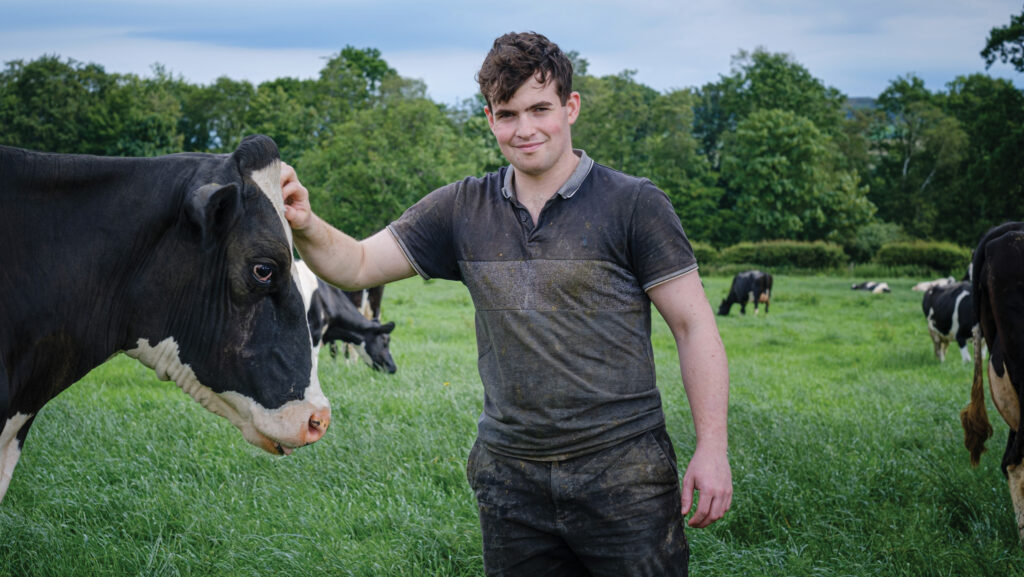
In his first years of dairy farming, Joe Lyall has secured a supermarket-aligned milk contract and helped to increase the number of heifer replacements calving at 21-24 months by more than one-third.
Quite an achievement for a 22-year-old who also works part-time at the Rivers Trust and graduates this summer from the University of Manchester with a master’s degree in environmental science.
Joe milks, feeds and beds-up the herd, and manages data and grant applications.
With one eye on the future, he sees great value in involving the farm in research projects and trials including hedgerow carbon storage, farmland bird monitoring, and pond biodiversity.
“I am keen to have a holistic understanding of what our natural capital potential is, especially as environmental markets continue to develop and standardise,” he says.
Getting started
As the fourth generation of his family to milk cows at High Oaks Farm, Joe’s dairy farming heritage spans 60 years.
His route into agriculture was much the same as that of other next-generation farmers born into the industry.
“I followed my dad, mam, uncle and granddad around the farm as a child before taking on more jobs myself and shifting to the decision-making and planning side of the business.”
That experience and the support of an “incredible” network of advisers and mentors has given Joe the self-assurance to push forward with many innovations.
Innovation
With support from the herd’s nutritionist, Joe secured an Aldi-aligned contract, adding 0.75p/litre to milk income.
That team approach saw him working with the farm vet and sustainability team at milk-buyer Arla to lower heifer age at calving. In 2026, 76% calved at 21-24 months – up from 46% in 2023.
“At 410 days our calving interval is quite long, so getting those heifers calved earlier was in part down to a willingness by us to breed sooner.
“But we have also improved early calf nutrition to get to those target weights for bulling.”
Stockmanship must be “as good as it can possibly be”, he says: “Those marginal gains all add up to pulling down the calving age.”
Joe designed a new calf shed, which replaced rearing in a former milking byre where cryptosporidium impacted early calf health.
As a consequence, weaning age has reduced from 12 weeks to 10.
The future
Joe’s research as a 2025 Nuffield NextGen scholar gave him an insight into the diversity and ingenuity of other dairy systems.
His own approach falls between two production models: the intensive housed approach to dilute costs through volume, and one shaped around extensive grazing to minimise cost of production and maximise margins.
As he contemplates his own future, Joe envisages drawing the best from both.
“I have no wish to milk 1,000 cows, employ large numbers of staff and get trapped on the intensity treadmill with all the associated emotional and environmental strain.
“I have caught the Holstein bug off my dad, though, and can’t see us moving away from that breed towards a Kiwi-cross or similar cow without considerable outside pressure.”
Joe wants to shape the business into one that optimises home-grown resources and captures the price premiums and bonuses available through Arla’s FarmAhead Incentive and the farm’s aligned milk contract, to breed productive and robust cows capable of achieving high lifetime yields.
“Put simply, our business in five years’ time will be financially thriving, not surviving, with lower variable costs as we improve our feed from forage and health and welfare.
“Put even simpler, I want to be milking as many of the cows that I am milking today in five years’ time!”
The numbers
- 127ha farmed
- 350 cows milked
- 3.7 average number of lactations per cow
- 11,200 litres/cow average annual yield
- 4.51% butterfat and 3.44% protein
Farm facts
- Pedigree Holsteins
- All-year-round calving
- Twice-a-day milking
- 117,000 cell/ml somatic cell count average
- 14/28 herringbone parlour
- Milk sold to Arla
- Four automatic calf feeders
- 100kg heifer weaning weight
- Heifers contract-reared off farm
- 18ha winter barley and 18ha forage maize grown
- Three self-employed workers
The judges liked
- Keen to keep learning and introduce new ideas
- Understands the future challenges of business and the farming industry
- Utilises grant schemes to support on-farm improvements
- Passionate about making positive changes to strengthen the family business
- Clear technical performance goals
What the judges say
Joe has a wide-ranging and questioning approach to all aspects of his family’s dairy farming operation, taking the stance that nothing is sacred, everything is possible. His outlook is practical and his attitude rigorous.
Iona Smith, Turnberry, South Ayrshire
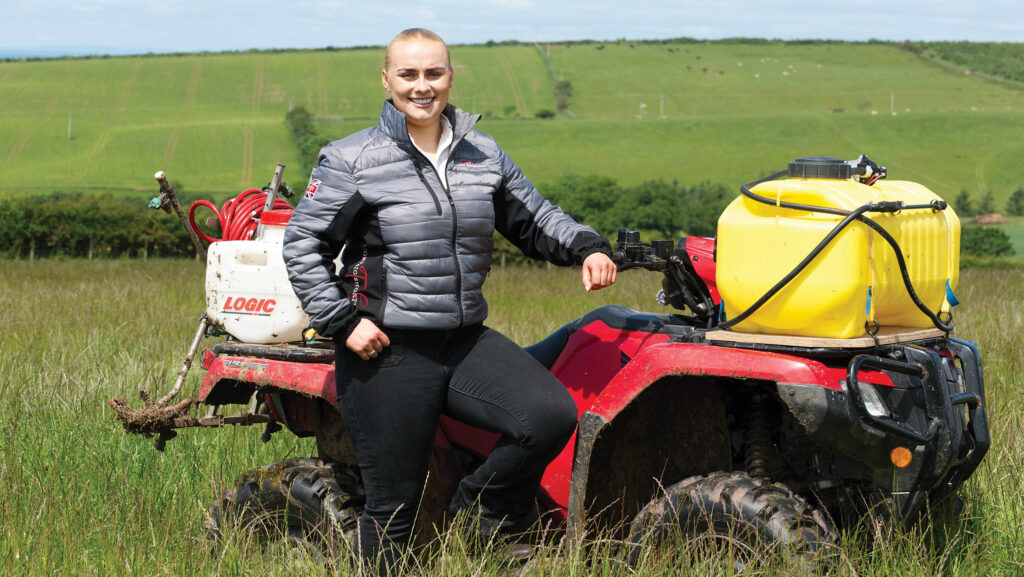
© Angus Findlay
Cattle have been a constant in life for Iona Smith, 27, who was raised on a private estate-owned farm in Turnberry.
Shaped by that upbringing and her father’s passion for grass-based beef production, Iona established a pedigree herd of six Shorthorns when she was 21, taking full control of management from breeding synchronisation and artificial insemination (AI) to genetic improvement.
That commitment is evident, too, in how she manages her family’s long-established Milovaig herd of Herefords with her father and mother, Douglas and Sheena, and brother Calum.
It’s a role she balances with her job as a Monitor Farm Scotland regional adviser.
“Farming has always been central in my life and over time I have developed both the practical skills and determination to build a long-term future within the sector,” she says.
Getting started
It was always clear that Iona would follow her family’s path into beef and sheep farming.
Theirs is a system shaped by Ayrshire’s rolling hills and lush pastures with cattle breeds capable of efficiently converting that grass into meat.
As Iona’s confidence, knowledge and experience have grown, so too have her responsibilities – from breeding and herd performance to grassland management.
She breeds Herefords, Aberdeen Angus and Shorthorns, animals that have strong grass conversion and maximise growth from forage.
Ease of calving drives breeding decisions as the family all have off-farm jobs too.
Innovation
Iona has made a big impact on the family business in the past five years, improving livestock performance, strengthening breeding and contributing to a more structured and forward-thinking approach to decision-making.
“Keeping on top of all the paperwork and data, and showing the cattle, has really helped us in driving sales of our progeny,” she says.
Shorthorns are synchronised at AI to calve over a four-week period – Iona calculates that the cost of the breeding programme averages £120 a cow.
Cows are given two cycles of AI before a sweeper bull is introduced.
The family runs the business as a team and, as each year passes, Iona and Calum take on greater responsibility for managing the livestock and the day-to-day work.
That focus on succession is helping Iona build confidence.
One of her ideas was to construct a polytunnel to house ewes at lambing, a £15,000 investment that brings all ewes together under one roof.
“It has been a godsend because it goes without saying that we get a lot of rain in this part of the world and that always seems to come at lambing,” says Iona.
The future
Maintaining a self-sufficient and commercially driven approach to livestock production is a principal focus.
Iona is conscious of protecting and utilising the farm’s natural resources through grassland management, the feeding of home-grown forage, and maintaining soil health with a programme of liming at about 19.8kg/ha (8t/acre).
“I believe that caring for our land is essential for both current performance and the long-term future of the business.”
As opportunities to rent more land on the estate come up she will increase acreage to grow more forage to reduce purchased inputs.
Building a new cattle shed is another priority – the herd is currently away-wintered in housing from the end of October to the beginning of May at a cost of £19 a head a week.
As a female, Iona says she brings a different perspective to the family farming mix: “It needs a woman’s touch!” she laughs.
“As a family we produce high-end pedigree cattle and are forward-thinking; we use what we have to our strengths. I think that is really important in farming.”
The numbers
- 61ha rented land farmed
- 61 Hereford, Aberdeen Angus and Shorthorn suckler cows
- 80 Texel breeding ewes
- 140% ewe scanning rate
- 700kg average cow weight
Farm facts
- 1 March indoor lambing and calving
- Six-week calving block
- Fat lambs and cattle sold through Ayr market
- 30 months average heifer age at first calving
- Aberdeen Angus and Hereford stock bulls
- Shorthorn bull hired in to sweep up Shorthorn herd
- Accredited high health status herd
- All machinery hired in
The judges liked
- Unmistakable passion for farming and livestock
- Huge drive and ambition, and a remarkable work ethic combining commitments on the family farm with relief milking
- Impressive ability to multitask between her responsibilities at home and off farm
- True advocate for the farming industry
What the judges say
Iona shows great commitment to livestock farming, and is making enormous strides in the wider world through connection as an adviser and advocate for women in farming.
A word from our sponsor
“Young farmers are the future of our industry. This award celebrates those embracing new ideas, overcoming challenges and driving progress on farm. We are proud to support and recognise the talent shaping agriculture’s future.”
Rachel Watling, national marketing manager