

How feed efficiency score helps herd breeding decisions
After another tough summer, and with farmers digging into winter feed supplies early, one Australian farmer thinks she may have technology to help UK producers breed more feed efficient herds.
“Every dollar matters,” says Dr Bronwyn Darlington. “Feeding animals where you’re paying for feed and not getting the weight gain matters to your bottom line. It’s key when you’re looking at drought and drought preparedness.”
Originally from a 2,023ha (5,000-acre) beef and sheep farm in New South Wales, Bronwyn understands the pressures on livestock farmers and has plentiful experience of farming in a drought.
See also: Beef breeding index combines efficiency and environmental gains
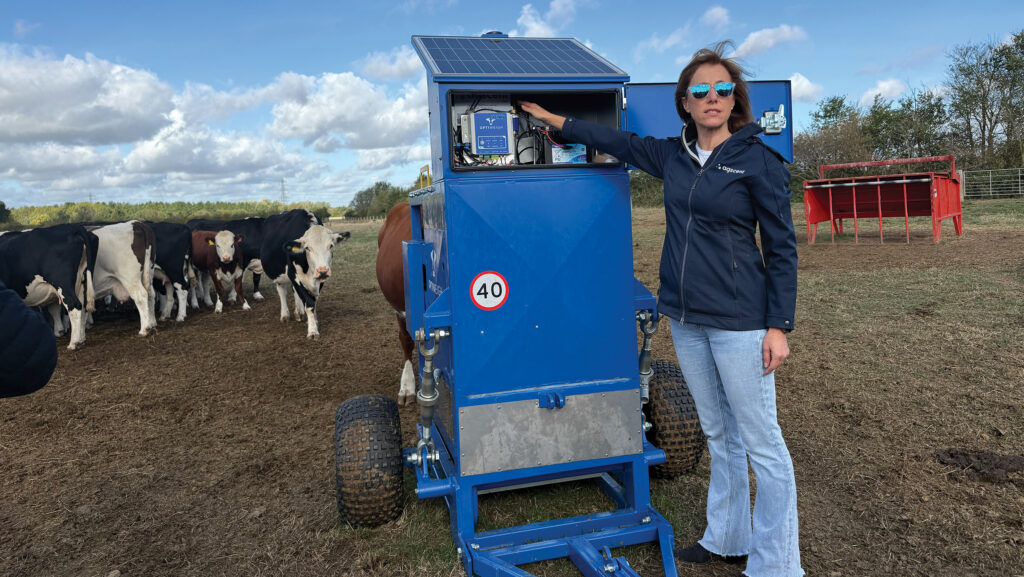
Bronwyn Darlington © Hayley Chapman
Methane as a measure for efficiency
She has developed multiple technologies that use breath molecules in diagnostics, and has just launched the Agscent Air GHG technology in an Optiweigh device to the UK market.
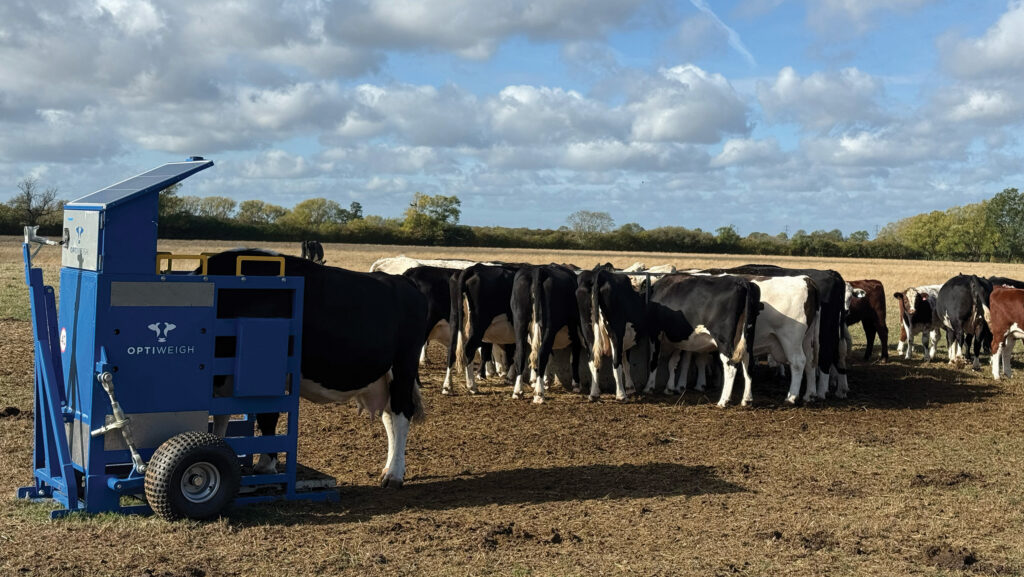
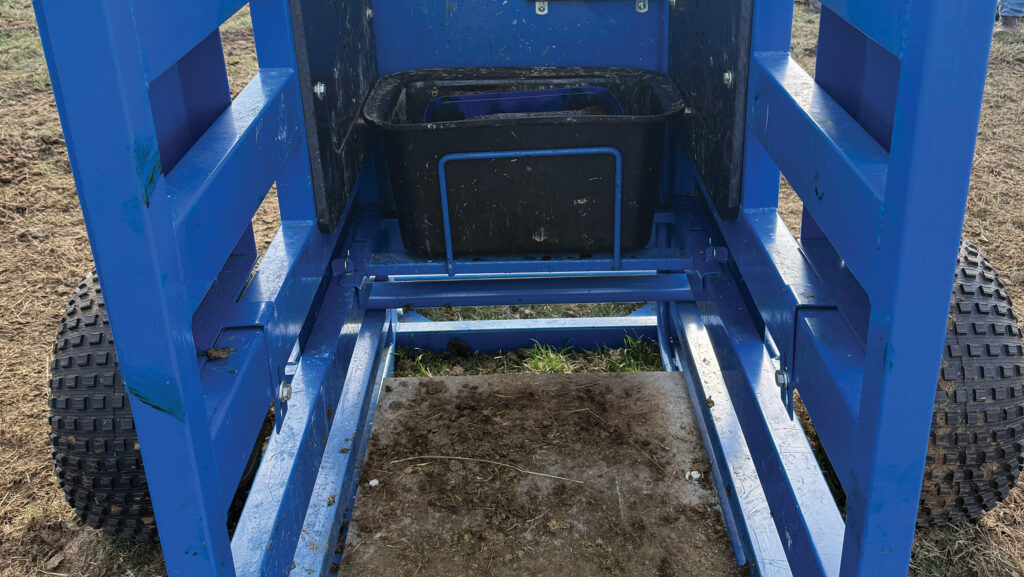
This allows cattle to be weighed at the same time as their methane emissions are detected and recorded, all while they are tempted into the equipment by a feed supplement.
Using methane emissions alongside weight data over time can enable producers to see which animals are most and least efficient in converting feed to weight gain.
“Methane is the lead indicator, and one day down the track, that [measuring methane for environmental purposes] will matter more,” she says, adding, however, that the main reason they developed the technology was “to improve productivity and efficiency and reduce costs for producers”.
Efficiency ratio for each animal
Enteric methane is a by-product of foregut fermentation, and its quantity rises with feed intake conversion. Feed energy lost as methane typically sits at 6-12% and methane emissions can vary across a herd by 20-25%.
“If your methane indication or parts per million is high, it means your feed efficiency is low, and the research has been done on that since the 1950s,” says Bronwyn.
The software connected to the device produces an efficiency ratio for each animal, read by electronic ear tags, using the following calculation:
Efficiency ratio = average daily gain (kg) divided by average methane (g/day).
The higher the ratio, the more efficient the animal is at converting feed into weight. By ranking all the cattle, it can inform decisions about those to retain, those to breed from, and those to cull or sell.
Bronwyn recommends having the device in situ for a couple of months, to build up multiple readings over time for each animal.
If changing environment (for example, from pasture to housing), then another period of measurement could help expand the overall picture of an animal’s efficiency on different feeds.
© Hayley Chapman
Breeding decisions
When looking at breeding stock, an animal with a high efficiency ratio and a low overall methane output is a good animal to breed from, Bronwyn suggests.
It means breeding will be for low emissions and efficient weight gain. And methane emission is highly heritable, at 20-40%, which is similar to milk yield heritability levels.
The information can also feed into data from other software programs, so all breeding traits and KPIs can be considered at the same time.
© Hayley Chapman
Future-proofing for weather and regulation
Preparedness for future challenging years of weather is key, Bronwyn says. Genetic gain takes time, so starting now will better equip a herd to produce less methane and become more feed efficient.
“The lessons from Australia are that if you wait, it’s too late, because you’re having to make a lot of decisions at a particular point in time when you’re under pressure,” she says.
The device can also be used to assess the efficacy of methane supplements. However, she says the challenge with supplementation is that the cattle are not interested in it when the pasture is good.
The technology and adapted breeding using its insights can also increase environmental sustainability ahead of any pressure on farmers to measure emissions.
Bronwyn believes regulation to make methane measurement mandatory is “inevitable” in Australia and the US, where cattle farming often takes place on a large scale.
However, the data collected by the software is not shared with any commercial businesses or governing bodies and is completely owned by the farmer who submits it.
Cost
The equipment can be purchased or rented, with the combined AgScent Air GHG and Optiweigh devices starting at £37,500 to buy.
Case study: Tetchwick Farm, Buckinghamshire
Beef farmer Jim Sutcliffe has been trialling the Agscent Optiweigh with Air GHG technology on his 100-cow suckler herd, which he runs on 61ha (150 acres) of grassland at Tetchwick Farm, near Aylesbury.
Jim, who breeds his own replacements and sells calves as stores, is using the results to inform heifer selection and pull cull cows.
The best 20 heifer calves are retained each year based on size, pelvic floor scoring and now feed efficiency.
Rather than just “eyeballing” and weighing them, he says he thinks the feed efficiency score will take over as a key selection tool.
He has been surprised by some of the data, which has revealed that animals he thought were small are actually very efficient, while some of the larger animals are eating “too much, or a heck of a lot”.
The device was used at pasture in September and moved inside in November. In the shed, both cows and calves have been visiting the machine.
Jim believes methane also needs addressing from a sustainability point of view. “We’ve got to try and get [methane] down, and if we can be feed efficient at the same time, well, that’s fantastic,” he told Farmers Weekly.
An indirect benefit has been to flag some sick animals. Because the data is generated quickly, it has revealed animals that are losing or simply not gaining weight and allowed early checks on them out at grass.
The numbers
8 – period of Agscent trial at Tetchwick Farm (days)
100% – percentage of the 23 cows in the paddock visiting the device multiple times a day
1,107 – total number of visits recorded in the trial
725 – methane measurements recorded, all from voluntary visits
Wearable monitor offers methane mitigation feedback
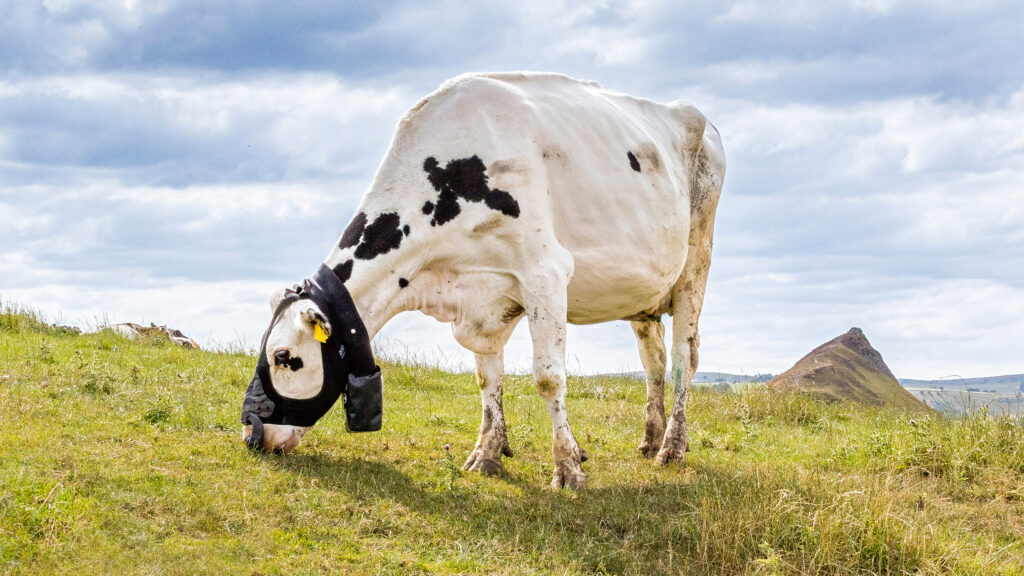
© Zelp
A methane-monitoring mask for cattle heralded as a “major step forward for measuring greenhouse gas emissions from livestock at scale” has been launched in the UK.
The wearable device has been produced by Zelp (Zero Emissions Livestock Project) and records emissions in grams/day via a flexible nosepiece attached to a headpiece.
It is designed to be worn in normal farm situations and cattle only change behaviour briefly after the device is fitted then return to normal eating and drinking.
Developers say the device, called Zelp Sense, can be used by individuals to assess emissions and the efficacy of methane mitigation strategies, as well as on a larger scale for research and commercial purposes.
“We are already working with partners who want to measure Scope 3 emissions, run large-scale inventory programmes, accelerate the development of methane-mitigating feed additives and vaccines, and verify which strategies are working for their clients in the field,” says Francisco Norris, co-founder and chief executive officer of Zelp.
Note: Scope 3 emissions are indirect emissions not including those from purchased electricity, heat and steam.