

How to share confidence 40% of beef farmers have for future
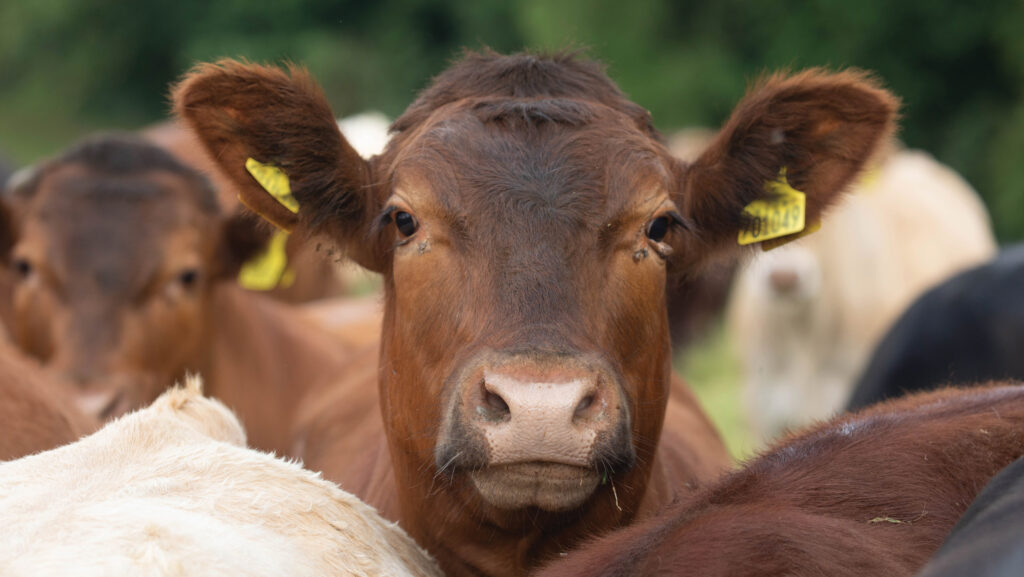 © Tim Scrivener
 Farmers Weekly, in partnership with Dunbia, KW and NBA, carried out a survey asking beef farmers what the barriers are to business growth within the industry.
The results were examined by a group of farmers and industry experts at a roundtable discussion.
Feedback from the survey
Beef farmers with a positive outlook and newly acquired business skills are confident in their future and seem set to lead cultural change within the industry.
Barriers to business growth are not seen as restrictive for those with the right mindset, but rather an opportunity, a challenge or something that drives change.
These farmers must be supported with the correct tools and grants to continue progressing their businesses.
See also: How to start rotational grazing with beef and sheep
Meanwhile, those lacking faith in their future – despite positive market conditions – need to get off-farm and mix with other farmers.
They must be “brave enough” to ask for help and guidance because “a lack of confidence is driven by fear and lack of knowledge”.
National Beef Association (NBA) chief executive Neil Shand said that overall, farmers’ answers were more positive than in 2024’s survey.
He suggested small herds that had been propped up by the Basic Payment Scheme had exited the industry.
Dunbia’s head of agriculture, Sarah Haire, thought that the positivity in the industry revealed by the survey was “encouraging”.
However, she said farmers still needed to focus on controlling what was within their farm gate, particularly in the areas of data and grassland management.
Top tips for farmers from the roundtable discussion
- Grow grass as a crop and you can get more out of it.
- Think of grass as a crop and soil as an asset – you can mitigate so many challenges by improving them.
- We are all producing great British beef so keep moving on the road
– don’t park. Take incremental steps to change. - Reduce vulnerability to volatility by optimising what you do and be gross-margin focused to get business resilience.
- Have networks and attend meetings to provide the social aspect because farming is quite lonely.
- Measure, manage, maximise.
- Produce beef efficiently, but don’t be negative about other farmers on a different system.
- Have balanced breeding goals – don’t just focus on growth, but also look at longevity and maternal genetics, as these are also important to farm profitability. Then the next step is to look at feed efficiency.
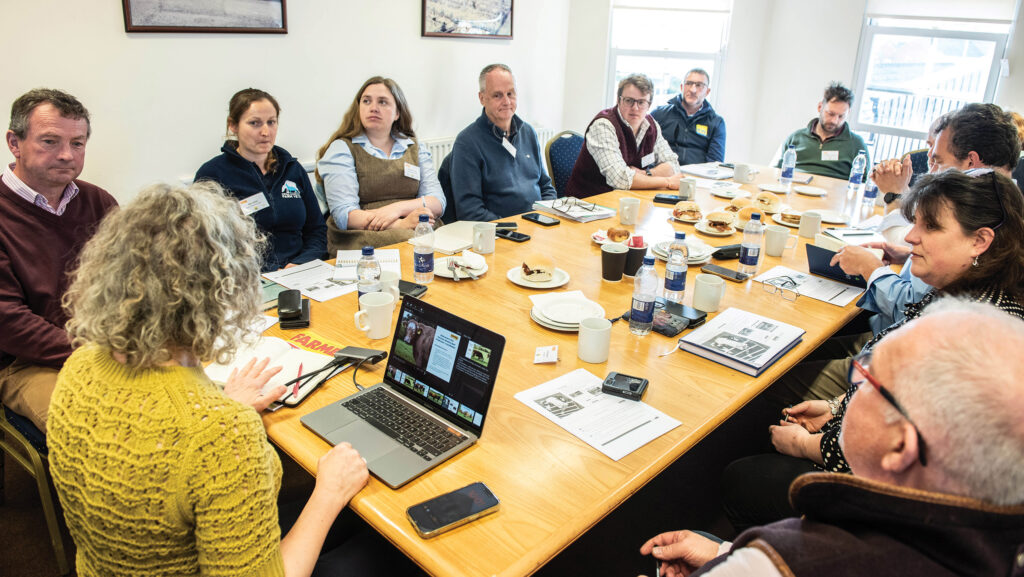
Beef farmers and industry professionals discuss results of FW’s survey © Phil Weedon
Confidence to grasp opportunities
Some 40% of survey respondents were “confident” in their farm’s growth prospects over the next five years, while 31% were neutral and 26% were “not confident”.
Roughly equal numbers were looking to increase their beef enterprise (42%) or planning to stay the same (45%).
But there was an age divide: respondents aged over 65 years were most likely to make no changes (54%), whereas those under 44 years of age were going to expand (61%).
SAC Consulting’s senior beef specialist, Gavin Hill, pointed out that some farmers do not know who will succeed them.
“We are trying to push joint ventures; we have to give these opportunities – and banks are keen to support them,” he said.
KW Feeds nutritionist Stuart Duff said he was seeing an increase in new beef enterprises where milk contracts had been withdrawn in the Midlands and east of England.
Former dairy farmers have the infrastructure and expertise to go in at scale rearing dairy beef calves, he said.
Cotswolds-based coach, consultant and beef producer Silas Hedley-Lawrence warned progressive beef farmers not to get “sucked into your bubble”.
“Use artificial intelligence to take you to another level, not just the usual farming circles, to push things in new, different and exciting ways,” he said.
The advice for farmers with less confidence in the industry was universally supportive and encouraging. “Everyone has things they are good/not so good at,” said Ben Harman, Buckinghamshire beef farmer and NBA chairman.
“It needs a bit of self-awareness and going to groups to find out what you could know. Get out among your peers and see what might interest you – a two-way exchange of information grows your confidence.”
New entrant beef farmer and KW Feeds nutritionist George Sturla advised: “Don’t be scared to leave the farm and ask for help, even just a chat in the pub and discussing your problems helps.”
Gavin added further encouragement: “If you go to groups, you will realise that your problems are everyone else’s too.”
Not every farm needs to be in the premier league making a full management system makeover. The panel agreed that small changes, tweaks or “just optimising” are all a good start.
Vet Mel Julian, of Cross Counties Vets in Northamptonshire, stressed the benefit of mentoring, pairing a farmer who is doing well with another who could learn from their experience and knowledge.
Support for business training
Some 73% of farmers revealed that they had had business management training – albeit more than five years ago for half of them.
Neil said that was a far bigger proportion than he would have expected. There was all-round support for further upskilling, and business, grassland management and technical knowledge were key topics of discussion.
Leicestershire beef farmer James Herrick said it was important to have a clear plan and set clear goals.
“I have a 10-year plan and review it every quarter – you know where you are trying to head. I then communicate it on farm, so everyone else knows,” he explained.
According to Neil, devolved governments had talked about continuing professional development in agriculture, relating investment to subsidies; Gavin confirmed this happens in other European countries.
Sarah was concerned that of the devolved countries, only England does not have the infrastructure for skills and training: “The lack of support and training in the industry is a challenge,” she said.
George said he had taken advantage of training offered by Farming Connect in Wales and advised farmers to take any free training they could find.
“Speak to a neighbour or someone who is doing it, go to an open day and learn,” he added.
Progress in grassland management
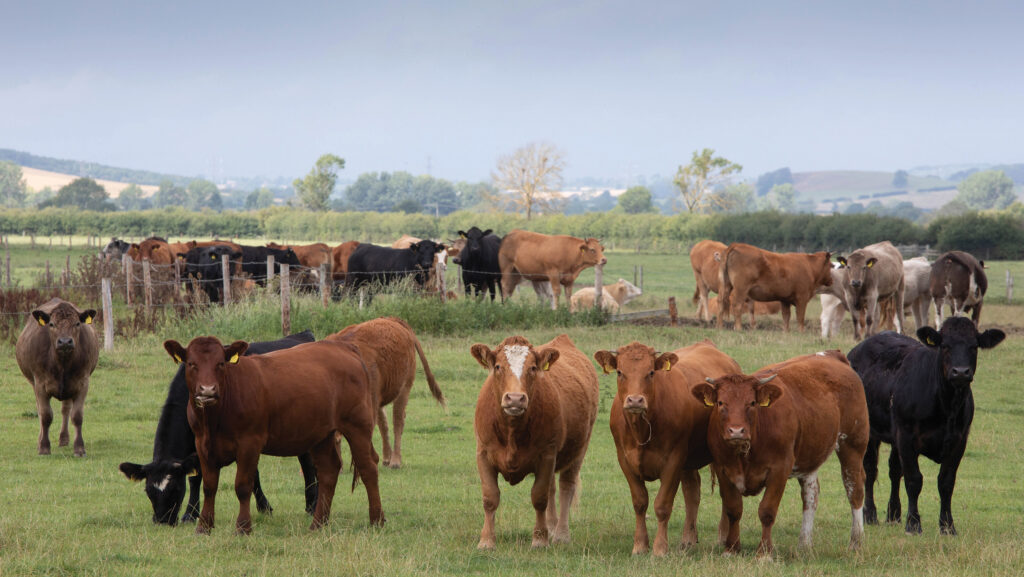
More efficient grazing management makes money © Tim Scrivener
A key action suggested by the panel after the 2024 survey was for beef farmers to make more efficient use of grass.
This year’s cohort of respondents were doing that: just 37% were exclusively set stocking. Of those who had adopted better grazing practices, 82% were rotationally grazing and 26% strip grazing.
Many dairy-beef rearing schemes now have grazing requirements in their contracts, pointed out Sarah, which may drive more efficient use of grazed grass.
It was agreed that while all types of rotational grazing help to cut costs, there is also a perception that it is complicated and time consuming.
Silas suggested farmers take “baby steps” by splitting one large field into two, and the next time into four. The resulting changes would build confidence – and for him, “good” is an extra one to two weeks grazing a year.
James agreed that getting started was not easy. “If you reduce your costs, it’s hard to see instantly – more like 12 months down the line on the balance sheet,” he said.
The incentive for him to “take grazing seriously”, measuring grass weekly and allocating grass on daily moves, was seeing that it saved him money, and made money. His cattle are now out on grass and crops for 11 months of the year.
Northamptonshire farm manager Peter Moyes said that his cattle were on a rotational system, but he wondered how bad weather and lack of environmental payments would affect ventures where cattle were grazing arable farms.
“Arable farmers will panic and want livestock off the land in wet weather,” he suggested.
As winters become less severe, Neil reckoned some farms could look at outwintering to save costs and carry more stock.
Gavin revealed that there has been a big push on the hills in Scotland to outwinter cows.
“In north-west Scotland, there are now cattle with [virtual fencing] collars out for the first time ever. Cow types are now more suitable for outwintering, but you have got to do it right [without] run-off or cow welfare issues.”
He said savings are farm specific, but total costs for a cow and calf from in/out systems range from £150-£750.
James reported that he saves £30 a head a week by keeping cattle out on bales and crops over winter – though it “requires planning and managing”.
Tools to improve decision-making
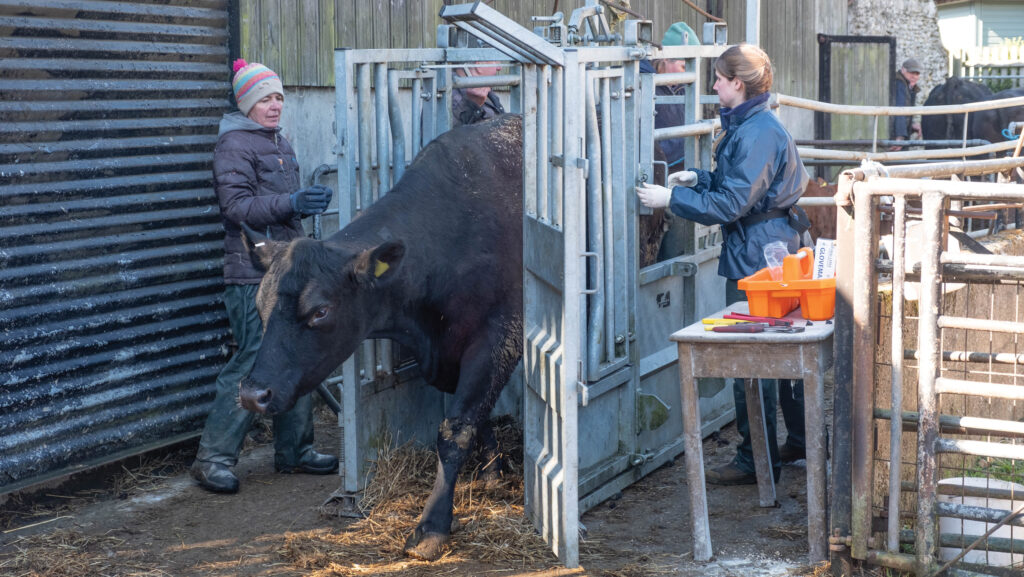
Seek help to analyse farm data to make it useful © Tim Scrivener
Another action recommended for beef farmers following FW’s 2024 survey was to do more recording and benchmarking.
Given that costs, rent and finance were one of the three biggest barriers to business growth in 2026 (40%) alongside diseases such as bovine TB (41%) and investment to meet legislation or infrastructure (38%), this remains important.
In 2026, respondents said they were recording multiple KPIs, and 65% “regularly” benchmarked. However, AHDB geneticist Dr Harriet Bunning questioned whether KPIs were being used to make management decisions.
Sarah added: “With so much data, the difficulty is in translating it into something meaningful and useful.” James termed this dilemma “analysis-paralysis”.
Mel suggested they get help in interpreting farm data and identify a starting point and areas for improvement.
The advice from Stuart was to begin by measuring small things. “Test it to see if benefits come. And adopt technology to drive efficiency, whether it’s a plate meter or ration tool,” he said.
Harriet added: “Don’t be scared to collect data and make it work for you to make the best decisions – you don’t suddenly have to become perfect.”
She also said farmers should aim to be open minded and not become “pigeonholed” when making breeding and management decisions.
Future priorities for producers
Future proofing beef farms and the industry was also discussed.
Peter stressed the importance of trying to encourage youngsters into the industry. “We need an influx of young, driven and enthusiastic people,” he said.
James called for “real-life progression stories to show the pathway they have taken”.
For Neil, there remains a “massive communication void in the industry”.
“We need to bring all the industry together to help the whole: lift the bottom 20% up to the next level, as they are the ones most likely to exit,” he said.
He also pointed to the need for wider support: “The two biggest challenges to business growth [from the survey] that a farmer can’t control – disease and investment to meet legislation – relate to government, so we need more interaction with trade bodies and help with legislation.”
Beef survey 2026
Farmers Weekly, in partnership with Dunbia, KW and NBA, carried out a survey asking beef farmers what the barriers are to business growth within the industry. This article summarises the resulting roundtable discussion considering the issues raised by the 800 farmers across the UK and Ireland in the survey results.
Thanks to our project partners National Beef Association, Dunbia and KW Feeds. Farmers Weekly had full editorial control of this report.