

How to start rotational grazing with beef and sheep
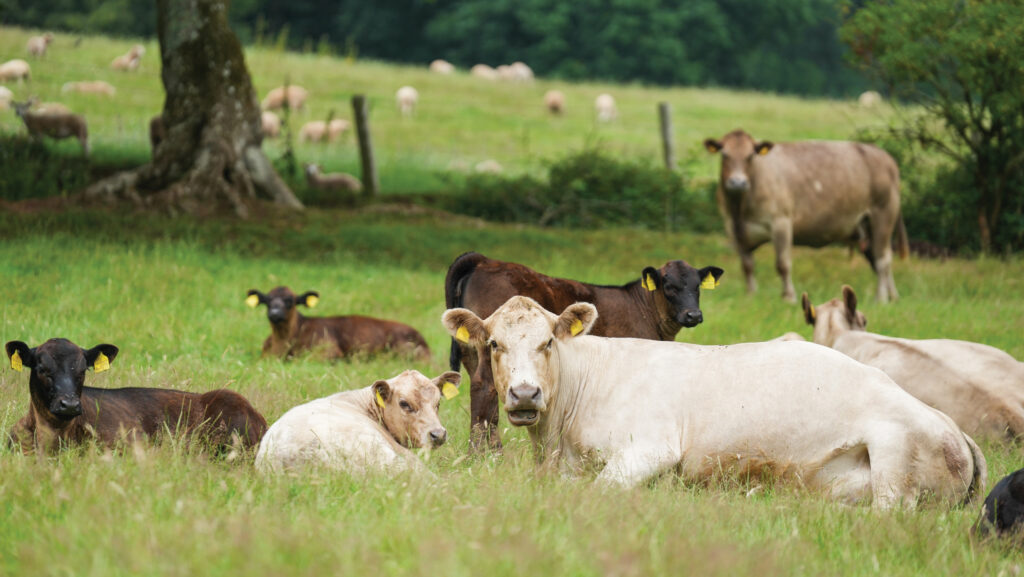 © Emily Fleur
 Better grazing management has allowed the Berry family to expand their sheep and beef enterprise without the need to take on additional land.
A series of measures, including rotational grazing and improving soil health, has increased the potential of the land at Higher Thornton Farm to grow more feed, therefore supporting greater numbers of stock on the same acreage.
See also: Farmers Weekly Awards 2025: Grassland Manager of the Year
Chris Berry started rolling out the changes in 2017 when he joined his parents in the family farming business at Kenn, near Exeter in Devon.
Nine years on, the third-generation farmer, and 2025 Farmers Weekly Grassland Manager of the Year, shares his advice on the strategies he has adopted and how these could help set other farmers on the right path to be sustainable and profitable.
Chris Berry, Devon
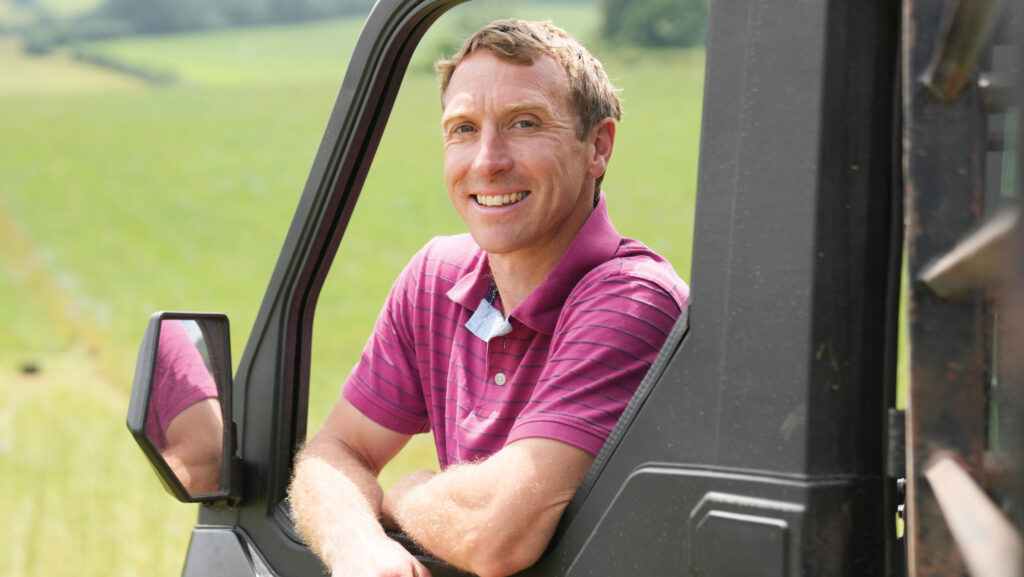
Chris Berry © Emily Fleur
When we were set stocked, we ploughed a lot of fertiliser and feed into the system, but we weren’t making the most of the land we farmed – we just weren’t grazing it effectively.
Rotational grazing meant that, in theory, we gained a lot of extra land because we could grow more grass on the acres we already had.
For any farmer, making the best use of their land is one of the most beneficial approaches they can take.
Farm facts
Higher Thornton Farm, Devon
- 180ha farmed
- 60 Angus-cross suckler cows
- Six to eight-week calving block from April
- 1kg lifetime daily liveweight gain target for cattle
- 900 New Zealand Highlander, Romney and Easycare ewes
- 28-day lambing
- Lambs weaned at 80-90 days
- Beef and lamb sold to Kepak
- Countryside Stewardship and Sustainable Farming Incentive agreements
Gaining knowledge to inform new techniques
I had no experience of rotational grazing and also the infrastructure we had when we were set stocked – big fields with either streams or a single water trough in the corner – meant it wasn’t an easy system to set up.
I had friends who were dairy farmers and were paddock grazing, so I sought advice from them on how I could make rotational grazing work for us.
We put it into practice on a very small scale initially, starting with a couple of fields, and I gained further knowledge through that peer-to-peer learning, and by experimenting and researching.
Identifying the need to streamline enterprises, to run fewer grazing groups and invest in grazing infrastructure, all fast-tracked our progress and gave us the confidence to wholly embrace a fully grazing, low-input system.
Most of the farm is now sub-divided with semi-permanent electric fences and all paddocks have good access to water and mains electric.
Our shallow, sandy soils in a very low rainfall area can be limiting, but it means we can mostly graze year-round.
The only housed stock are cattle that need a bit more finishing and our younger heifers.
Cows are outwintered on a hay bale-grazing system, and their weaned calves get better-quality silage at grass for around 90 days, depending on the grazing situation.
Inexperience meant we had some failures initially, but joining a grazing discussion group of farmers who had the same goals, and who were working through similar problems to those I had, was pretty pivotal.
If you haven’t got the knowledge you need, to inform what you are trying to achieve, then my advice is to ask people who do – mirror the things they are doing effectively, and learn from their mistakes.
Seeking help from mentors and professional advisers
My first mentors were friends from college and Devon Young Farmers who were great grazing managers.
As they were mostly dairy farmers, adapting their ideas to suit our beef and sheep system was pretty tricky.
Sheep are one of the more difficult stock classes to manage behind an electric fence, without taking it to the next level of splitting a field into lots of blocks and running fewer grazing groups.
It was at that point that I paid for advice, gaining a huge amount of knowledge at a minimal cost compared to the cost of a degree in grazing management; it sped up my progress tenfold.
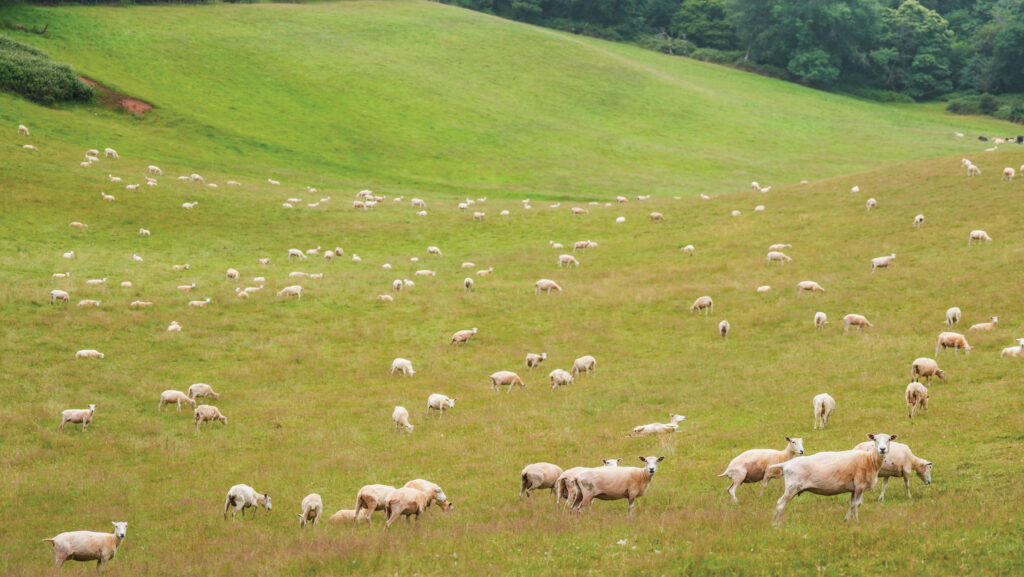
© Emily Fleur
Build and maintain good landlord relationships
The tenancy at Higher Thornton Farm is an Agricultural Holdings Act agreement.
Our landlord is very supportive of how we are farming the land in a way that is good for soil health, taking the land in a good direction, and a system that is working for wildlife, too.
To keep a landlord on side, a tenant needs to earn their trust and respect and other opportunities will often follow.
We also rent land on short-term farm business tenancy agreements and grazing licences with sheep keep.
To maintain those opportunities, it is important that a tenant demonstrates they are looking after the land and sticking to the terms of the agreement, moving sheep when they say they will, for example, and not pushing the boundaries.
Once that respect has been earned, there might be opportunities to negotiate future changes that can work for both parties.
Nurturing staff
My parents stepped back from the day-to-day farming pretty quickly when I came home to farm, to give me the opportunity to try new things.
Since then I have used the apprenticeship route for employing farmworkers.
Apprenticeships offer something for everyone: the farmer can employ staff at a slightly lower wage, but in return the apprentice gets more guidance and training than they might otherwise.
I have always taken our apprentices to discussion group meetings and other farm events because if you want your staff to adapt to your system/your way of thinking, they have to see and hear the things you are seeing and hearing.
Working with neighbours
We are members of a cluster group of 17 farmers in the Kenn Valley who meet up regularly, either on each other’s farms or at a local pub with a speaker.
This has allowed good relationships and trust to build among neighbouring farmers and is collectively giving us access to potential income streams from environmental land management opportunities.
Whatever the system, it must be profitable
A rotational grazing system is a great way of lowering cost of production because it doesn’t require a lot of infrastructure and machinery.
Just a few electric fences and water troughs and you can start up a small rotational grazing system fairly quickly.
Buying fencing and splitting up fields can seem like more cost and work compared to set stocking, but once you have smaller groups to check, it saves a lot of time and, accumulated, the little gains in time and labour can really add up.
I am a big advocate of mixed grazing, co-grazing cattle and sheep, or running a leader-follower system that exploits a suckler cow’s (or ewes after weaning) ability to convert poorer quality grass.
Stock classes with higher nutritional requirements graze the paddock first, then the suckler cows or dry ewes tidy up the pasture and hoover up worm larvae, further reducing our use of anthelmintic drenches.
Mixed grazing throughout the year allows us to have as few as four grazing groups rotating around the farm, with moves typically every two to four days.