

3 ways for dairy units to make on/off grazing work
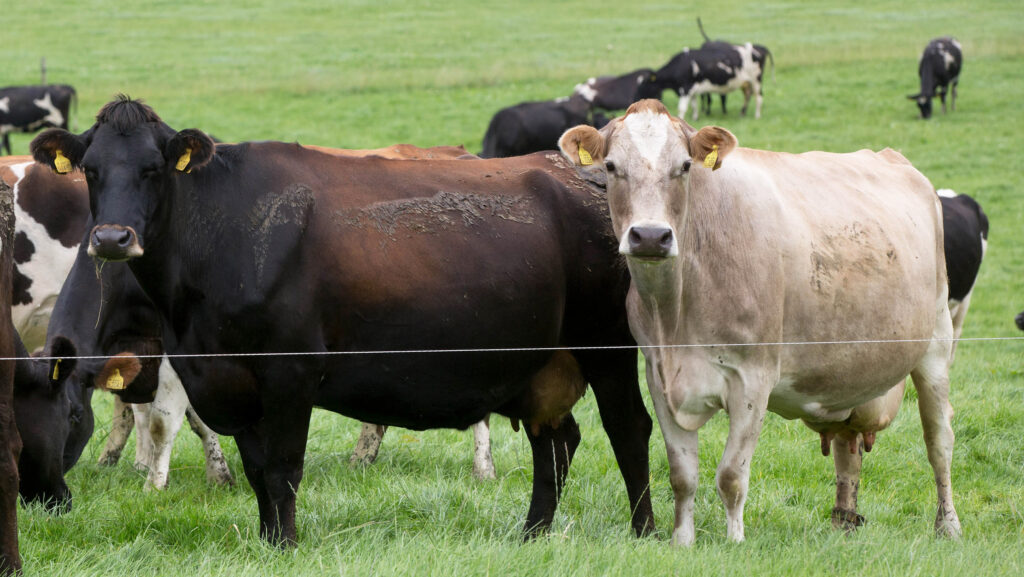 © Tim Scrivener
 A combination of low (or no) silage stocks and a falling milk price means there are dairy farmers turning cows out, despite wet conditions.
On/off grazing is the most effective short-term strategy to get grazed grass into the diet without damaging soils – or having to move cows five or six times a day.
Turning out for short periods gives time to scrape out, bed up and feed before cows come back inside. It also acclimatises the rumen and shapes cow behaviour.
See also: How to manage dairy cows at grass as seasons get more extreme
But there are three areas where people often make mistakes, says LIC consultant Sean Chubb.
“In the really wet spring of 2024, anecdotally, cows were affected by going in/out in terms of milk solids, body condition and then fertility because of the change in environment and feed,” he explains.
Sean provides some tips for successful on/off grazing.
1. Train cows beforehand
Cows benefit from a three- to five-day lead-in period to give them time to adjust their eating habits, so that on/off grazing works better.
Often, cows are turned out and expected to eat their allocation of grass dry matter in a four-hour period, whereas the previous day they had 24 hours to eat their ration, says Sean.
He likens this to the full, heavy feeling after eating Christmas lunch on one day of the year. “If you trained yourself beforehand, you could eat more and not feel so bad,” he says.
“If you are looking to turn cows out in wet conditions, then manage cow appetites accordingly. They have no appetite to graze if they are fed silage at both milkings.
You don’t want them going out full, so that they pick at the grass then lie down. Instead, feed silage so that it is finished before they go into the parlour, or hold the cows after milking and wait till 10am to turn out.”
Once they have grazed their allocation, the herd can return to the shed for supplements. As long as cows are fully fed in a 24-hour period with some silage and concentrates, Sean says on/off grazing will not hit cow condition, production or fertility.
2. Get them off early
As soon as cows have eaten their grass allocation, they must leave the paddock to avoid poaching. A cow can eat 13kg of dry matter (DM) in four hours, says Sean.
“If you allocate just 4kg of intake for four hours, they will be [walking around] looking for more food and make a mess. The moment cows have grazed their feed and gone down to the residual you want, get them off.”
Going to check on cows too often can also result in soil damage, and cow stress. “If cows see you at the gate, they will come and bellow, and start to walk up and down, expecting to come in,” he explains.
Sean suggests that rather than visiting the paddock to check grazing progress, and poaching levels, on the first day use a pair of binoculars (or a drone) to view from a distance.
This avoids disturbing the cows, particularly in wet/windy weather.
“Once they see you, they want to come in, so don’t go up too close. But there is no one answer for all herds – you need to understand your cows,” he adds.
3. Remember grass utilisation
In really wet conditions, grass utilisation can drop to 50-60% of the grass in a break, says Sean.
“If you want them to eat 4kg DM/cow, and it is tipping down with rain, you will only get 2-2.5kg at best – factor this into your timings at grass.
“Get cows inside earlier; you can utilise more on fine days. Or give cows a larger area to ensure their 4kg intake and take pressure off the land, as there will be less weight on a square metre.”
Grazing tips for wet conditions
For autumn-calving herds with cows at full intake capacity, the advice is to “graze as wet as you dare”, says Sean.
Deciding how wet a paddock is boils down to confidence, and experience of what can and cannot work, he says.
“But with a milk price drop and less silage, you may be forced into it, so talk to people in your area who are getting cows out, or get some professional advice.”
He points out this is where perception is important and conditions should not be judged on conditions from the gateway: “Get right into the paddock and you may be surprised how wet or dry it is.”
Backfencing
Backfencing is crucial to prevent cows from walking over grazed grass and poaching the soil surface once the grass canopy has been eaten.
“Try to protect soil structure because once cows sink you get compaction. You can make a track down the side of the paddock to the back and graze forward. Changing management alters feed behaviour in the cow.”
Paddock drainage
It is important to have a proper understanding of paddock drainage on the farm and understand how it copes with high volumes of rain in a 24-hour period.
“Look at the paddock after the cows have left it, then check it one month later,” he says, adding that a weather app is a useful signal to alter management accordingly.
“And remember that any paddock with poor infrastructure is a wet paddock. Tracks are essential, and you need at least two gateways, troughs and fencing that can be set up for flexible breaks.”