

Advice on getting successful inseminations with sexed semen
 © Tim Scrivener
 Sexed semen has reduced the heifer or bull lottery from inseminating with a conventional straw.
But its higher cost means it makes economic sense to be extra diligent with cow health and insemination protocols to ensure a successful insemination.
Vicki Shepherd, a vet specialising in cattle health and production, of Fertilivet says sexed straws now have a higher proportion of viable semen which have increased achievable conception rates.
See also: Pros and cons of sweeper bulls v all artificial insemination
“In 2015 we saw changes in sorting technology which allowed more gentle handling of cells, less damage, and subsequently enhancing sperm survival in utero.
“Increases in the speed of sorting technology also led to straws being produced containing up to four million semen cells rather than 2.5m.”
© Tim Scrivener
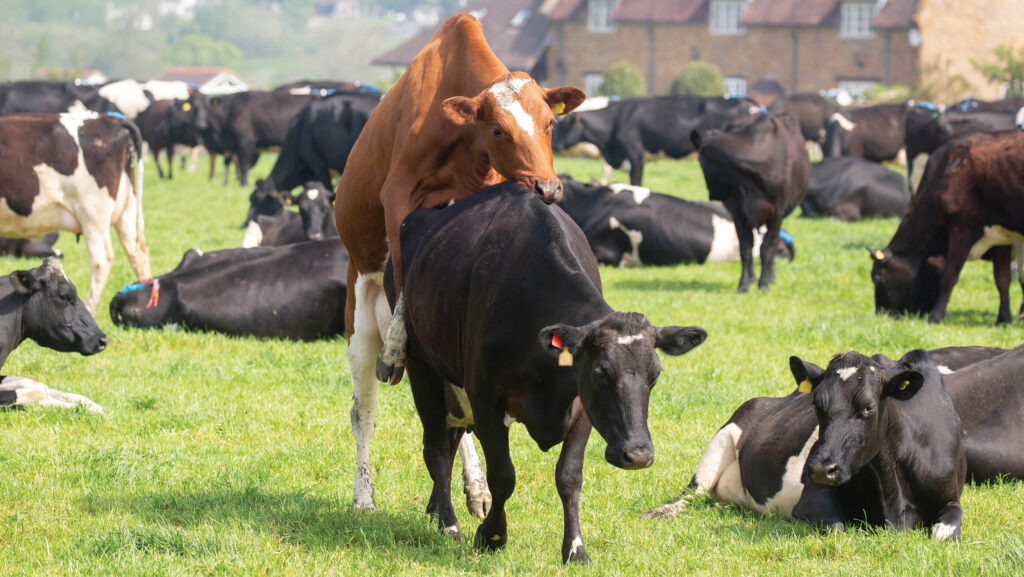
Oestrus detection is also better, with many farms using heat detection technology in conjunction with manual observation.
“It means we can be a lot more accurate with detecting oestrus in animals that are displaying it, and because of that we have become better at serving at the right time so again it optimises the potential success of each service, further reducing historic differences between the conception rates from sexed and conventional.”
There have also been advances in breeding better fertility into high-performing dairy breeds which may only have displayed oestrus very briefly, says Vicki.
“Farms and breeding companies have been focusing on this and we now see more fertile, high-yielding animals coming through.”
It now means farmers are achieving conception rates upwards of 45%, but she says sexed semen can still be a “little bit more unforgiving”.
“If you are hoping to get away with it by inseminating a cow not quite in the best of health, or one that isn’t quite at the right stage for artificial insemination (AI), you might have had success with conventional [straws] but less so with sexed,” she says.
© Tim Scrivener
“With sexed semen you are spending a lot more money, £27-£30 a straw isn’t unusual, and that means the margins are a bit slimmer, so it is important to not waste that opportunity. Everything needs to be right.”
Vicki thinks there are multiple measures that farmers need to get right to achieve a successful outcome from sexed semen.
Timing
Sperm cell heads can become damaged during the sorting process, therefore, the viability in the reproductive tract of sex-sorted sperm cells can be shorter.
Historically, the advice was to inseminate a cow later with sexed semen than with conventional straws, however, Vicki says this is now less important.
“With modern advances there appears to be less of a discernible difference between conventional and sexed as to the timing of serving. I don’t adjust my timings for fixed-time AI based on what straw I am using.”
Recent studies have shown that as long as cows are inseminated between 13 and 23 hours after onset of oestrus, there is no statistical difference in conception rates between sexed or conventional semen, Vicki adds.
“Combining heat detection technology alerts with observable cues, such as bulling behaviour, clear vaginal discharge and uterine tone on rectal examination, optimise the ideal window for serving. The worst crime is squandering that opportunity.”
Cow health
Cow health at the time of insemination – and in the 10 weeks leading up to it – is key to good reproduction.
“The follicle that we want to turn into an embryo starts developing eight to 10 weeks before insemination, so when we serve an animal the outcome is hugely influenced by her health status 10 weeks ago,” Vicki says.
It means that first service conception rates can be impacted by a transition period health event, such as ketosis: if there are ketones in the follicular fluid, it will significantly reduce the cow’s chances of conceiving.
Even the physiological stress of a high stocking density and competition can impinge on follicle development.
Vicki says: “We are relying on those follicles to be in pristine condition when we serve the cow.
“We have bred these very stoic animals that tend to crack on with production even when they have had trauma, like a displaced abomasum, but those follicles are fragile creatures.”
Opportunities to display oestrus
A cow needs every opportunity to display bulling activity. A lameness event, for example, or production of big volumes of milk will reduces the chances, but when a cow’s nutrition is inadequate, she will not necessarily have the energy to bull.
And even healthy animals need the environment to be right. “If the floor is slippery with no grooving in the concrete, a cow may be put off from showing bulling activity,” Vicki says.
“You have to give cows the opportunity to do that by having the right stocking density, and enough loafing space – all these things are important because if they are not given the opportunity to bull, that plays into submission rates.
“Farmers should always be aiming to optimise the cow’s ability to show oestrus and the health that will allow her to do so.”
Protecting semen in the straw
Farmers cannot control what happens to semen before it is enclosed in a straw, but they can control how it is treated once they have it on-farm.
Protecting the semen together with patience, and getting the set-up right before cows are served, are all relevant. Rushing the job is the biggest mistake Vicki sees.
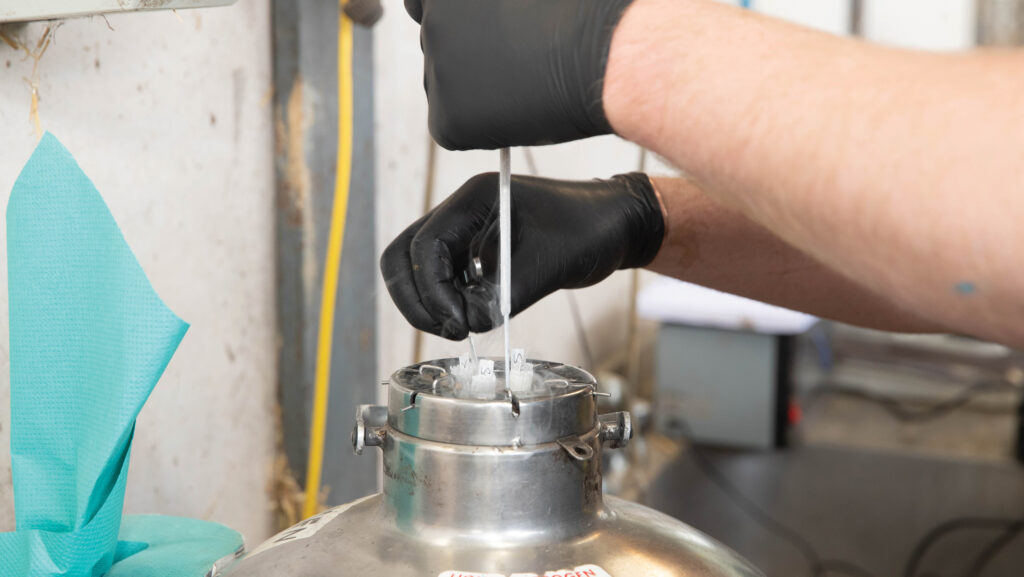
“I occasionally see the person doing the AI with two or three straws down their back. The cow has got a lot less chance of conceiving if the straw has been out of the tank for those 15 minutes. It should be one straw at a time, after it has been gently thawed at 35C for 40 seconds,” she says.
She adds that water in the thawing tank should be changed weekly.
Handling facilities at insemination
The more unsettled the cow, the greater the chances of damaging her cervix during insemination.
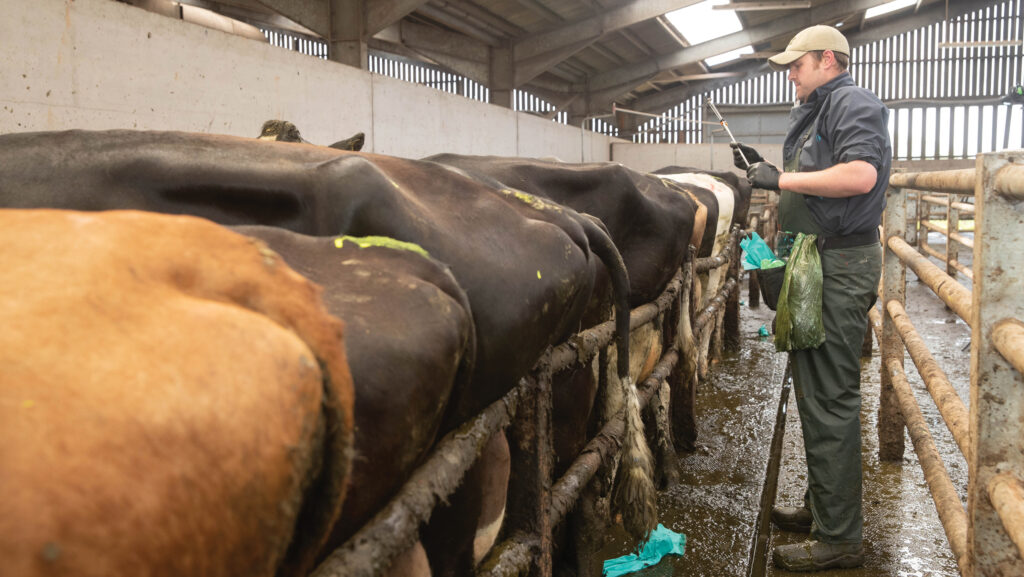
“If she is a quiet cow, there is the temptation to serve her in the cubicles. Realistically she should be in an AI stall or crush – somewhere she feels secure and where you feel safe, and that gives you the time to do a good job.
“If she is a bit fidgety and isn’t comfortable and nor are you, you are more likely to introduce trauma to the cervix with that AI gun, especially if she has a difficult uterus, or you are feeling under time-pressure or rushed.”
Breeding plan
The combination of sexed semen and genomic testing means farmers can select their best heifers to breed replacements from at their very first service.
“Get your vet involved in your breeding plan, just like your herd health plan, because we can look at all available herd genetic and individual genomic data to help inform decisions,” Vicki says.
“The outcome will be better by making it a team effort, having the farm staff, vet, the breeding company, the AI technician, all sitting at the table with the farmer and everyone having a voice.”