

Advice on how much milk to feed to produce resilient heifers
© Tim Scrivener
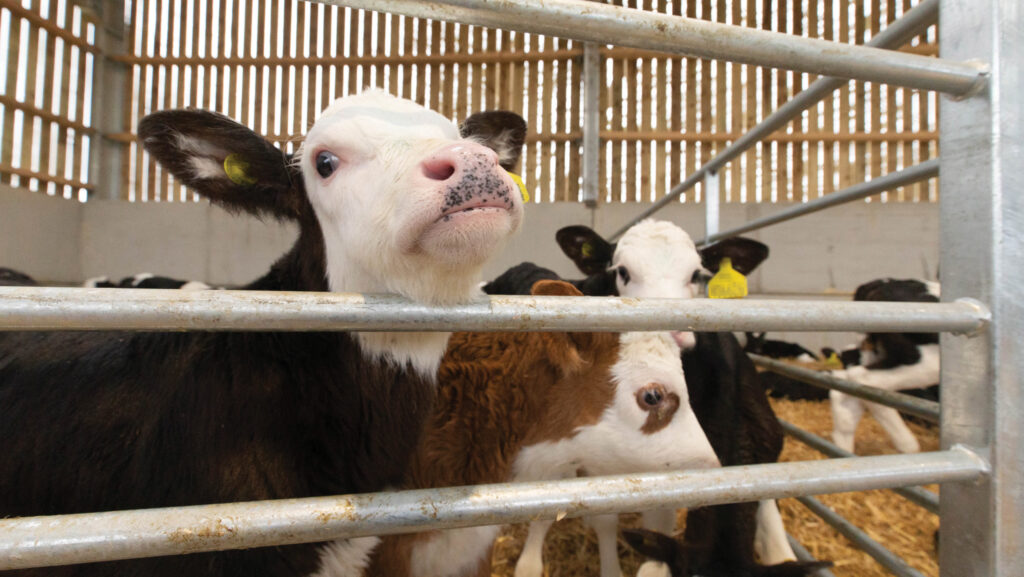
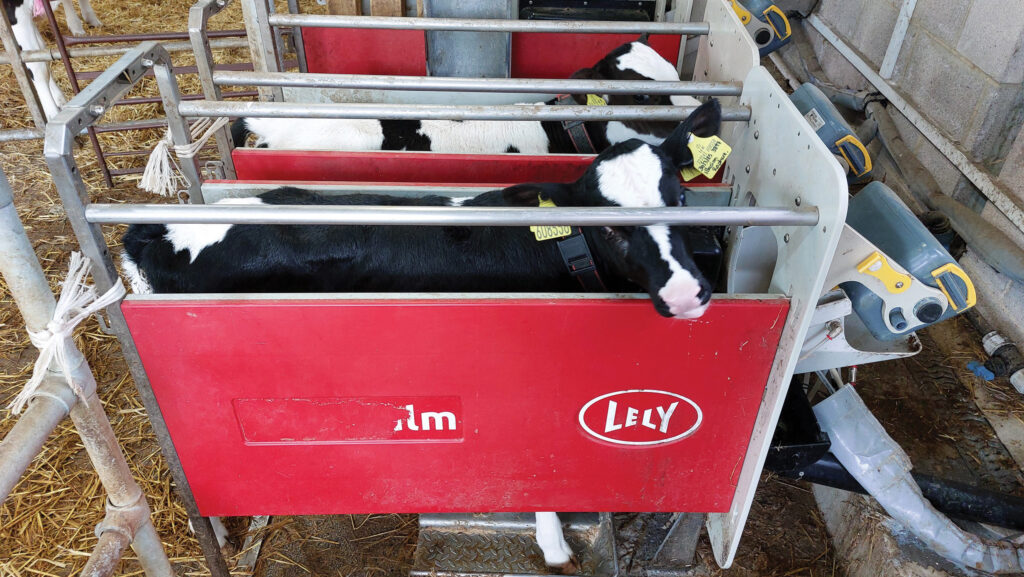
Calves on automatic machines can drink up to15 litres a day (when given the choice) in as few as seven and as many as 13 visits to the feeding station.
Yet low-input systems targeting a cost-effectively reared heifer might only feed two litres of milk, twice a day.
See also: Cow’s milk or calf milk replacer: 5 things to consider
There are conflicting messages (backed by science) in the industry about the amount of milk to feed dairy calves and the consequences for rumen development and successful weaning.
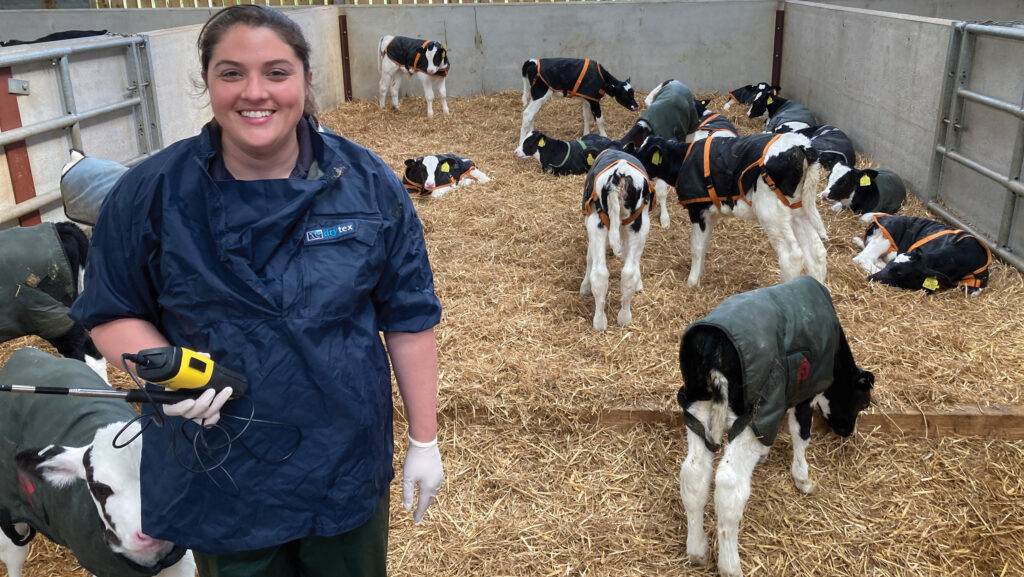
A farm’s heifer replacement strategy revolves around expectations about calf milk intakes, weaning age, growth rates and cost, says vet and youngstock consultant Kat Hart, of The George Veterinary group in Malmesbury, Wiltshire.
Kat Hart © The George Veterinary Group
Take advantage of early growth rates
As such, she says dairy farmers need to be very clear what their goals are, and whether they are prepared to change their expectations to grow a more robust and resilient dairy heifer.
It is now well recognised that calves grow more efficiently at the milk feeding stage, so it’s cheaper to spend money up front.
Trying to catch up with growth rates at later stages of development, such as at bulling or when a heifer is in-calf, is biologically less efficient and therefore more expensive.
When the focus is on reducing production costs, Kat says this attitude results in lower expectations around growth rates for heifers.
“The aim is to do well on minimum cost. Although such businesses care about future heifer yield and performance, cost-effectiveness is more important to them,” she says, pointing out that a 35kg Kiwi crossbred calf can gain 1kg/day in weight if given the nutrients.
On the other hand, super-high-yielding herds know that, to achieve genetic potential, they really need to push calves in a “luxury” environment, as this switches on their biological programming.
“When there is little-to-no disease, and plenty of nutrition as they grow, calves are more likely to reach their genetic potential,” she adds.
More milk means more resilience
Research shows that supplying a young calf’s nutrients in milk lowers disease levels.
Similarly, calves drinking more milk play more, although it’s difficult to specify whether it is because these calves have more energy, less disease, or are able to express natural group behaviour.
“Generally, the more nutrition it has, the more resilient a calf will be. More milk leads to more resilience, so it’s a win,” says Kat.
She explains the protective effects of colostrum only last for 10-14 days. At three to four weeks of age, the calf starts building its own immune system, which requires a lot of energy from its feed.
“When there is a nutritional gap, calves get scour as the colostrum wears off.
“Organs such as the liver are growing and developing – lean growth is last on the list for body survival, so that’s why you don’t see any growth in muscle and frame in the first four weeks of life.”
As long as a calf is drinking at least 8 litres/day, Kat says it will be getting sufficient nourishment and will use the energy efficiently in its developing body.
Feeding 6 litres/day is a norm for many farms these days, and Kat finds that calves will always finish this amount, unless they are “really sick”.
Hungry calves (and those stimulated by group feeding) can drink 6 litres all at once.
© MAG/Shirley Macmillan
But not all calves on automated feeding will finish 10-12 litres (let alone take as much as 15 litres) in a 24-hour period.
This reflects that they are individuals, with different body clocks, she says. “This is normal feeding behaviour.
Some calves are snackers, others like a few big meals and there is a lot of variation. We only see this, however, when we give them a choice such as feeding ad-lib via machines.”
Start with ad-lib milk, then step down
With natural variations in mind, instead of a true ad-lib system, Kat suggests a “middle way”, by feeding an early ad-lib phase for four to five weeks, followed by a step down to 8 litres/day for another four to five weeks.
This encourages concentrate intakes (and promotes the rumen), with further steps down in volume until weaning at 10 weeks.
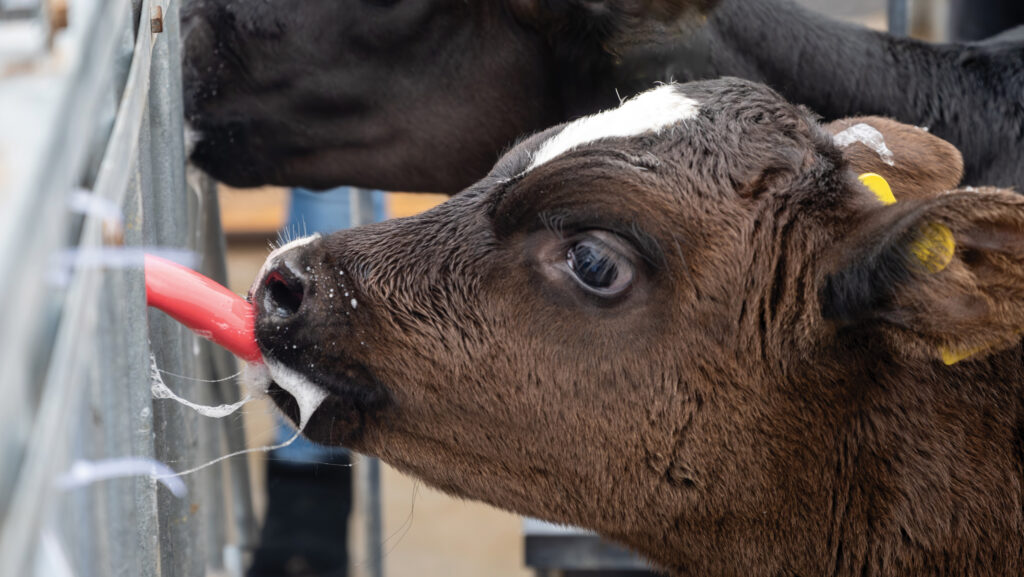
She challenges the mindset about building intakes slowly and recommends giving a calf 8-10 litres/day from two days of age, after it’s had colostrum feeds on day one.
© Adobe Stock
The key is to offer this amount of milk, and the calf will either take it all, or build up its own intakes gradually.
“Go up straight away: 8-10 litres/day is normal on a good machine. It takes a lot to convince people to start at that level – when they do, they are amazed.
“The calf will just have very liquid faeces and will drink more milk,” she says.
“This digestible scour stays on top of the straw. Once it falls through, it’s due to something else such as gut inflammation or a bug.
“People become scared when they see more scouring in calves on ad-lib milk in the first week.
“It’s only where hygiene is poor around feeding equipment and mixing that it introduces the potential for bugs and disease.”
Monitor behavioural changes to catch problems
However, Kat warns against monitoring a calf’s back end and relying on colour or smell to identify scouring issues.
Instead, it’s important to know what’s normal for a group of calves and look at behavioural changes to catch a problem.
This might be a calf lying down more often, isolating, socialising less, or looking sad. It relies on good stockmanship, or smart tags and collars that can measure lying and playing times.
To ensure success, the basics of selecting the correct quality of milk powder and ensuring consistent mixing every day are essential.
(Milk can be checked by using a Brix refractometer to measure the sugar percentage once a week: it should be a constant 12-14%.)
So too is regular cleaning, maintenance and calibration of all calf feeding equipment, from teats and buckets to machines and pipes.
Operating a midway feeding system is easier to do on machines and harder in manual systems, Kat admits. It’s still considered a bit “niche” to feed calves three times a day.
However, she says it is practical on twice-daily feeding to give a 3-litre feed and then, if the calf drinks it all and continues to suck the teat, to put another 1 litre in its bucket.
And she says that changes made to calf diets are quick to show a difference in behaviour and performance – usually within three weeks.