

Flat feed markets spell buying opportunities
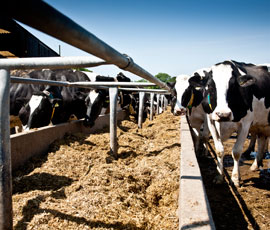
The markets have remained relatively flat in recent weeks, which has been good news for livestock farmers throughout the UK looking to complete feed buying for the rest of the winter.
There’s also been increasing interest in forward contracts for the summer, with prices across the board generally much better than they were last year.
The EU summit to discuss ongoing debt issues has had minimal impact on the commodity markets, and there’s little doubt that reaching a unanimous agreement on how to tackle the problems is going to be difficult. The current economic crisis isn’t going to be solved overnight, and the markets seem to have accepted this, pricing in most of the risk already.
As a result, attention is beginning to turn to the fundamentals once again, although any impact on prices will be tempered by the overall downward pressure still exerted by the global financial crisis. The price of soya bean meal, for example, fell slightly following the release of the latest United States Department of Agriculture (USDA) report, which increased soya bean year-ending stocks by 0.98 million tonnes (mt) despite questions still remaining over crop yields.
Countering this, Chinese soya bean imports are starting to improve, with 5.7mt being reported for November, a figure slightly above expectations. There’s also some concern that South America needs some rain and may be entering a dry spell.
It’s still too early for any of the above to cause a significant scare in terms of falling soya bean supply or rising demand, but in the days since the USDA report soya bean prices have risen slightly. With the threat of a La Nina weather pattern hanging over South America, keep a close watch on prices going in to the new year.
There’s also been growing interest in May-October contracts for soya bean meal, with a price of around £253/t comparing favourably to last year. Consider booking perhaps 20-30% of requirements to guard against a rebound in prices, and remember that in 2011 soya bean meal prices were much higher at times.
The Christmas pressure was also began to show at time of writing, with spot rapeseed meal trading at a premium to forward contracts as demand to cover the holiday period increased. Although volumes for the season remain good, some short-term shortage is now developing as a result of this rise in interest.
Combined with a lack of availability for distillers’ feeds in the UK, which is adding pressure to prices, the advice is to book any remaining rapeseed meal needed for the new year immediately. Contracts for January-February delivery are currently around £160/t, and at this price securing supplies should be more important than chasing any additional cost savings.
In terms of energy feeds, rain in the United States is still holding up the corn harvest, although any impact on prices was countered by the USDA increasing its estimate for year-ending stocks by 5.62mt, with a similar (5.92mt) increase for wheat. In fact, predicted global wheat production continues to improve, with this latest news producing a further £2.50/t drop in the London wheat futures.
Wheat contracts for January-April delivery are available at just over £140/t, and there does still appear to be the possibility that this price could fall further. However, above normal temperatures in Europe and heavy rains hampering harvest in Australia may yet put pressure on wheat supply, so consider taking at least some cover on energy feeds if the price looks right.
Sweetstarch is currently available for the rest of the winter at around £167/t, with summer deliveries of wheatfeed (May-Oct) good value in the mid £120s/t. For digestible fibre, soya hulls at £145/t for January-May delivery is probably the best option to see out the winter and provide the digestible fibre needed to buffer spring grass.
Overall, the situation is starting to feel a little different compared to recent months, with the markets beginning to consider that for now the bottom may have been reached, particularly given the change in South American weather and increasing nearby demand. Although it’s impossible to rule out any further price drops going into 2012 if economic issues hit the headlines once again, for the time being the fundamentals are starting to have more of an influence, so there may yet be a few short-term price increases before any further significant drops are seen.
* Prices correct at the time of writing, all prices quoted are for 29t tipped bulk loads delivered on-farm within 50 miles of origin. Prices subject to change.