

FW Awards: Meet the 2026 Dairy Farmer of the Year finalists
 Julian Courtier, Rupert Major and Ian and Cath Ratcliffe © Emily Fleur and Oli Lees
 This year’s finalists are profitable block-calving herds with a good work/life balance and high standards in staff management.
See also: FW Awards: Meet the 2026 Poultry Farmer of the Year finalists
The finalists
- Julian Courtier, Gooseford Farm, Devon
- Rupert Major, Castle Hayes Park, Staffordshire
- Ian and Cath Ratcliffe, West Webbery Farm, Devon
The judges
- Sean Chubb – Sean is a business development consultant at LIC Europe, originally from New Zealand, now based in the UK
- John and Nicola Young – Dairy Farmers of the Year 2025, John and Nicola operate a high-yielding herd in Cumbria
- Shirley Macmillan – Farmers Weekly deputy livestock editor Shirley Macmillan is an experienced journalist with particular knowledge of dairy farming
Julian Courtier, Gooseford Farm, Okehampton, Devon
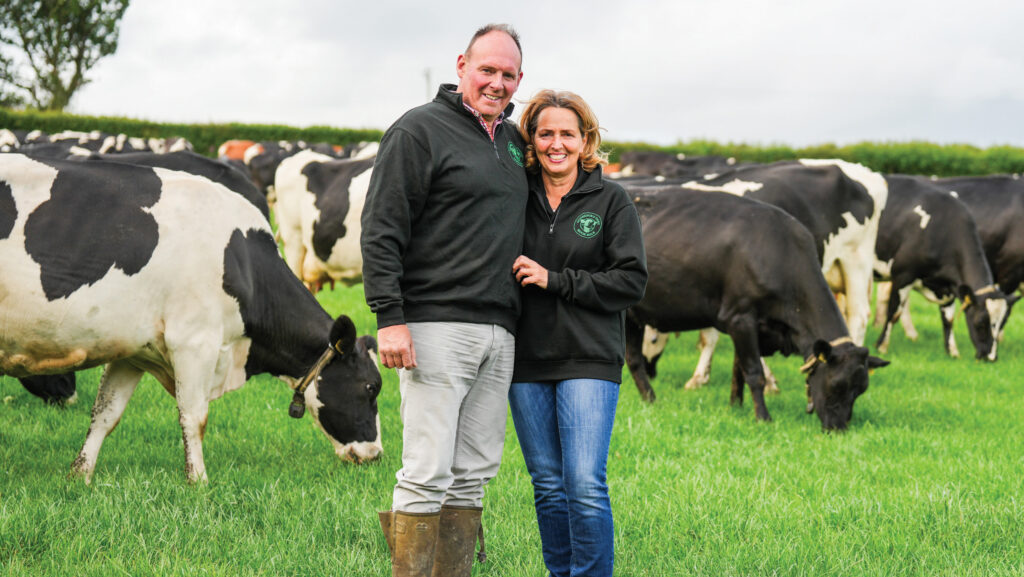
Julian Courtier and his wife Mary © Emily Fleur
Vision, resilience and a lot of hard work have established an autumn block-calving herd on a former beef and arable farm.
Getting a milk contract and financial backing were a big undertaking for Julian Courtier, as well as planning permission in Dartmoor National Park.
But he was driven to secure a sustainable future for his sons Christopher and George. The herd has since grown to 450 cows and is now breeding its own replacements.
The business has also diversified into retailing to the general public, hosting an open day in September “so that people can see cows calving, calves and milking”.
“This is a true family business, built to support the next generation. We are proud of how far we’ve come, but even more focused on where we’re going,” says Julian.
The business
Christopher leads on herd and grassland management while George is responsible for youngstock and machinery.
With three full-time and two part-time staff, the family has had to learn how to build a team and a strong team culture, getting the best out of people who do not own the farm, says Julian.
Breakfasting together each morning, the family discuss the day ahead, share ideas and maintain team spirit among the staff. They also have a summer social event.
Employees are taken to discussion group and meetings, so they feel a part of the business. The family have also learned to persevere with training staff as “people evolve” in different timeframes.
Technical performance
Having decided against robots and liking grassland management, Julian set up the farm to focus on milk from forage – 57% of the diet is grazed grass.
Turnout is from late February, and they house for 135 days a year. They have their own kit to make high-quality grass and maize silage when the opportunity suits them.
The family have dropped the calving spread from 15 to 11 weeks. The three-week in-calf rate has risen from 35% to 54% and empty rate has fallen from 15% to 7%. Heat detection collars have played a significant role in improving fertility, he says.
Having initially bought in lameness and health problems when starting the herd, Julian has focused on preventative health planning and a comprehensive vaccination policy.
“These issues slowed us down and we had two or three years treading water to sort it out. Now we have a lot more control and our own breeding is coming through,” he says.
A HerdVision camera monitors mobility and body condition score as cows leave the parlour. Regular foot bathing has controlled digital dermatitis. Reviewing dry-cow nutrition has reduced milk fever and retained cleansings.
About 10-15% of the grazing platform is reseeded each year. Herbal leys increasingly feature in the mix to improve soil structure and drought resilience.
Future plans
This year, a 400-head youngstock building will be finished, allowing them to rear replacements, and more dairy beef calves to sell in spring.
Work then starts on a 1.25m gallon slurry tower with slurry separation. The plan is to save money on sand bedding and be more sustainable by using recycled manure solids on cubicle mattresses.
Grant funding towards roofing silage clamps aims to reduce dirty water production, while a neighbouring block of land has been added to expand the 85ha grazing platform.
“It’s not yet a settled business, but we want a life and to enjoy it and keep production costs down,” says Julian.
A key ambition is to secure a second unit to grow the business, while creating opportunities for the next generation. Diversification could eventually lead to a farm shop.
The numbers
- 4.8/ha Stocking rate on platform
- 2.5km Water pipes to paddocks
- 1,500 Farm open day visitors
- 135 days Winter housing period for cows
- 620kg Average cow weight
Farm facts
- Own 200ha, rent 100ha
- 450 Irish Holstein Friesian cows
- Averaging 8,500 litres at 4.5% fat and 3.8% protein
- Target 1.6t of concentrate
- 120 R1s and 166 R2s
- 184 dairy beef sold at six months
- Four vending machines; one mobile trailer for events
- Growing 10.3t to 11.8t of grass dry matter/ha
What the judges liked
- A down-to-earth, enthusiastic and ambitious family working well together, with plans for a second unit for two sons
- Surrounded themselves with good advisers, executed plans well and aware of what they don’t know
- Good work/life balance
- Open farm day for the general public
- Taking care of staff
What the judges say
A hands-on family farm where everyone can work across the whole business. The Courtiers are driven go-getters, planning ahead and for succession. Although still in its early stages for a dairy farm, it’s very strong financially.
Major Farming, Castle Hayes Park, Tutbury, Staffordshire
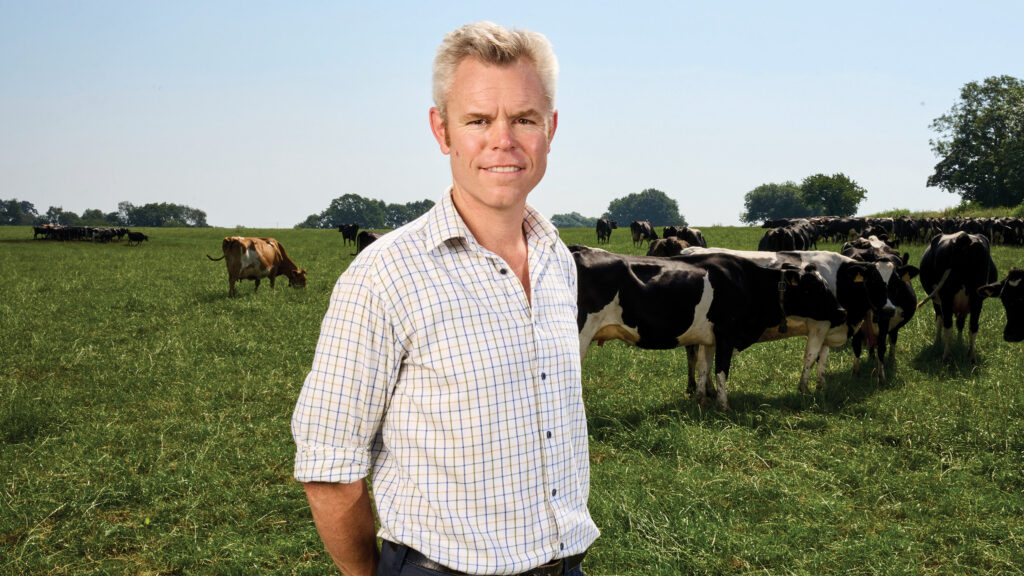
Rupert Major © Oli Lees
Fourth-generation tenant farmer Rupert Major runs a simple system self-sufficient in forage, yet he’s still driven to reduce production costs and improve business resilience.
He has grown a spring-calving herd to replace arable and poultry enterprises and calls it a “people-focused business that grows grass and milks cows”.
“The more we graze, the lower our costs and the more robust and profitable the business is,” he says.
However, his goal is also to be a great employer, as that brings opportunities to improve and expand the business. That means having enough competent employees to complete core tasks and leaving time for training and learning for everyone.
The business
Detailed measuring across all areas allows Rupert to set targets and monitor progress with the farm team.
Savings from outwintering were used to expand cow numbers, extend the parlour and build a 250-cubicle shed. In 2023, he added 91ha under a contract farming agreement, making a separate youngstock and silage unit.
He has renewed grazing infrastructure across both units and invested in covering the collecting yard, to support solar panels and batteries. This “sets the farm up very well for the next 100 years”.
Staff work 66 hours/week at peak in spring, dropping to the 35 hours in December/January. Surveying the team about working patterns has led to changes in rest days that suit all.
Everyone has a training plan, and where upward progress is not possible, Rupert tries to develop staff in a way that realises their potential, while retaining motivation.
Keen to get off farm (including the staff) and engage in peer-to-peer learning, Rupert also regularly hosts students (veterinary and agricultural) and farmers.
At home, he is trialling grass measurement via satellite and testing two different gypsum products.
Technical performance
Yields average 5,908 litres at 4.59% fat and 3.84% protein with a five-year average lameness incidence of 7.4% and 12.7% for mastitis.
First-lactation heifers are run as a separate management group, grazing paddocks closer to the parlour. Rupert says they transition better, continue to grow and milk well, producing 86% of the adult cow solids yield.
SenseHub collars in cows and tags in heifers for heat detection have helped conception rates (55% to sexed semen in heifers; 46% for cows).
Rumination reports are detecting cows in the 21-day window post-calving for supplementing with silage, thereby reducing the risk of issues such as ketosis.
The technology is also highlighting periods of heat stress, which are mitigated by feeding cows later in the day, and milking earlier when it is cooler.
All performance is off grass “so we’ve got to be good at it”. About 5-7% of the farm each year is reseeded using outwintering as an entry. Plantain, herbs and clovers are included in perennial ryegrass mixes.
Flexibility is key: in dry summers, the whole farm can be grazed; in a wet year, silage is cut rotationally as growth gets ahead of lower grazing demand.
Future plans
Being able to maintain profitability at the bottom of the milk price cycle is a core business aim. Plans are to cut nitrogen inputs to 120-140kg/ha, and the team may look at reducing the calving block to 10 or nine weeks.
The farm is at optimum cow numbers so further growth will be via a joint venture or a second unit. Rupert and the team are investigating whether to replace loose housing and outwintered heifers with cubicles for all.
“We want to stop loose housing due to the cost per day, and we have to buy in 350t of straw, but we are still discussing it,” he says.
The numbers
- 520kg Cow liveweight
- 7 Full-time employees
- 675mm Annual rainfall
- 11.5t/ha Grass dry matter grown each year
- 17.5km Fencing renewed this year
Farm facts
- Farming 404ha including 296ha milking platform
- Calving starts 14 February
- Grazing February to November
- 650 crossbred cows and rearing 170 heifers a year
- Dairy beef calves sold to integrated beef finisher
- Selling milk to Arla
- First-lactation heifer management group grazing closer to the parlour
- Target 700kg cake a cow
The judges liked
- Using staff feedback to drive change – it has a big impact on retention
- Skilled at monitoring figures and using them to make changes
- Good grassland management; making great use of herbal leys
- On-farm research into technology
- Sourced a private dairy beef calf buyer and adapting management to suit the customer
What the judges say
Rupert has a good handle on the figures and pays attention to detail. Farming for the “sweet spot”, he is driven by a good work-life balance for everyone and actively involves staff in the business.
Ian and Cath Ratcliffe, West Webbery Farm, Bideford, Devon
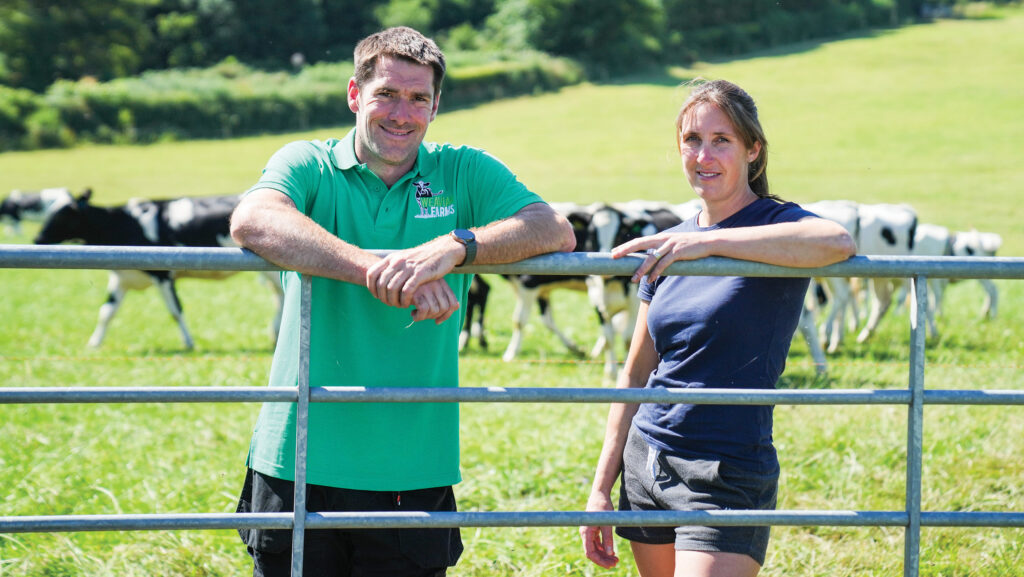
Ian and Cath Ratcliffe © Emily Fleur
Selling the family farm in Cheshire to relocate to Devon in 2013 allowed Ian and Cath Ratcliffe to establish a larger autumn-calving herd and breed their own replacements.
Herd size went from 180 to 370 cows, and they have built a family business on a foundation of high-welfare, healthy, fertile cows.
They have also created a working farm culture based on the highest standards for sustainable farming. This is promoted by hosting school visits and bottling a small percentage of their milk to sell under their Webbery Moos brand.
As a couple, they play to their strengths: Cath is in charge of detail and data, whereas Ian is operations director focusing on daily cow and people management.
The business
Farming goals have not changed, but how they get there is having to adapt, says Ian, as they learn to farm through wetter winters and prolonged dry spells.
One way to take more control of forage production has been to invest in their own short-chop forage wagons. This enables them to take surplus grass as silage, rather than waiting for contractor.
Expanded slurry storage in 2020 with a separator allows them to spread after each silage cut, reducing artificial fertiliser by more than 100kg of nitrogen/ha over the season. Slurry is inoculated with bacteria to reduce methane output and nutrient losses.
They have worked hard to put together a farm team by understanding different characters and motivators. This ensures employees understand what is wanted and are invested in it, says Cath.
“We look after them and they have a good parlour and facilities to work in,” she explains.
Ian points out that it’s easier to retain staff than to keep looking for new ones – people like working with healthy, good-looking stock and good kit.
Rotas are based on five-day weeks of 50 hours and there is a profit share scheme for staff after three years of employment.
Technical performance
After starting with a flying herd, the Ratcliffes are now breeding smaller Holsteins with high autumn-calving indexes, genomic testing their own heifers to accelerate genetic progress.
“We are working really hard to improve resilience and enhance milk production efficiency,” adds Cath.
Last year’s drought pushed them to increase acreage and build forage reserves on their hungry shallow soils over shillet.
Their experience of drought tolerance from herbal leys on the heifer block led them to over-sow the milking platform with a mix of red and white clovers, plantain and festulolium.
Youngstock management and tracking results is geared towards growing an efficient milking cow. Calves are now reared on four auto feeders drinking up to 11 litres/day, and weaned at 11 weeks, which has improved growth rates.
After calving, heifers remain in a separate management group.
Preventative medicine is key, with spend on vaccines and routine blood, milk and dung testing to monitor health status. Diets are tailored accordingly to allow for mineral status.
Electrolytes and pain relief to support the immune system are routine if it means avoiding antibiotics.
Future plans
Challenges equal opportunities for Ian and Cath. They don’t want to milk more cows and add pressure; rather, they want to enjoy their farming.
Now in the financial position of being able to buy land, top of their list is to establish a grass-fed beef enterprise to complement their Webbery Moos story. They see this as a simple way to expand their business and consider long-term succession for their young family.
The numbers
- 90% Six-week in-calf rate
- 63% First service conception rate
- 4% Prevalence of cows scoring 2 and 3 on mobility
- 0.8% Incidence of milk fever
- 92% Heifer 305-day yield as percentage of herd yield
Farm facts
- 233ha owned/rented grassland; 33ha rented maize
- 370 cows plus 120 heifers a year
- Averaging 8,613 litres at 4.86% fat and 3.73% protein
- Growing over 11t DM/ha grass
- Calving from end of August in nine weeks
- Turnout mid-March, housed mid-October
- Four full-time staff plus relief; three on bottling enterprise
- Dairy beef calves sold privately
What the judges liked
- Lots of research, putting science into practice
- Data driven with a good handle on costs and figures
- Very strong partnership with complementary strengths
- Respect for staff, including a profit-share scheme and good work/life balance
- Engaging with local farmers to access land and taking pride in managing it
What the judges say
Ian and Cath combine data-focused management and hands-on skills with a passion for cows, welfare and the milk industry. Their commitment to staff includes a profit share scheme, as well as providing good-quality houses.
A word from our sponsor
At Lely Atlantic, we recognise the hard work dairy farmers do to produce high-quality, nutritious dairy products, and the care they place on their livestock through high welfare and sustainable production.
John Smout, proposition manager – milking and digital, Lely Atlantic