

How difficult succession talks led to dairy expansion
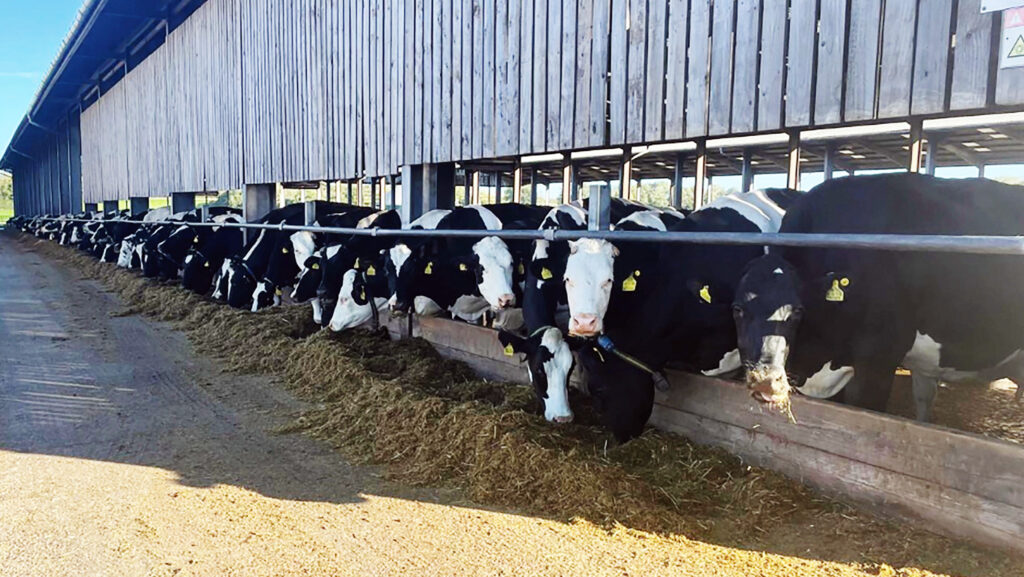 Manor Farm Dairy © John Cartledge
 Despite being a partner in the business at the age of 18 and driving many key decisions, John Cartledge found his ambition had outgrown the acreage at his family’s dairy farm.
John had already overseen dramatic growth at the 65ha (160-acre) farm in the Peak District.
Cow numbers had quadrupled under his stewardship; facilities had been upgraded and output peaked at 12,000 litres a cow.
See also: How farming brothers are preparing for business succession
Farm facts
Manor Farm Dairy, Shepton Mallet, Somerset
- 109ha owned and 202ha rented
- Milking 1,000 cows
- Flying herd
- Average yield 10,000 litres at 4.6% butterfat and 3.8% protein
- Supplying Arla
Cows were being milked three times daily at Peaslow Farm near Buxton, with the herd of 220 Holsteins producing 2.7m litres annually off just 83ha (205 acres).
“We were farming 1,400ft [427m] above sea level, so it was a difficult farm.
“I had a lot of freedom, but I had this unrequited ambition,” he recalls.
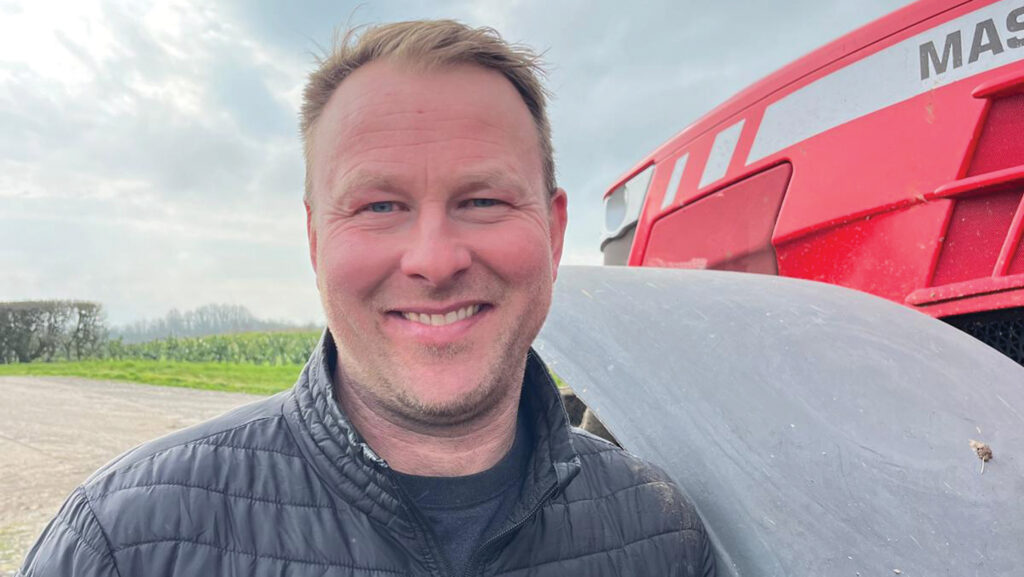
John Cartledge © John Cartledge
Benchmarking and discussion groups planted the seed for further growth, but he says it was obvious that it would require moving to a bigger farm.
Attitude to risk
While his parents, Winston and Anne, had supported him from a young age and encouraged him to take the reins, they were more risk-averse to borrowing money than John, which stalled plans.
By 2020, John, then aged 37, had begun exploring share-farming options.
Then, that September, a turning point happened when the family sat down with succession facilitator Jo Speed.
“When people reach the level of stress John describes, they stop talking, and then there isn’t a plan,” explains Jo.
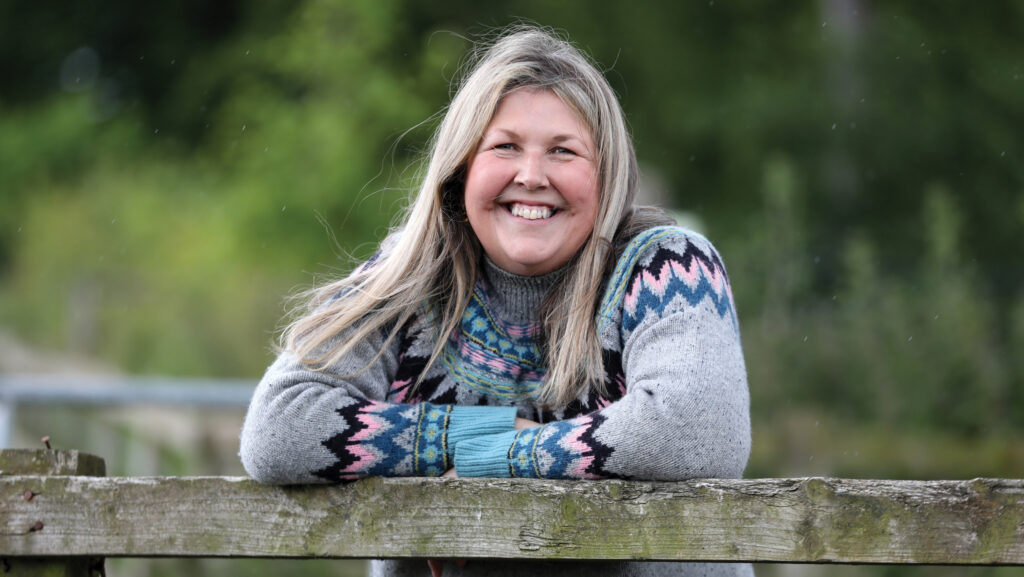
Jo Speed © Jo Speed
The structured conversation helped them navigate the stalemate.
Jo says John’s situation was unusual because his parents had given him significant responsibility from a young age.
“It’s not just the technical and management skill sets that are vital when considering the farm handover. Financial elements are critical, too,” she explains.
“Often, the next generation hasn’t managed accounts or dealt with the bank manager, so the asset holder lacks confidence in handing over the business. Although that wasn’t the case for John.”
John says the level of responsibility his dad gave him from a young age would have satisfied most.
“[But] I’m just an out-and-out capitalist, and I could understand my parents were worried about losing everything they had built.”
Guided discussions and action points
During that meeting, honest aspirations were aired and, crucially, timelines were agreed.
“We created actions like John going away and speaking to the accountant,” says Jo.
John says the business was in a fortunate position, making good profits, and he did not have to pay his three siblings out of the business either.
“My dad always said, whoever farms the farm will get it, which made things simpler. My sisters and brother were very supportive.”
Jo says many farming families avoid “squaring up to conflict” because of the potential impact it can have on personal relations.
“It’s the perception that there could be conflict that avoids a discussion when there isn’t necessarily conflict,” she explains.
“And even if there is conflict, it is unhealthy to avoid it.
“Conflict can lead to progress, and often sitting down and airing matters makes people realise they have a lot of common ground.”
In fact, John says he and his parents had everything in common except their attitude to risk.
A key breakthrough came when it was agreed his parents could stay locally and keep some land – removing the emotional pull of the farm helped shift perspective to building a legacy, not land.
Keeping them informed and having their support was critical during this process, he adds.
New opportunity
By chance, John says, the right opportunity “fell in their lap” in 2021 when a dairy unit in Somerset came on the market for £2.4m.
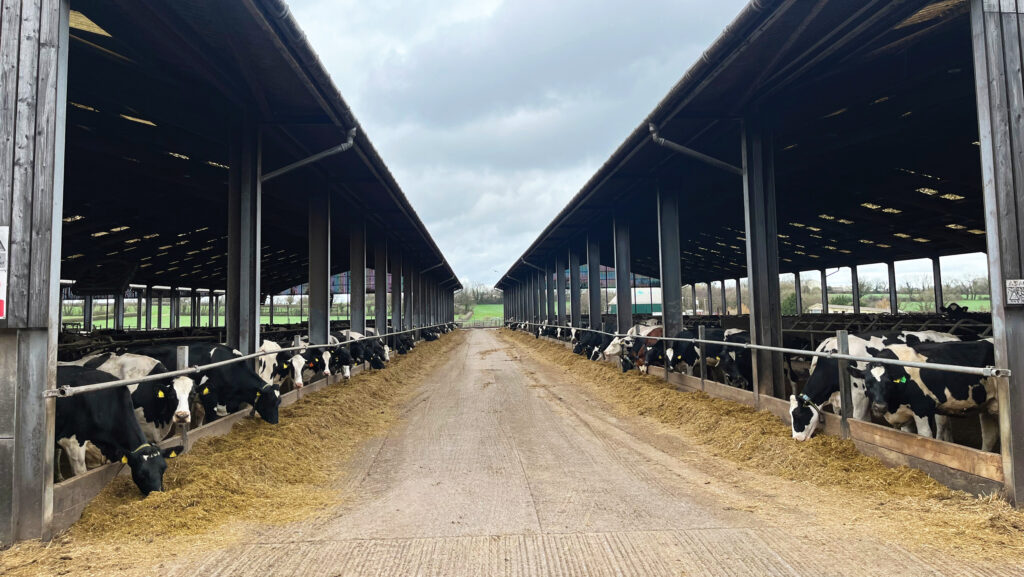
It offered capacity for 1,200 cows, with 65ha (160 acres) and room to grow land mass.
To finance the move, the Derbyshire farm was sold, along with youngstock, and 200 milkers were moved south to what is now Manor Farm Dairy.
To ease concerns, John’s father retained 20ha (50 acres) at the new dairy unleveraged, ensuring he could withdraw capital if needed.
John’s parents, now in their 60s, have retired but retain a 5% share in the business and formal agreements guaranteeing lifelong support.
His parents stepping away from farming day-to-day has improved relationships, says John.
Business growth
Within four years, the business has grown to 1,000 cows. John’s wife, Sarah, has become central to the business.
She previously ran a glamping enterprise at her family’s Peak District farm but is now a partner at Manor Farm Dairy.
They have complementary skills. “I’m good at the finances and strategy, but I’m terrible at organisation,” says John.
He added that Sarah brings structure, and together they form a balanced team. “Our relationship was strong before we started. I knew it would only get stronger.
“It was my dream, but had she said no, we would have done something different together.”
John says luck has played a part and the good milk price of 2022 enabled them to pay for 400 milkers with cash.
But he attributes much of their growth to “total pig-headedness” and astute budgeting.
“We haven’t wasted a penny. We don’t have a single machine on finance. We are not flashy and we try not to carry too much cash – we try to make money work.”
The next generation
Jo believes that too many farming families leave conversations about succession too late.
“The older the asset holder gets, the less appetite they have for risk. The longer you leave it, the harder it becomes,” she says.
John and Sarah are already having frank conversations with their sons, Sam, 14, and Harry, 11.
“One of our sons scrapes the sheds at weekends and earns £10/hour – your kids aren’t there to make you wealthy.
“We’ve said he needs to say when he is ready to be involved in the business and start building capital,” says John.
They are also making provisions for semi-retirement at 55 by diversifying into commercial storage so they do not have to draw on income from the dairy in their older years.
John says he sees no ceiling to growth and can see them milking 2,000 cows in the not-too-distant future. But his philosophy is blunt.
“The fear of not pursuing my ambitions is greater than the fear of failure.
“There are only ever two reasons why people don’t progress, and that is fear of failure, or you don’t want it enough.”
Yet he acknowledges none of it can happen without confronting succession head-on.
Winston adds that it is important to involve young people in the running and decision-making of the business from an early age.
“One of the biggest achievements of a life in farming is watching the next generation take over and being successful.”
Do you need help with succession?
The Succession Alliance is a non-profit organisation that connects farmers with professionals who specialise in farm succession and mediation.
More information and resources are available on its website.