

FW Awards: Meet the 2026 Livestock Adviser of the Year finalists
 Dan Humphries, Mark Jagger and Liz Lunn © Nathan Stirk, Phil Weedon, John Eveson
 This year’s finalists focus on better dairy cow nutrition and heifer care and encouraging new pig farmers.
See also: FW Awards: Meet the 2026 Dairy Farmer of the Year finalists
The finalists
- Dan Humphries, Horizon Dairy Vets, Shropshire
- Mark Jagger, Pilgrim’s Europe, Suffolk
- Liz Lunn, Advanced Ruminant Management, Lancashire
The judges
- Amy Mepham – The NFU’s dairy policy adviser, Amy Mepham has wide experience in the UK milk industry as well as farming abroad.
- Peter O’Malley – Last year’s winner is an experienced vet with Synergy Farm Health, which covers Devon, Dorset, Somerset, Hampshire and Wiltshire.
- David Jones – David contributes to Farmers Weekly on a variety of topics covering both arable and livestock farming subjects.
Dan Humphries, Horizon Dairy Vets, Shropshire
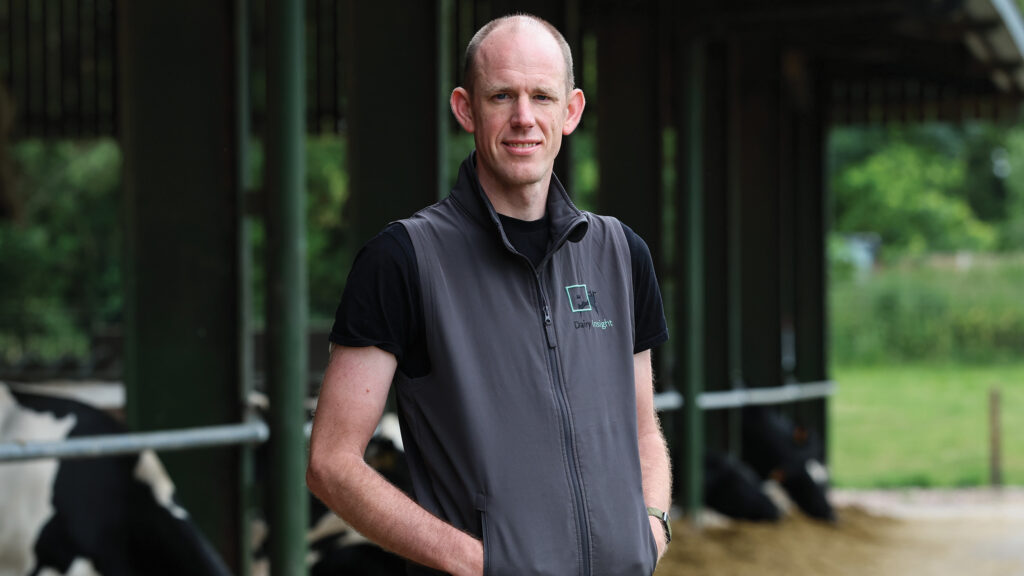
Dan Humphries © Nathan Stirk
Shropshire vet Dan Humphries’ laser-like focus on nutrition and inputs for his clients’ dairy herds has improved yields and health, while reducing protein levels in the feed.
Dan points out that nutrition is 55% of the cost of a dairy business, and it is the only lever that farmers can use quickly to improve the performance of their milking herds.
He is using the latest technical tools to get the nutritional needs of each milking cow spot on and so make milk production more sustainable in his work at Horizon Dairy Vets and his consultancy Dairy Insight.
“If you really control the inputs like nutrition, you don’t have to worry too much about the outputs, in terms of fertility, growth rates, mastitis and footcare,” he says.
His approach is to spend time with dairy managers and their teams to give them the skills to improve performance. He spends 50% of his time with his “wellies off” to focus on this training.
Technical knowledge
His seven-strong vet practice is one of a very few with a total emphasis on dairy, and Dan says he is using two of the best available nutrition tools to refine cow performance.
First is Agricultural Modeling and Training Systems (AMTS) Nutrition, a next-generation feed formulation software platform. This is seen as the most accurate rationing model for dairy cows, devised by US Ivy League university Cornell.
The second is algoMilk, founded by Spanish academic vet Alex Bach, which estimates the nutritional needs for each cow to improve income over feed costs and efficiency.
The results at one of Dan’s long-term clients Harper Adams University are impressive. The 400-strong Holstein herd showed an increase in milk yield a cow a day from 28kg in 2022 to 33kg in 2024.
Yield increased further after three-time-a-day milking was introduced in 2024, to 44kg a cow a day in 2026.
But he says that he is not solely interested in yield, rather it is income over costs that is important to make milk production more resource efficient and sustainable.
Environmental credentials
Dan has helped achieve improved yields and performance while cutting the protein levels fed to the cow. This has helped cut costs and reduced impact on the environment.
The protein content of the ration fed to the Harper Adams dairy cows was cut some years ago, to 14% from 18%, and the yields kept going up.
The Harper Adams farm has been soya free since 2018, with the current ration including protected rapemeal and home-grown grass/clover, lucerne, maize and forage rye.
“Animal performance is a result of animal health and that in turn is a result of nutrition,” says Dan.
In terms of medicines, antibiotics use has been reduced to a very low level, and critically important antibiotics have not been sold by the vet practice since 2017.
Client relationship
Alice Sault, the dairy manager at Harper Adams, says Dan’s work on the farm over the past 14 years has pushed all the staff to do better, helped by his work on developing people and teamwork.
“Dan has been key to improving yields through better health and nutrition,” she says.
Mastitis levels have fallen, which is especially difficult with a string of different students milking in the 40-point rotary parlour, but this has been helped by Dan’s strict protocols for milking.
The move to three-times-a-day milking in 2024 has pushed yields for the 400-strong herd to 14,000kg a cow a year.
The numbers
- 14 years as a vet
- 9 years with Horizon Dairy Vets
- 7 vets in the practice
- 40 dairy clients
- 1 out-of-hours call a month for a vet practice covering 10,000 cows
Farm facts
Harper Adams University, Edgmond, Newport, Shropshire
- 500ha farmed, cropping grass, lucerne, maize and forage rye to feed the milking herd
- 400 Holsteins, fully housed, milked through a 40-point rotary parlour
- Annual milk yield of 14,000kg a cow, calving year round
- NMR RABDF Gold Cup winner in 2024
What the judges liked
- Dan encourages his clients to develop their own skills to make decisions to maximise their own systems.
- He is already doing today what many farm vets would aspire to do in the future.
- He is using new monitoring and nutrition software and integrating machine learning to maximise income over feed costs.
What the judges say
Dan can identify what really matters to his clients in a way that not only emphasises cow welfare and efficiency but also puts people at the heart of the whole dairy enterprise.
Mark Jagger, Pilgrim’s Europe, Suffolk
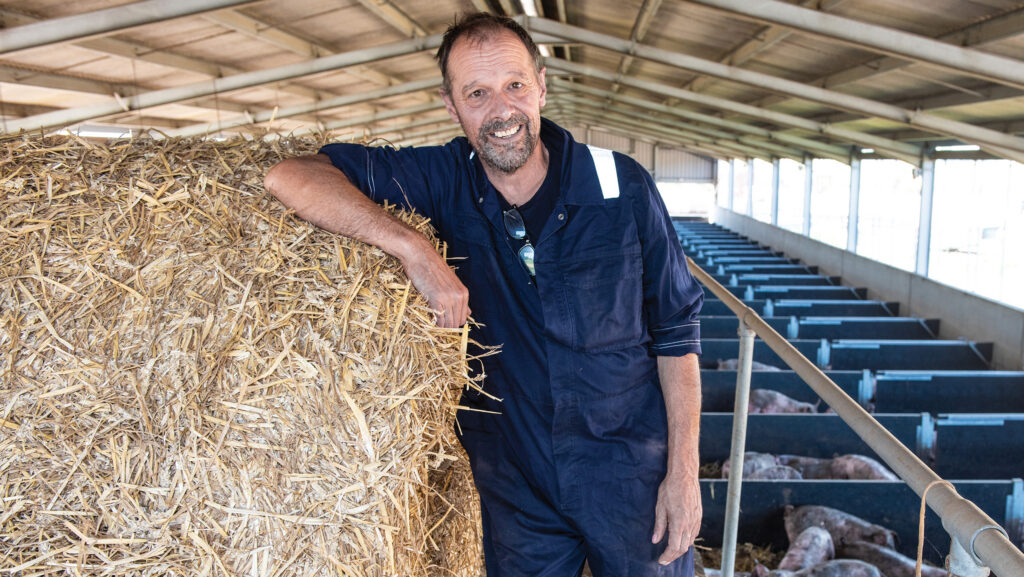
Mark Jagger © Phil Weedon
Pig specialist Mark Jagger is on the lookout for new recruits to the industry to improve Britain’s low self-sufficiency in pigment and improve its carbon footprint.
Mark is fieldsman for one of Britain’s biggest pig companies, Pilgrim’s Europe. He sees his main role as recruiting newcomers to the industry and looks to encourage 15 new entrant farms each year to feed the company’s two large pig plants.
His innovations, such as improving water supplies to pigs, has led to a fall in antibiotics use, while extracting iron from borehole water has boosted pig water intake.
Pilgrim’s produces 25,000 pigs a week and is looking to push up production while moving to more sustainable production as it tries to cut back on imports.
“Bringing new farmers into the pig industry is a joy. As the cost-of-living crisis eases, consumers will look for more high-welfare, low-carbon pigs, and we are looking to supply them,” he says.
Technical knowledge
Mark’s water supply innovation improves flow rates by installing peristatic pumps.
These can dose water accurately with antibiotics rather than simply adding them to a water header tank, which did not ensure the correct dosage.
The use of these pumps has led to a more standardised concentration of antibiotics, which are aimed at controlling health problems such as pig scour.
This has led to an overall 15% fall in antibiotics use on Pilgrim’s 165 contract-finishing farms.
In addition, he has developed a method of filtering bore hole water through gravel or sharp sand, which has cut the iron content of pig water.
This has led to 15-20% increase in pig water intake from farms using borehole water. This, in turn, has resulted in healthier pigs and reduced medication and labour on many farms.
Too much iron causes acute toxicity, cellular damage and reduced growth performance in pigs, despite it being an essential nutrient to prevent anaemia.
Environmental credentials
Mark works with one Suffolk pig farm that has has introduced changes such as giving pigs more space and greater access to feeders and water drinkers.
The farm, which takes in pigs at five weeks to finish at 25 weeks, is now using less feed to produce the same amount of pigmeat, because pigs are not stressed competing for feed and water.
“Every pig is now saving 20kg of feed for the farm, which is producing 30,000 pigs a year. That’s quite a saving in feed,” says Mark.
In addition, he has worked with engineer John Harvey to design a new pig water drinker, which has reduced water wastage and allows pigs to drink more water.
Some 17 years after this new drinker design was first used, Mark believes that more than 50% of the UK’s growing pigs drink from that type of drinker.
Client relationship
Mark has helped the Suffolk farm expand from finishing 4,000 pigs a year in 1996 more than sevenfold and has assisted with a whole range of pig issues.
“He has been involved with everything important on the farm for the last 30 years, from finding staff to helping with the design of our current building,” says the farmer, who asked not to be named.
Mark has helped improve water quality on the farm, where filters were installed to reduce iron content from boreholes after the site’s water supply stopped in the middle of the night because of iron contamination.
The current iron filtration system has been working well for five years on the farm with no problems.
The numbers
- 40 years in the pig industry
- 33 years with Pilgrim’s Europe
- 18,000 employees at Pilgrim’s Europe
- 165 contract finishing farms, producing 25,000 pigs a week
- 52 Pilgrim’s-owned breeding units
Farm facts
Suffolk farm
- Finishing 30,000 pigs a year
- Taking pigs from five weeks to finishing weight
- Pig shed with 12,000 finishing places
- 140ha farmed, growing winter wheat, and winter and spring barley
What the judges liked
- Mark is innovative, tenacious and resourceful and always prioritises pig welfare and efficiency
- He is very collaborative and is keen to use local industry to solve problems
- He has a clear vision for the pig industry, seeing a future of increased pigmeat consumption by sustainable production to cut imports
What the judges say
Mark is very friendly and approachable with a wealth of knowledge and is leading change and innovation in the pig industry. His work improving the quality of water for pigs has had a big impact.
Liz Lunn, Advanced Ruminant Nutrition, Lancashire
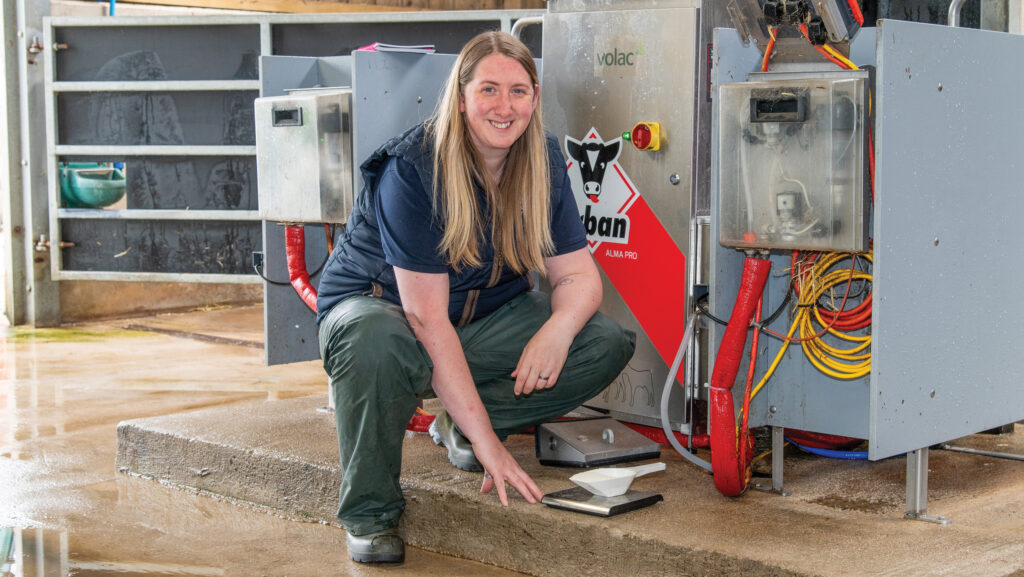
Liz Lunn © John Eveson
Livestock consultant Liz Lunn has helped push up growth rates of Jersey heifer calves by nearly 50% after working on one Scottish dairy farm for just nine months.
Extending the period of feeding colostrum, using higher-quality milk powder and palatable starter feed, and following strict protocols for rearing calves have all helped drive this rise.
Liz, the heifer rearing manager at the group Advanced Ruminant Nutrition, only started working on the Scottish farm in October 2025. Since then, daily weight gain of calves has increased to 0.76kg from 0.52kg previously.
The better heifer performance in the 410-strong Jersey milking herd is aimed at getting 90% of heifers to calve at 22-26 months, compared with 20-36 months before.
Liz’s goal is to get heifers in the best condition when entering the milking herd. “What we want is healthier heifers calving sooner, at the right size, so they perform well and stay in the milking herd for longer,” she says.
Technical knowledge
Liz says the Jersey heifers are yielding 6,242kg milk/year from their first lactation, or 72% of the yield of a third-lactation cow at 8,646kg/year.
She is aiming to get heifer yields up to 82-85% of third-lactation cows, which would be worth £60,000/year.
Heifer care starts from day one, with calves now fed for 10 days with colostrum compared with just one day previously.
Jersey calves are born relatively small, with little flat reserves, so they need extra care compared with Holstiens.
Liz is looking to do much better than the national average of 17% of heifers not making it into the milking herd.
Better heifer health and performance in the herd will allow more Jersey cows to be put to a Charolais bull rather than breeding potential herd replacements.
Currently, just under half the Jerseys are put to a Charolais.
The aim is to push that figure to 60-70%, as Jersey bull calves at two weeks of age make £30 each, whereas a Jersey-Charolais bull calf can make £380.
Environmental credentials
The move to more efficient heifer rearing will have a big environmental impact, as reducing age at first calving to 22-24 months will save on feed costs.
Improved health should also reduce cull rates and increase the number of lactations, which number 3.6 at the moment. Liz is aiming for four lactations and higher.
“If we need fewer heifers, the ones we have will do better, as they will have more space and less disease,” she says.
Selling more cross-bred bull calves will also help pay for the new automatic milk calf feeding machines that have just been installed on the farm.
Client relationship
Liz has worked with farm manager Ryan Logan at Kerricks Farm, near Dumfries in south-west Scotland, for the nine months that Ryan has been on the farm. However, they worked together for seven years on his previous farm.
“Liz brings a whole farm approach and sees that youngstock rearing is an investment, not a cost, If we don’t unlock the genetic potential when calves are born, then they will never reach their potential,” he says.
Given it costs £2,000 a head to rear a heifer, he says calving at 22-24 months is critical, as every month they go over that target is an additional cost.
Liz and Ryan started working on the farm together in October 2025. They moved the herd to a fully indoor system the following month, and increased milking frequency to three times a day milking in January 2026.
The numbers
- 20 years as a livestock adviser
- 7 years with Advanced Ruminant Nutrition (ARN)
- 22 staff at ARN
- 30 regular clients
- 250 clients in the group
Farm facts
Kerricks Farm, Duncow, Dumfriesshire
- 210ha farmed with grassland and maize
- 410 Jersey milked three times a day through a 20:40 herringbone parlour
- Annual milk yield 8,200kg a cow
- Moved to housed herd in November 2025
What the judges liked
- Liz has good technical knowledge and is willing to challenge herself and her clients to be continually improving
- She is very personable and instils confidence in people by her guidance and mentoring
- She uses data and conveys results in a way clients can implement changes to improve their farming systems
What the judges say
Liz is warm, friendly and passionate and instils loyalty in her clients. She is considered more than an adviser – she is part of the farm team and will travel long distances for her clients.
A word from our sponsor
“Duynie is proud to support this category. Driven by sustainability and innovation, we transform food industry co-products into high-value animal feed, helping farmers improve efficiency, reduce waste, and build a more circular agricultural future.”
Dannie Hunter, marketing manager