

Benefits of low-power sensors for grazing infrastructure
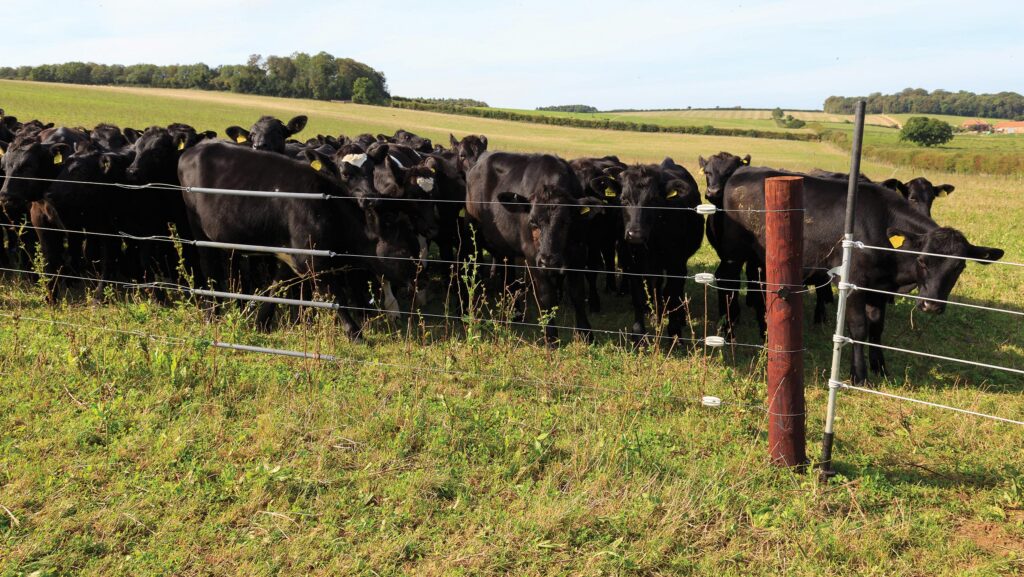
Glovers Farm electric fencing © MAG/Judith Tooth
Bawling from a group of cattle is a sound that can strike fear into a farmer, signalling a herd on the loose or thirsty animals.
Add this summer’s record temperatures and grass shortages to the mix and the possible harms from empty drinking troughs and field breakouts are amplified.
Emerging technology is now helping farmers get a step ahead of those emergency situations.
See also: How farm-designed solar energiser powers fencing year-round
Sensors that monitor electric fence voltage and water pressure warn of changes to the average thresholds of this key farm infrastructure.
For what can cost as little as £300 for an electric fence sensor and £160 for a device fitted to a water pipe, systems can be monitored continuously and remotely.
Long-distance data
Many of the sensors up and running on UK farms operate through the long-range, low-power network technology LoRaWAN, a protocol that carries tiny amounts of data over long distances using very little power.
These sensors communicate without relying on mobile phone signal or wi-fi, making them well-suited to farms.
More businesses are adopting this technology, helped in part by government-backed funding streams that meet some or all of the cost of installing base stations and sensors.
Case study: Electric fence sensors
Outages to the power running through an electric fence often lead to a breakout.
This can happen quickly, as it doesn’t take cattle long to work out when a wire has no charge running through it.
It can even be a matter of minutes when grass is in short supply and animals are keen to get to fresh grazing.
Andrew Gresty has installed seven sensors on two mains-powered fences running around the perimeter of his beef farm near Wrexham.
Farm facts
The Cloy, near Wrexham
- 75ha farmed – 29ha harvested as silage by neighbouring farmer
- Year three of transition from dairy to Hereford suckler herd
- 44 suckler cows and heifers, plus 26 replacements
- Average age of first calving 24 months
These warn of low voltage or power outages and have been a game-changer for Andrew, not least because of a spinal injury four years ago.
This reduced his mobility and added physical challenges to the time pressures of walking fence lines at The Cloy to check voltage levels.
“When the weather is rough, there might be a branch pegging the fence to the ground.
“But I wouldn’t necessarily know about it until I actually saw it or if I had a tester in my pocket and checked the voltage manually,” he says.
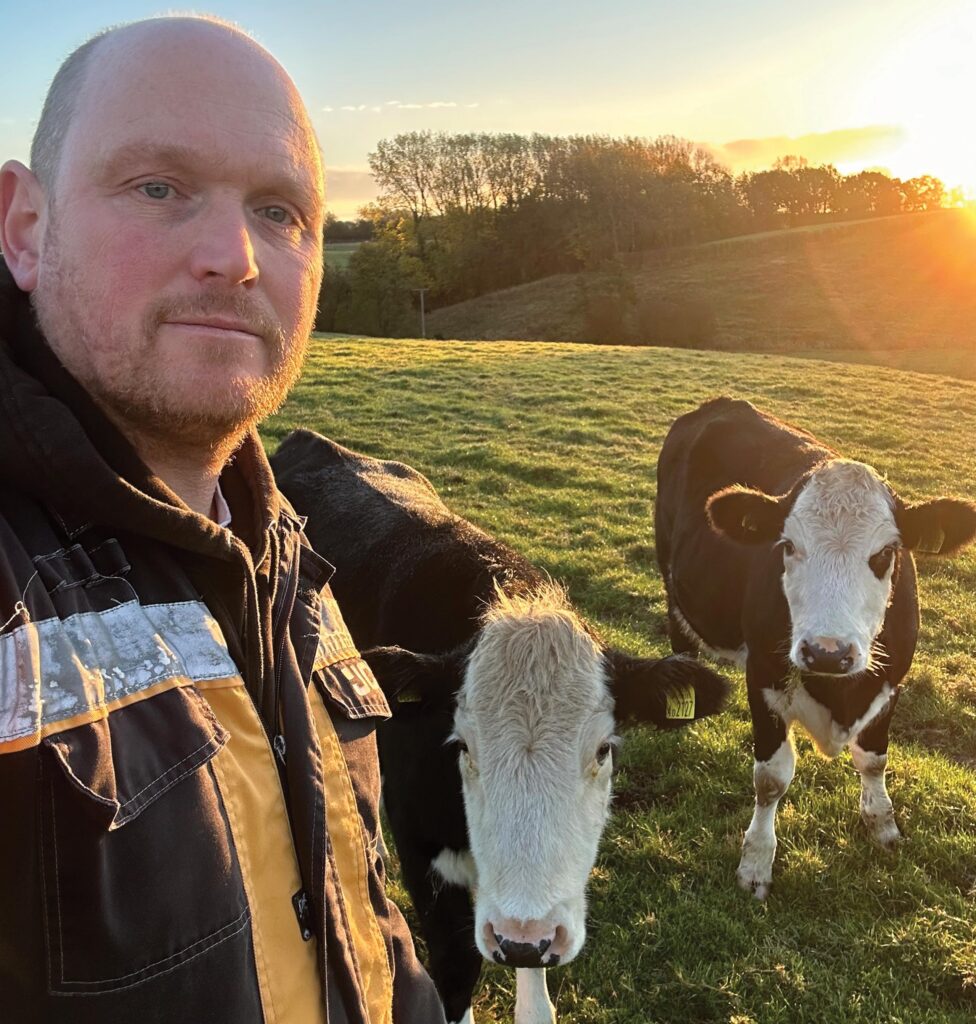
© Andrew Gresty
Power-drop alert
Alerts, set at a threshold of 2,000 volts on his 10,000-volt system, notify Andrew every 20 minutes when power drops below that level.
Vegetation growing up around the wire can be the culprit and, since the sensors were installed, he notices the impact of dew on the power level.
“When the dew comes down at night, it is surprising how the power drops,” he says.
Each sensor costs about £300. For Andrew, the cost was fully funded by the UK Shared Prosperity Fund (now closed) as part of a trial to investigate how connected technology might improve efficiency, productivity and sustainability in farming.
He is so impressed by their performance that he has self-funded two water pressure sensors, each costing £160, to monitor two private water lines where the occasional burst pipe has resulted in large bills.
These were only recently installed, but he hopes they will detect underground leaks and prevent water supply issues for cattle.
“We have had issues with leaks in the past because ours are long private lines, and both the water meters are about three-quarters of a mile away from the farmyard,” he explains.
“I’m still experimenting by monitoring the differential between the maximum pressures of the two sensors – if one drops more than the average I know I have a leak.”
The only difficulty Andrew has had is in setting the systems up.
As the installation of the fence sensors was part of a trial, he benefited from a training day but says he would have struggled to set them up himself.
There is also the perennial risk of cables getting nibbled by wildlife or livestock, so they must be protected from that threat.
Case study: Water pressure sensors
Both pressure and ultrasonic-type sensors are available for monitoring water feeding into drinking troughs and tanks, not only to detect leaks but also to enable farmers manage troughs remotely.
Philip Hughes farms beef and sheep at Hendwr, near Corwen, Denbighshire, a region with an average rainfall level of 1,650mm.
Farm facts
Hendwr, near Corwen, Denbighshire
- 400ha farmed
- 300 dairy beef calves
- 400 Welsh ewes
- Slurry and broiler litter-fed anaerobic digester
- Caravan park
He has four water sensors using LoRaWAN, paid for by the UK Shared Prosperity Fund.
There are many reasons to monitor supply, particularly mains-fed water, says Philip.
“I was keen to install this technology to help understand if we had any leaks, particularly on mains supply, which is costly, but also to alert us if the cattle had knocked a valve off.
“This would mean water was not getting through to their troughs, and that’s when they start breaking out.”
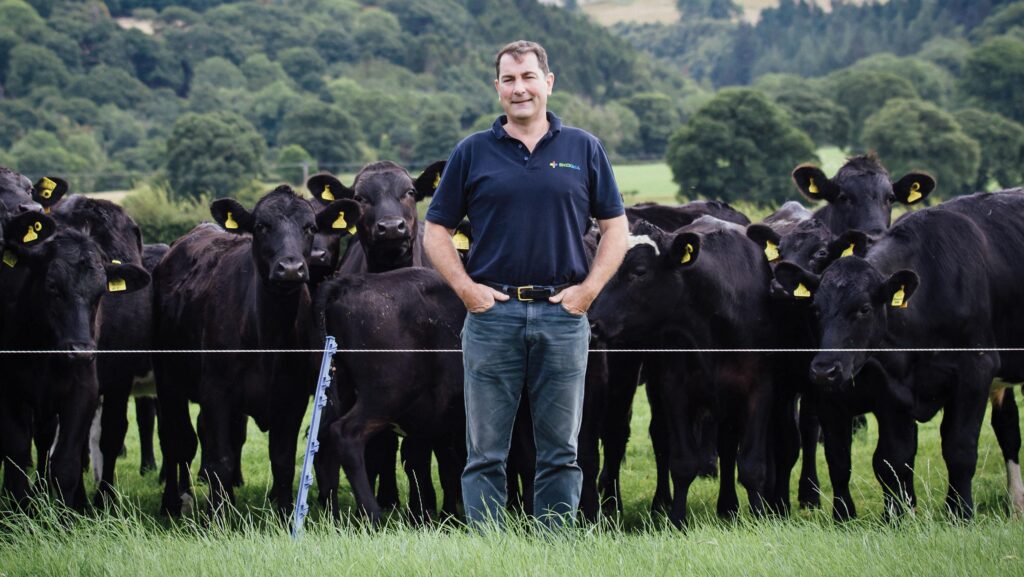
Philip Hughes © Precision Grazing
Monitoring of water intake
Limited supply also impacts on performance – but he can now monitor intakes.
“Animals need water every day, not just in drought conditions, but things do go wrong more quickly when it is hot,” he points out.
The sensors are fitted at pumping stations in strategic locations along the 25mm alcathine water pipes, each station serving multiple drinking troughs.
Although only recently installed, they have already alerted Philip to a water leak, which he is in the process of locating. If successful, it could “save us a lot of money”, he says.
His land is in a mountainous region of Wales, and that is the one disadvantage he has encountered with his specific type of sensor.
“The biggest issue is trying to get a signal through mountains. But the beauty of LoRaWAN is that when you are on the internet, it is free.
“And the sensors run on a very low battery requirement, so they will operate for quite a few years before you need to touch them,” he says.
Livestock water requirements
An animal’s diet and weight, and the weather, all dictate how much water it needs.
For each 100kg liveweight, cattle drink up to 15 litres of water a day, but this can increase significantly in warm weather.
Demand is greater in a lactating cow, as milk comprises 87% water.
Need can also increase substantially if she is affected by heat stress.
A cow yielding 25 litres requires 50-60 litres of water daily; on a hot day it can be 100 litres or more.
If need isn’t met, there will be a negative impact on milk yield, health and fertility.