

How one dairy grows top-quality grass for grazing and silage
 © Sara Gregson
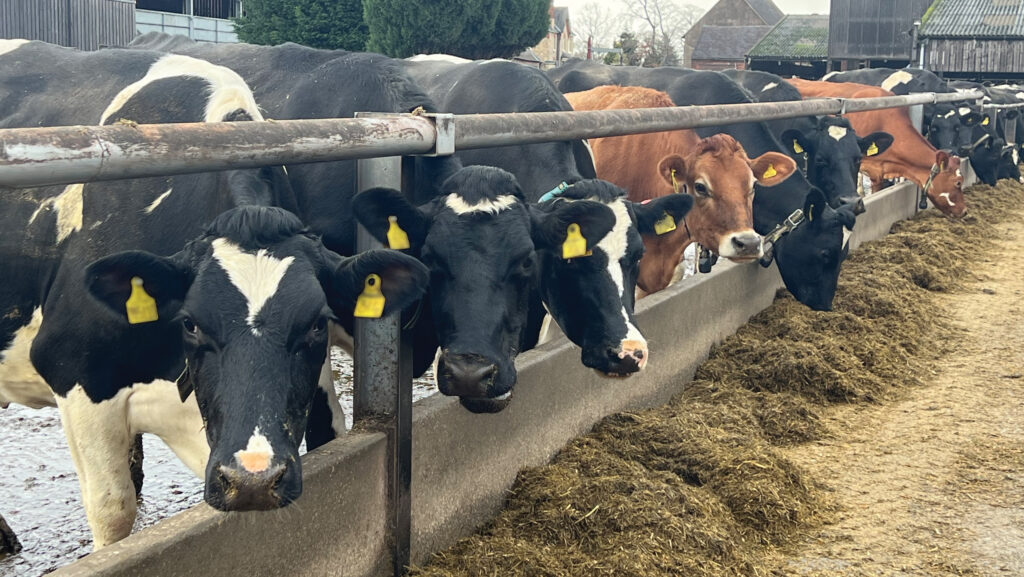
 Cheshire farmer James Witter mowed a fifth cut of grass silage on 28 December 2025, picking it up on New Year’s Eve, just before the weather turned cold.
This additional 350t of high-quality silage, from 53ha (131 acres) of lighter land, is already being fed to the cows, helping make up for the 50% shortfall from the third cut, which suffered badly in the summer drought.
See also: Advice on managing silage stocks for dairy diets
“We can’t fight nature, we have to work with it to produce the best feed we can,” says James, who was a runner-up in the British Grassland Society’s 2025 Grassland Farmer of the Year competition.
“Last year, we had to be flexible and adapt, be this moving dry cows off the grazing platform in mid-summer or making a very late cut. I think we have enough silage now to last us to the end of April.”
Farm facts
Wheelock Farm, Sandbach, Cheshire
- 306ha grassland with 41ha wholecrop
- 560 dairy cows, mainly autumn calving
- Average yield 8,500 litres at 4.12% butterfat and 3.49% protein
- 46% milk from forage
- Five cuts of grass silage plus wholecrop
- Supplying Muller Sainsbury’s
- Two full-time and one part-time staff working with the cows
- Farm shop, café, children’s play area, maize maze, pumpkin patch
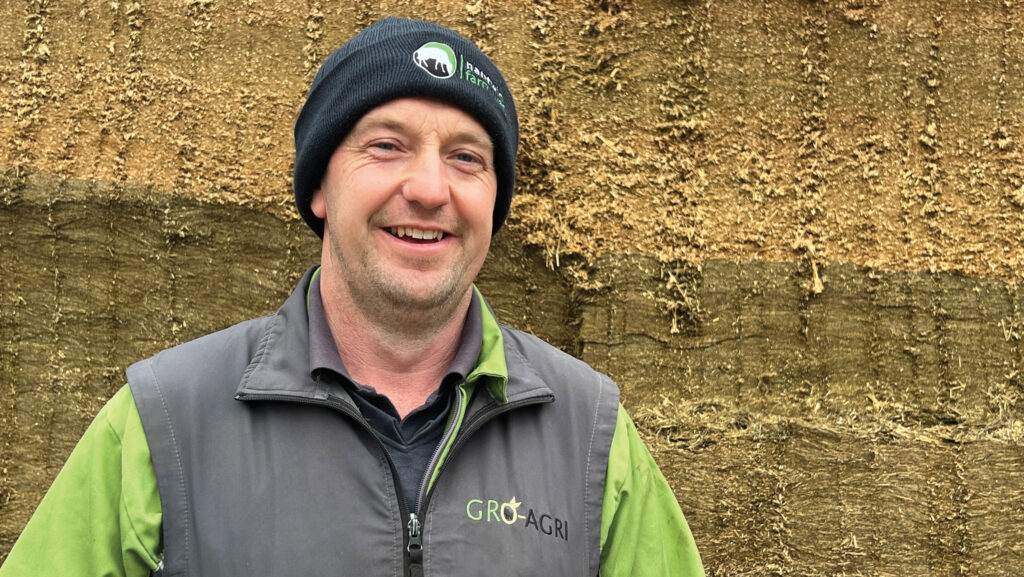
James Witter © Sara Gregson
James is a third-generation farmer at Wheelock Farm, on the outskirts of Sandbach. His father, David, mother, Gillian, and brother Edward all work in the business.
With 560 cows in total, 400 calve in autumn (10 August to end of October) and 160 in spring (1 February to 10 April) to give a reasonably level supply.
Average annual milk yield is 8,500 litres, with 4,000 litres a cow coming from forage.
“Optimising forage dry matter intakes at 15-16kg dry matter [DM]/day is really important, for production and for animal health,” says James.
Grazing management
The farm consists of 163ha (400 acres) of long-term leys that are reseeded every 10 years and managed in a paddock-grazing system.
The autumn calvers are turned out to graze in late February/early March.
The spring calvers go out mid-April as grass growth starts to increase and will begin the second rotation on the grazing platform, rather than the overwintered grass on the first round.
The 100ha (247-acre) grazing platform is divided into 29 paddocks linked by railway sleeper tracks and with multiple entry points to prevent poaching.
Stocking rate is high, at 5.5 cows/ha, and 190kg of nitrogen (N) fertiliser is applied a year across the paddocks, with an early application in February, followed by further applications after each grazing.
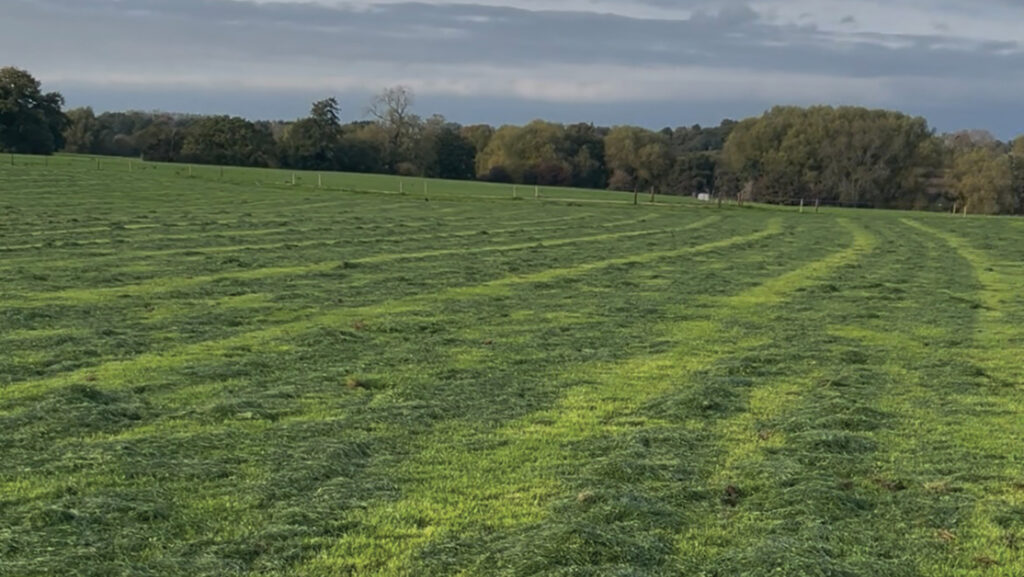
A pre-mown grazing paddock © James Witter
The cows are given a fresh break after each milking/12 hours. This allows for a rotation of 29 days.
However, if the grass is growing particularly quickly, some paddocks will be cut, protecting the quality of future grazing.
“We also pre-mow the grazing grass with a plain mower from early May, which we find really boosts intakes,” says James.
“Our grass seed mixtures have only two different perennial ryegrasses in them with heading dates within six days of each other. We aim to pre-mow them before they head.”
The cows go into a paddock at 3,000 to 3,200kg DM/ha before it is mown, and they graze it down to 1,550kg DM/ha. Last year, James was still pre-mowing on 5 November and the cows were out until 11 November.
Conserved forage
Taking five cuts of the highest quality grass silage every five to six weeks is the other key element of the forage plan. This is grown on 114ha (282acres) of dedicated silage ground.
Forage analysis for five cuts of grass silage taken in 2025 |
|||||
|
|
First cut |
Second cut |
Third cut |
Fourth cut |
Fifth cut |
|
Date of harvest |
28 April |
11 June |
7 July |
10 September |
28 December |
|
Dry matter (DM) (%) |
36.6 |
35 |
27.0 |
38 |
24.6 |
|
Digestibility value |
75.9 |
71.7 |
70 |
68 |
72 |
|
ME (MJ/kg DM) |
12.1 |
11.5 |
11 |
10.5 |
11.5 |
|
Crude protein (%) |
18.6 |
15 |
21 |
17.8 |
24.6 |
|
Area (ha) |
114 |
114 |
114 |
114 |
50 |
|
Tonnes made |
1,100 |
1,000 |
500 |
1,100 |
350 |
| Source: James Witter | |||||
“We do the mowing, tedding, rowing up and chopping ourselves so we can go exactly when we want to. We wilt the grass for 24-48 hours depending on weather conditions and crop size.
We will only use a silage additive if weather conditions are unfavourable.
“Contractors come in to cart and clamp the grass. If the weather window is only small, contractors are called in to help with the whole operation.
This ensures we consistently achieve the quality we are looking for,” says James.
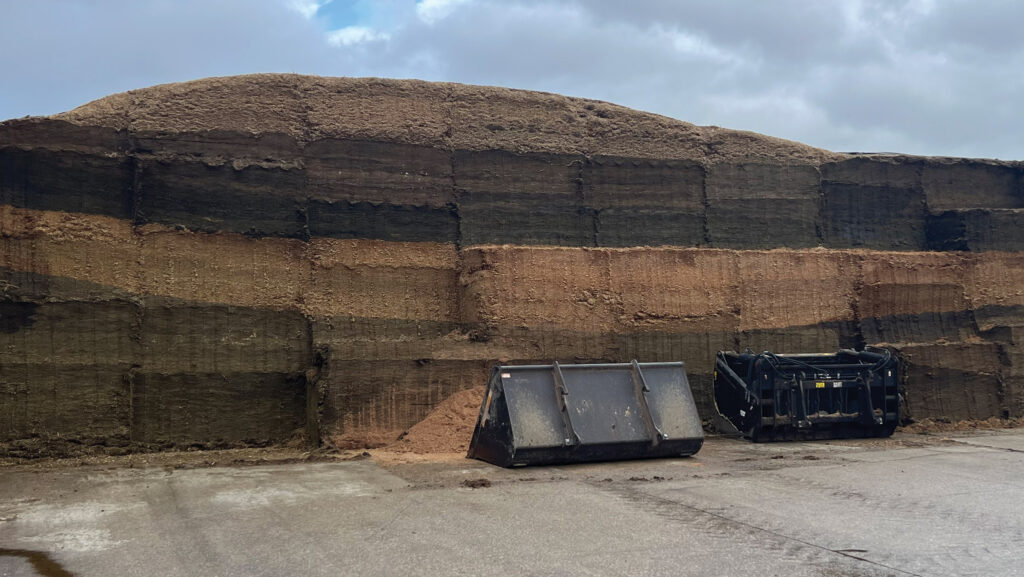
Pristine clamps prevent wastage © Sara Gregson
“The first two cuts last year were pretty much done when we would expect, but the drought really kicked in at the beginning of July.
We harvested third cut after just four weeks because it was coming so hot and the grass was becoming stressed. Tonnage was down by half.
“We then waited a further nine weeks before taking the fourth cut due to the drought. Good grass growing conditions into November and December gave us the opportunity to get the very late fifth.”
About 23cu m/ha of slurry is spread on the silage ground over the year and nitrogen and sulphur fertiliser is applied at a rate of 55kg/ha after each of the usual cuts, by contractors.
Some 41ha (101 acres) of wheat is also harvested for fermented wholecrop in the first or second week of July. The land can then be reseeded to a cutting mixture of perennial ryegrass varieties.
The wholecrop is clamped separately from the main clamp and this year analysed at 41.9% DM, 10.7MJkg DM of metabolisable energy, 67.9 digestibility value and 21.5% starch.
Feeding system
Concentrate use is just under 2t a cow with in-parlour feeders used on a feed to yield basis.
A total mixed ration of 8kg wholecrop and 40kg of grass silages are mixed with 1kg of ground maize, 1kg of soya and 4kg of a wheat grain distillery by-product.
This is fed out using a tub feeder to the autumn calvers when housed. Spring calvers are offered just the forage with supergrains up to drying off and then will have the same ration as the autumn group after they calve.
“Our main aim is to make the most of the grass growing in the fields and do everything we can to make sure this is of the highest possible quality all year round,” James adds.
James Witter’s tips for top-quality silage
- Have machinery and implements ready and clean beforehand – it saves time.
- Build a strong relationship with your contractor.
- Keep an eye on the weather in advance. If the weather is good a week before your ideal date, go and cut.
- Be flexible and work with nature – silaging doesn’t have to been done in one go. If it must be all done, bring in extra help if the weather windows are small.
- Wilt for 24-48 hours, depending on weather conditions.
- Use additive in less favourable conditions.
- Store conserved forage as cleanly as possible to minimise losses in nutritional quality. Cover the clamp soon after finishing so it is airtight and fermentation can begin.