

Tips on pre-mowing grazing paddocks with poor residuals
 ©Tim Scrivener
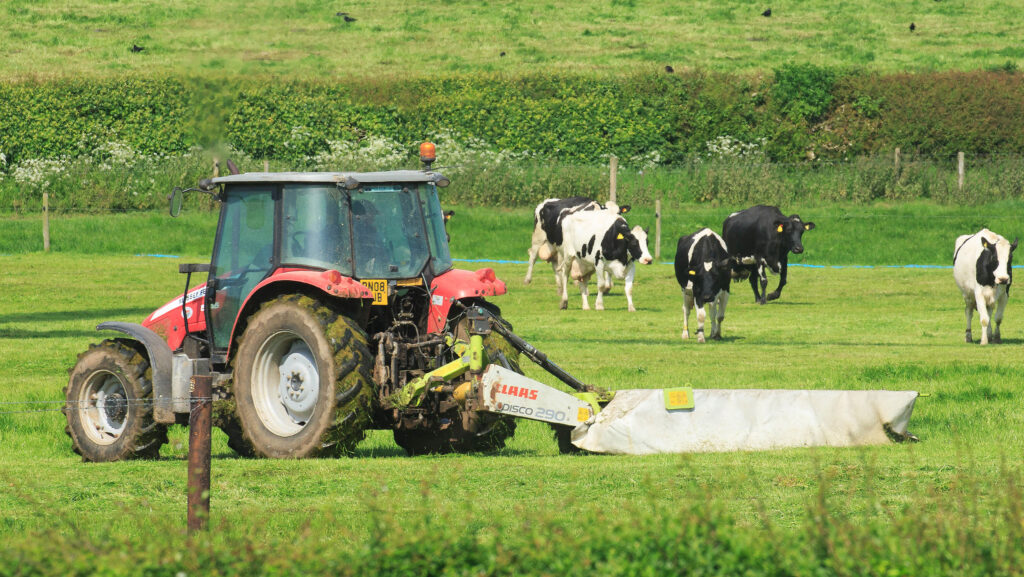
 Paddocks with poor residuals after the first two grazing rounds can be reset now by pre-mowing before the grass plant gets into its reproductive phase.
Wet ground conditions, over allocation of grass, or too much concentrate feeding that curbs cow appetites can all lead to slack grazing and high residual covers.
But it is important to realise that pre-mowing is a corrective tool to be used just once a year.
See also: Advice on planning forage stocks for spring-calving herds
And understanding how the grass plant grows is crucial to know when – and how – to pre-mow a paddock cost-effectively to get the right results, says Andre van Barneveld of Graise Consultancy.
He says the aim is to pre-mow residuals down to the target 4cm at a time of year when it can influence grass regrowth.
Done correctly, pre-mowing removes rejected grass to leave a clean sward for the next grazing. This maintains grass quality for the rest of the growing season.
Done badly, however, and it not only leads to overly stressed grass plants and a drop in milk output that can be hard to recover, but brings additional costs.
Right timing
The point, he adds, is to recognise when grass is past its quality; timing is critical.
“People tend to pre-mow too late which impacts the plant’s recovery time and risks going into a problem of deficit. Growth rates fall and you need another three to four days recovery time,” he explains.
Furthermore, once grass is in a reproductive state and there may also be a bit of moisture stress, mowing below the tiller point makes the plant stressed, stemmy and it aggressively tries to go to seed.
“This plant heads at 2,500 to 2,600kg of dry matter (DM)/ha instead of 2,800kg DM/ha,” he points out.
“You need to take corrective measures when more than 20% of a paddock has a residual over 4cm. If you leave residuals that are over 4cm, the grass plant’s digestibility and energy are compromised.
“So you need to decide whether to pre-mow or top after grazing. Topping results in pushing cows to graze down hard to minimise the amount of grass to mow,” Andre explains.
“This means they graze as low as 2.5cm – eating all the good bits, and this massively impacts regrowth which is patchy. Pre-mowing avoids this and also cuts a sward evenly.”
Even regrowth
Correct pre-mowing produces an even regrowth (provided there is sufficient soil moisture) and “great quality next time”.
One downside, however, is that it removes a herd’s ability to select and cows will eat the whole swath: “So they will also be eating grass of lower digestibility and lower energy which will reduce milk production.”
For best results, Andre’s advice is to cut down to a 4cm stubble mowing a 12-hour allocation (fence it off if necessary to ensure cows clean up).
Time it as close to cows going into the paddock as possible – ideally finish as the first cow enters the field. “This will increase dry matter by about 2%, but keep the feed value,” he adds.
Longer wilt times (especially on sunny drying days) reduce grass feed value and he says “don’t pre-mow in the rain as cows will refuse too much of it”.
“A lot of people mow 24 hours ahead, but this impacts production and grass utilisation falls through the floor.
“If we get 85% utilisation through grazing, pre-mowing is 75-80% because there will be a lot of small leaf that cows can’t pick up.”
Flexible technique
Every year will be different, however, and Andre says some years cows may clean paddocks out well leaving the correct residual.
This means it is important to be flexible with pre-mowing or topping as corrective techniques, making sure to properly assess paddocks at the right time.
There is another potential time to use pre-mowing as a cost-effective tool and that is in August – what he calls “clean-out” month.
It can be used again to ensure a clean base to paddocks going into autumn: “You might average 1.5 pre-mowings around the whole farm in a year. There is definitely a place for using it correctly, but it would better to top a paddock than do a bad job of pre-mowing.”
Most people who include it regularly in their rotational management fail to count the true cost of pre-mowing grass, he says, only reckoning the diesel. They forget about labour and machinery depreciation.
“Doing it yourself is not a different cost to using a contractor. There is also the cost of a drop in grass utilisation, a potential risk to milk production and the impact on potash requirement from repeated mowing.
“It is quite expensive per acre – and you’ve lost 5-10% of the grass you have grown.”